#IMF
IMF Flags Weaknesses in Bank of Greece Supervision of Non-Systemic Banks
The findings were published in a report prepared under the IMF's Financial Sector Assessment Program (FSAP), which reviewed the Bank of Greece's supervision of several non-systemic lenders.
IMF Says Greece’s Housing Crisis Isn’t About Too Few Homes - It’s About Too Many Sitting Empty
The IMF argues that Greece has one of Europe’s largest housing stocks relative to its population, but a substantial share of those homes remains vacant, underutilized, or trapped in legal and bureaucratic limbo.
IMF Says Greece’s Quiet Recovery Was Built on a Tax Revolution
The IMF divides Greece’s reform effort into three phases: stabilization between 2010 and 2012, institutional restructuring from 2013 to 2017, and an accelerated digital transformation beginning in 2018.
IMF Sees ‘Radical Transformation’ in Greece’s Tax System After Years of Reform
The IMF argues that Greece’s experience offers broader lessons. Institutional independence, it says, has been critical to building credibility and sustaining reform.
IMF Event to Spotlight Europe’s Growth Challenges in Fragile Global Economy
The conversation is expected to focus on the mounting pressures facing Europe’s economy, including weak growth, sluggish productivity and limited fiscal room, alongside rising demands for greater spending on defense, energy security and the green and digital transitions.

Greece Weighs Advance Tax Rulings to Boost Investor Certainty
The proposed framework aims to reduce the ambiguity that companies and investors often face when planning investments or structuring business transactions.

How the Greek Debt Crisis Changed the IMF’s Approach to Fiscal Policy
The report acknowledges improvements in the IMF’s analytical toolkit, particularly in debt sustainability analysis and in the monitoring of liquidity risks. However, it also identifies persistent weaknesses.

Eurozone Ministers Set to Choose New Eurogroup Chief Amid Tight Two-Way Race
The voting process will begin halfway through the meeting, following discussions on member-state budgets and the IMF’s assessment of the eurozone economy.

IMF Warns EU on Defense Spending as Greece Rolls Out €30 Billion Program
The remarks come at a sensitive moment for Greece, which is in the midst of an ambitious rearmament effort following years of underinvestment.
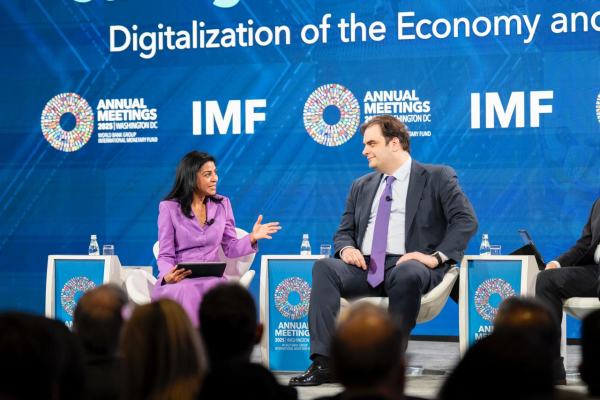
At IMF Event, Greece’s Pierrakakis Urges European Digital Integration to Drive Growth
Looking beyond Greece, Pierrakakis called for a unified European digital market.

Pierrakakis at IMF: Greece Emerges as a Model of Stability After Years of Crisis
Greece’s Minister of National Economy and Finance, Kyriakos Pierrakakis, described his country as “a success story built on the resilience of its people” during an interview in Washington, on the sidelines of the International Monetary Fund’s annual meetings.

IMF Study: Why Greece Is Strongly Affected by Global Commodity Price Swings
Analyzing data from 66 economies, IMF researchers concluded that this “interconnectedness” is the main channel through which global commodity price shocks spread into domestic economies.

Meet the Greeks Steering the IMF from Within
In recent years, a number of Greek economists have risen to influential positions within the International Monetary Fund (IMF), taking an active role in shaping global economic policy.
IMF Calls for a Shift in Public Spending Philosophy - Greece Still Faces Efficiency Challenges
As global growth remains subdued and public debt continues to mount, the International Monetary Fund (IMF) is urging governments to rethink how they spend public money
IMF Redefines State Fragility - Greece Caught Between Stability and Vulnerability
According to the report, fragility is not merely the result of poverty, political instability, or conflict.

Greece Borrows Cheaply, but Fragility Lingers
Greece is regarded as a reliable borrower, its fiscal position is steadily improving, and international markets are buying its debt without hesitation.
Greece Hasn’t Learned to Live Without High VAT - IMF Report on the Lingering Legacy of the Bailouts
A recent IMF report sheds light on why Greece remains “addicted” to indirect taxation — and why, seven years after the end of the bailout programs, successive governments have resisted lowering VAT rates on essential goods and services.
Greece Lags Behind EU in Modernizing Public Finance Accounting, IMF Warns
Greece remains significantly behind the rest of the European Union in the way it records and monitors public finances, according to a recent report by the International Monetary Fund.

Greek Industries Brace for Impact from EU Carbon Border Mechanism
The European Union’s Carbon Border Adjustment Mechanism (CBAM), introduced as part of its broader green transition strategy, is partially reshaping the landscape of international trade. Its main objective is to curb «carbon leakage» - the phenomenon where industries move production to countries with looser environmental regulations in order to escape stricter EU climate rules. While the overall impact on the EU’s trade flows is expected to be limited, the mechanism could significantly affect specific countries and industries, according to a study by the International Monetary Fund. CBAM is designed to protect EU-based companies that bear the financial burden of the bloc’s ambitious climate policies. It does this by imposing a charge on imported goods with high carbon footprints - such as iron, steel, aluminum, cement, fertilizers, and electricity - based on the amount of embedded carbon emissions and whether the country of origin already prices those emissions. This carbon levy ensures that imported products are not unfairly cheaper simply because they come from places with weaker climate standards. Although CBAM formally took effect in October 2023, it remains in a transitional phase until the end of 2025. During this period, importers must report the carbon emissions of the goods they bring into the EU but are not yet required to pay the levy. Starting in 2026, however, the EU will begin charging importers according to its carbon pricing benchmark and the emissions intensity of their products. The IMF estimates that CBAM will raise the cost of EU imports by around 0.1%, and non-EU countries exporting to the bloc will see their total export costs rise by an average of 0.04%. While this may seem marginal at the macroeconomic level, the financial burden will be more acute for countries with high-carbon exports and no domestic carbon pricing - such as Bosnia and Herzegovina, Serbia, and Ukraine - especially in sectors like steel and electricity. Greece, in relative terms, is less exposed to the mechanism. Only about 4.5% of the country’s total imports are affected by CBAM, and the value of these imports from non-EU countries amounts to just 0.1% of Greece’s GDP. As a result, the immediate macroeconomic and fiscal impact is expected to be modest. However, the picture shifts when focusing on specific sectors. A large portion of Greece’s aluminum (89%) and iron and steel (75%) imports originate outside the EU, making these industries particularly vulnerable. According to the IMF study, CBAM could increase the import cost of primary aluminum by 3.9%, iron and steel by 2.9%, and cement and related products by a striking 19.7%. These added costs could ripple through the economy, especially in construction and heavy industry, where such materials are essential. Greece’s dependence on a small number of carbon-intensive raw materials from high-emission countries may lead to price hikes and pressure on domestic industries. This challenge is compounded by the EU’s plan to phase out free emissions allowances for European businesses by 2035. Without an equivalent mechanism to protect EU exporters from carbon-related costs in global markets, companies in Greece and elsewhere may find themselves at a competitive disadvantage abroad.

Greece Faces Hard Truths on Its External Imbalances - Recovery Plan No Silver Bullet, Says IMF
Despite substantial EU-backed investment under Greece’s National Recovery and Resilience Plan, deep external imbalances continue to challenge the country’s economic stability, warns a new IMF report.
IMF: Greece Needs Structural Reforms to Catch Up with Europe
Greece must accelerate key structural reforms if it wants to close the gap with more advanced European economies, according to a new report by the International Monetary Fund.
New IMF Tool Maps Global Trade from Space, Highlighting Greece’s Maritime Clout
The International Monetary Fund has unveiled a groundbreaking new tool designed to track global trade in near real time by analyzing satellite data from commercial ship movements.


«Child Penalty»: How Motherhood Hinders Women’s Careers in Greece
Among European countries, Greece stands out as one of the places where having a child is particularly detrimental to a woman’s professional trajectory.

IMF Sees Improved Sustainability of Greek Debt, But Challenges Persist
The IMF flagged several lingering structural weaknesses.

IMF Urges Greece to Stay the Course on Reforms as Economy Gains Momentum
The IMF expects global energy prices to stabilize, helping headline inflation in Greece ease further.
IMF to Governments: Make It Easier to Pay - But Harder to Evade -Taxes
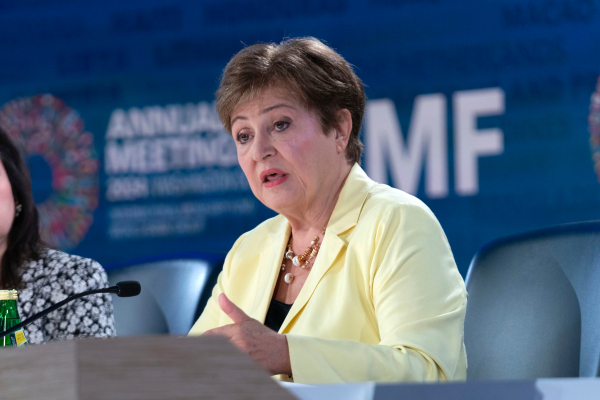
The IMF stresses the need for a transparent and predictable legal framework, which helps foster trust between citizens and tax authorities.
Greek Court Case on Public Sector Wages Raises IMF Concerns
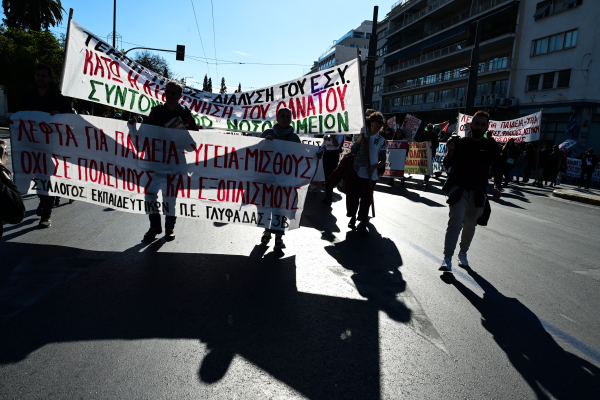
Despite assurances from the Greek government that it has no plans to reinstate the 13th and 14th salaries for public sector employees, a legal challenge by Greece’s public sector union, ADEDY, set for June, has drawn the attention of the International Monetary Fund (IMF). The case seeks to restore holiday bonuses that were cut during Greece’s financial crisis and bailout programs.
IMF Cautions Greece on Structural Weaknesses Despite Economic Gains
Greece’s economic outlook remains strong in the near term, with real GDP continuing its robust expansion, according to a preliminary assessment by the International Monetary Fund (IMF).