
A new study by the International Monetary Fund (IMF) attempts to quantify a concept that has long remained elusive: state fragility. In its report, “State Fragility: Towards a Conceptual Framework,” the Fund introduces a unified, data-driven approach to assess how well countries can withstand and recover from crises. Drawing inspiration from Nassim Nicholas Taleb’s theory on the nonlinear reactions of systems to shocks, the IMF seeks not only to understand when and why states fail, but also how they can strengthen their resilience.
According to the report, fragility is not merely the result of poverty, political instability, or conflict. Rather, it lies in how a state responds to disruption. A fragile country is one that suffers disproportionately large losses when facing adverse shocks and reaps minimal benefits from favorable ones. In essence, these are states that “collapse easily but struggle to take off.”
The IMF distinguishes between two broad forms of fragility. The first is chronic fragility, which characterizes countries unable to achieve sustainable growth and trapped in a cycle of underperformance. The second is stress fragility, which manifests when a state collapses under the pressure of sudden shocks—whether economic crises, political upheavals, or natural disasters.
Globally, the Fund estimates that about one-third of countries—roughly 65 according to combined data from the OECD, World Bank, and the IMF itself—can be classified as fragile, with the majority located in Africa. In its economic analysis, the IMF reviewed more than 440 recession periods between 1970 and 2024, finding that nearly a quarter of them displayed features of fragility: deep and prolonged downturns without swift recovery.
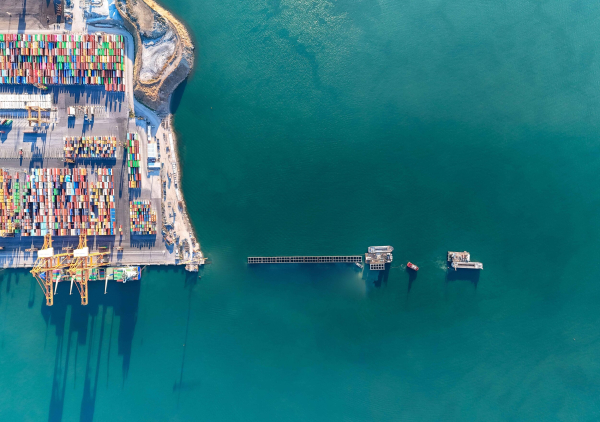
One of the main drivers of fragility, the study finds, is economic concentration. More than 40 percent of “deep recessions” occurred in economies heavily dependent on a single sector—tourism, oil, or raw materials. When these sectors are hit, recessions tend to be severe and prolonged. By contrast, diversified economies, with a broad and balanced production base, are able to absorb shocks more effectively and return to growth more quickly.
Equally critical is institutional quality, which the IMF identifies as a cornerstone of resilience. Chronic fragility, the report notes, is closely linked to weak governance, limited accountability, and inefficient public administration. Within this framework, the justice system emerges as a central pillar of stability. Countries with slow or biased judicial processes are more vulnerable to political instability and less capable of attracting investment. Conversely, an independent and efficient judiciary functions as a “stability multiplier,” strengthening state legitimacy and reducing the risk of crisis.
The report also addresses the role of public debt. While high debt levels are not inherently a sign of fragility, the Fund warns that, in economies with weak institutions and low productivity, debt can act as a “crisis amplifier.” In such cases, even minor shocks may trigger deep recessions, as governments struggle to secure financing or maintain market confidence.
A Warning Wrapped in Data
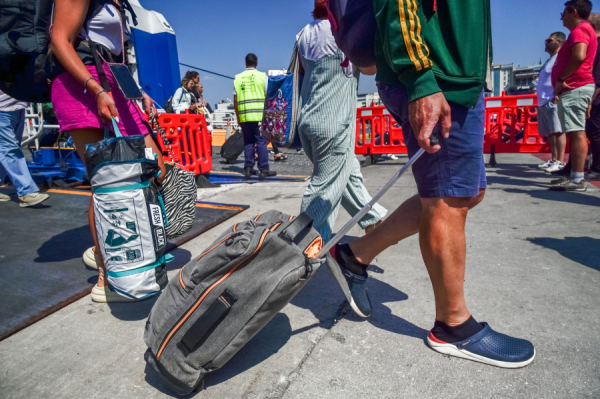
For Greece, the IMF findings carry particular weight. With an average growth rate of 1.3 percent between 1974 and 2024, the country does not fall into the IMF’s category of extreme fragility. Yet its resilience to shocks remains limited. The succession of fiscal, banking, and pandemic crises has exposed the vulnerabilities of an economic model overly reliant on tourism, services, and domestic consumption, leaving the country exposed to external disturbances.
The IMF identifies two main sources of fragility: economic concentration and institutional weakness. Under this aspect the persistent delays in the justice system, bureaucratic inefficiencies, and limited accountability hinder Greece’s ability to respond swiftly to crises or to capitalize on growth opportunities. Stability, the report argues, depends not only on fiscal discipline but also on institutional strengthening and productive diversification.
Particular emphasis is placed on the judiciary as a measure of institutional capacity. Judicial independence, speed, and efficiency are described as essential to a country’s stability. Nations with unreliable courts, the IMF warns, struggle to attract investors, manage social tensions, and prevent political unrest. Strengthening the justice system, by contrast, is described as “the most effective stability multiplier,” as every improvement in institutional function reduces the likelihood of crisis and enhances recovery capacity.
The report concludes on a note that reads both as a warning and a call to action: “Fragility is not destiny—it is the result of choices.” For Greece, as for any country, understanding these mechanisms is the first step toward overcoming them.