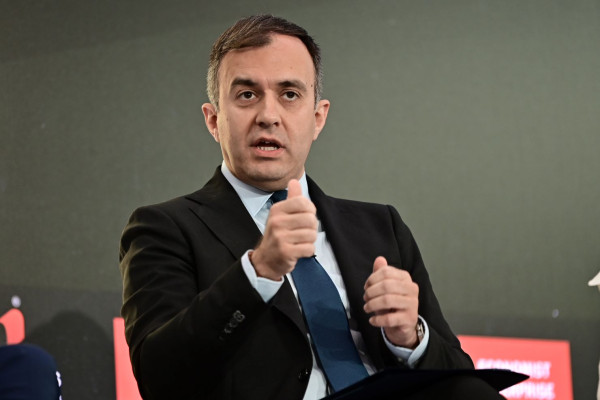
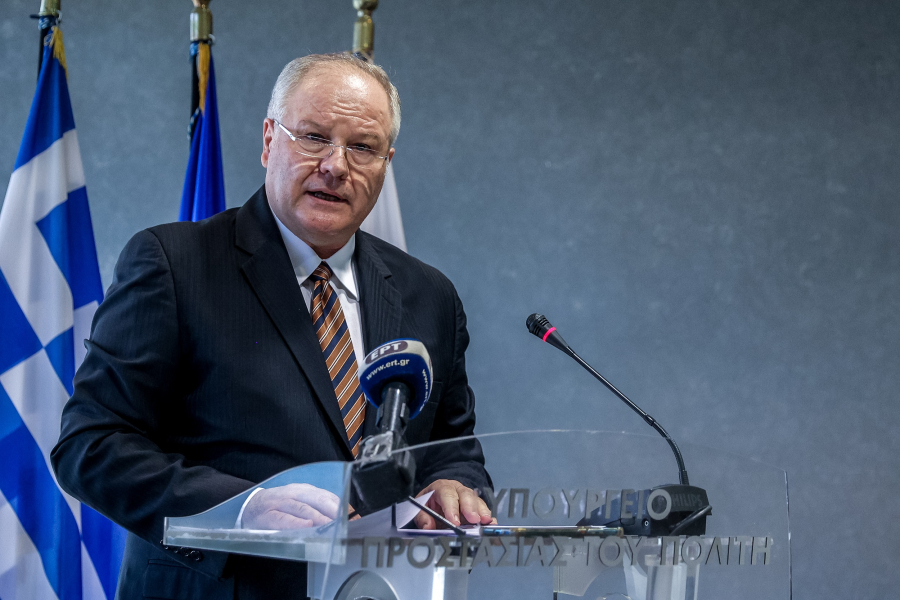
The high-profile trial over Greece’s illegal surveillance scandal involving the Predator spyware system resumed in Athens on Friday, with former national police chief and ex-Secretary General of the Ministry of Citizen Protection, Konstantinos Tsouvalas, taking the stand. His testimony quickly became a flashpoint, as judge and prosecutor repeatedly challenged his assertions and pressed him on apparent contradictions.
At the heart of the case are four business figures linked to the development and deployment of Predator: Yiannis Lavranos, the true owner of the technology contractor Krikel, as well as Felix Bitzios, Tal Dilian, and Sara Hamou of the Intellexa consortium, the group associated with the spyware system that targeted politicians, journalists, and officials.
Defense lawyers have underscored the importance of Tsouvalas’ appearance, arguing that without support from senior police leadership dating back to 2014, Lavranos could not have secured his position as a key supplier to the Hellenic Police nor obtained confidential contracts worth more than €20 million. These contracts, they maintain, were awarded through opaque procedures that bypassed proper oversight.
The courtroom exchanges on Friday centered on the long series of agreements between the police and Krikel, particularly concerning the TETRA secure communications system. Tsouvalas insisted he was unfamiliar with the company’s legal representatives, claiming that he relied instead on «political guarantees» when approving major contracts. His suggestion that millions of euros in state funds were allocated without basic due diligence drew immediate skepticism from the bench. The presiding judge questioned how the police could transact with a company without knowing who officially represented it, remarking pointedly that if a single document was all it took to secure multimillion-euro deals, «I could have sent one myself».
Tsouvalas repeated that during his time as police chief and later as a senior official in the ministry, he interacted only with a technical consultant from Krikel, not its executives. The only figure he acknowledged knowing personally was Lavranos, whom he described as a businessman operating in the United Kingdom in the defense sector. When confronted with evidence that he attended the baptism of Lavranos’ daughter, Tsouvalas initially omitted the detail, later calling it a brief appearance at a «social event» and denying any deeper relationship. The prosecutor noted the omission with visible irritation.
The court repeatedly pressed Tsouvalas on the link between Lavranos and Krikel. He insisted he had simply «not thought» to look into it further. When the judge suggested that his failure to investigate might stem from already knowing the truth, Tsouvalas flatly dismissed the insinuation.
Another contentious issue was the substantial police protection Lavranos reportedly received. Tsouvalas suggested this was granted following a personal request, but the prosecutor countered with an anecdote about a colleague denied protection during a mafia trial because the police claimed they lacked personnel. The sharp comparison raised further questions about why a private businessman had received treatment that even threatened state officials could not obtain.
The court also scrutinized a December 2020 contract with Krikel involving police operations along Greece’s northeastern border in Evros, a period marked by heightened tensions with Turkey. Tsouvalas described a chaotic security environment in which police communications were compromised and rapid procurement decisions had to be made. Yet the judges questioned why the police once again turned to Krikel instead of directly engaging Sepura, the original manufacturer of the TETRA equipment. Tsouvalas attributed the choice to internal assessments and ministerial decisions but offered little additional detail.
The former police chief was also asked about his contacts with Grigoris Dimitriadis, the former chief of staff to Prime Minister Kyriakos Mitsotakis, who resigned amid the surveillance scandal in 2022. Tsouvalas acknowledged only brief official encounters while accompanying the minister to the prime minister’s office and denied any ongoing relationship.
In a separate testimony, lawyer Ilias Spyrliadis portrayed his own involvement with Intellexa as superficial, claiming he functioned merely as a «courier» for company documents. He said he cut ties once media reports about the spyware scandal emerged.
The stakes of the trial are widely viewed as significant, reaching beyond the individual defendants to broader questions about institutional accountability and the rule of law in Greece. The court’s persistent challenges to Tsouvalas’ testimony underscored the deep scrutiny that the case has drawn. Judges and prosecutors are expected to weigh these inconsistencies carefully as they move toward a verdict in a scandal that has shaken public trust and drawn international attention.
The trial is set to continue on Monday with testimony from a former Intellexa employee.