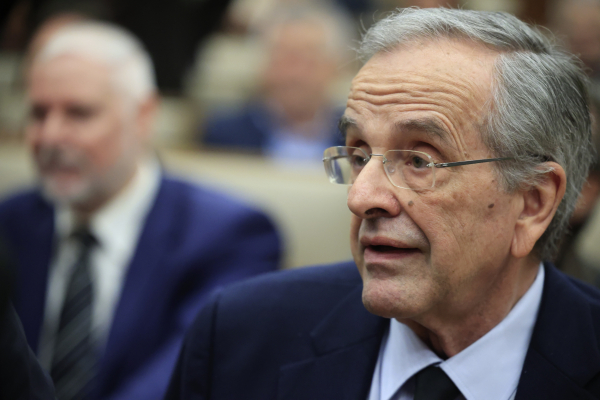
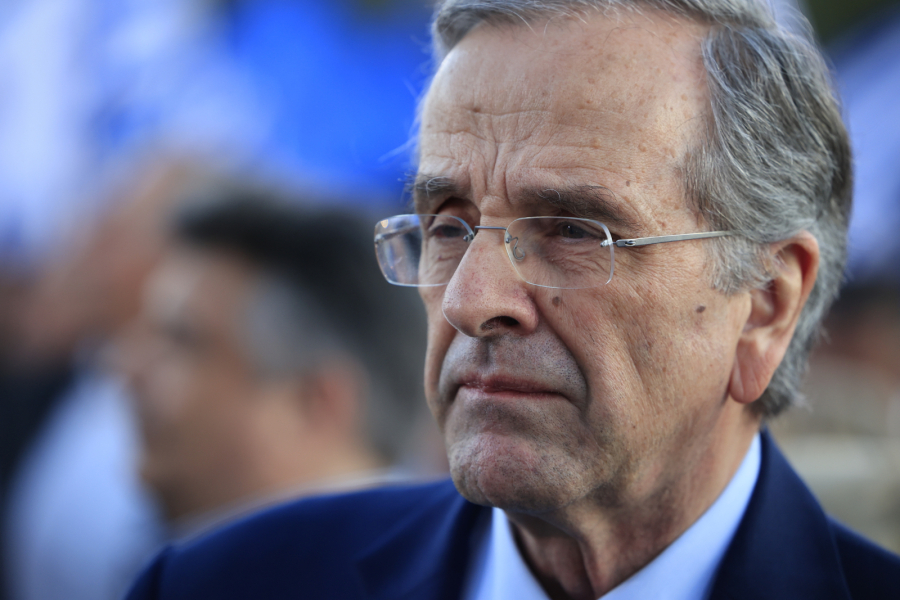
Former Greek Prime Minister Antonis Samaras has launched a sharp public intervention, calling on the government to provide immediate explanations over two issues he says touch directly on Greece’s sovereign rights: the terms of a recent offshore energy agreement with Chevron and allegations of Turkish interference in research activities near the island of Kasos. Samaras’ statement comes in response to concession contracts covering four offshore areas south of Crete and the Peloponnese, where a consortium led by Chevron and Helleniq Energy is set to conduct a new hydrocarbons exploration program. According to Samaras, clauses added to the contract at the last moment raise serious questions about whether Greece may be implicitly conceding sovereign rights in disputed maritime zones.
In a strongly worded statement, Samaras said that, as a former prime minister, he cannot remain silent on issues of national importance. He accused the government of celebrating the agreement as a diplomatic success while failing to explain provisions that, in his view, allow for the company’s withdrawal from areas that “may not form part of the Greek continental shelf or Exclusive Economic Zone.” He also pointed to references in the contract to areas where the Greek state “does not hold sovereign rights,” to the potential “loss of a delimited area,” and even to the possibility of waiving exploitation rights after a specific zone has already been identified. Samaras questioned whether Greece is effectively negotiating its sovereign rights and, if so, with whom and on what basis.
The second issue raised by Samaras concerns conflicting statements over research activity near Kasos, a small Greek island in the southeastern Aegean. He cited remarks made last week by the Cypriot government’s spokesperson, who stated that research in the area had been obstructed by Turkey and had not been completed as a result. This directly contradicts statements by Greek Foreign Minister Giorgos Gerapetritis, who has insisted that the research program was fully completed and that there was no retreat under pressure. Samaras posed the question bluntly: is Cyprus misrepresenting the facts?
“These are not what one would call ‘calm waters,’” Samaras concluded, using a phrase often employed by the Greek government to describe the current state of Greek–Turkish relations.
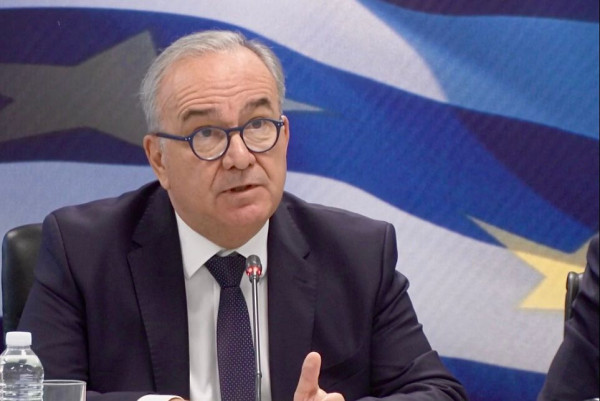
Government sources dismissed Samaras’s intervention as detached from reality. They stressed that sovereign rights cannot be forfeited through agreements with private companies and argued that the relevant clauses are standard legal safeguards designed to protect the Greek state from compensation claims in the event of future maritime boundary settlements. The same sources noted that technical discussions on maritime delimitation between Greece and Libya are ongoing, while Greece’s partial delimitation agreement with Egypt remains in force.
Regarding the research activity near Kasos, the government referred to an announcement by Greece’s electricity transmission operator, ADMIE, dated July 24, 2024, which stated that the research vessel involved in the Crete–Cyprus electricity interconnection project completed its work in international waters between Kasos and Karpathos according to schedule.