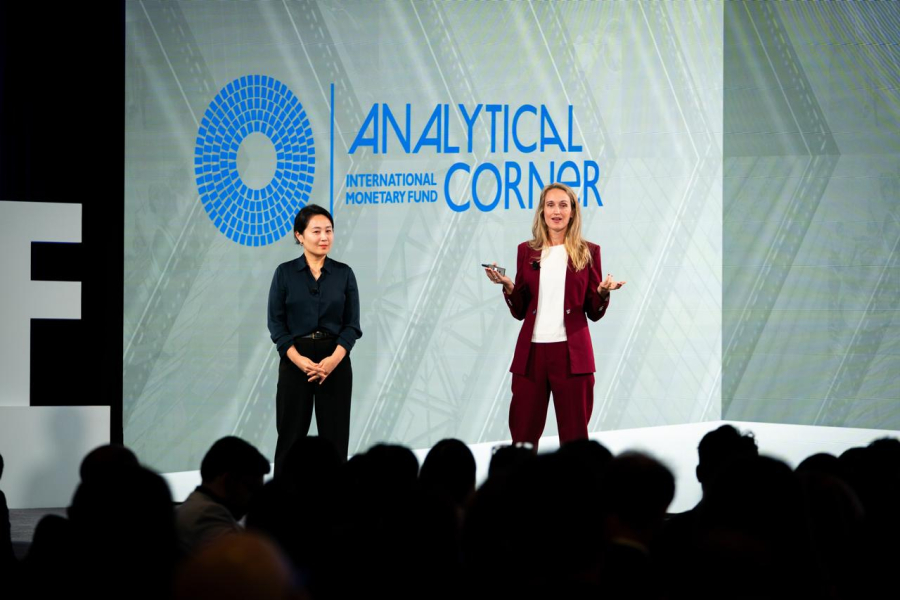
At this year’s IMF Annual Meetings, which opened on Monday in Washington, several of these officials are presenting the Fund’s latest assessments and forecasts for the world economy.
Alexandra Fotiou, a member of the IMF’s European Department, spoke on Monday at a seminar titled “Fragmented Markets and Growing Fiscal Pressures Are Slowing Europe’s Growth.” In her remarks, she underscored the need to deepen the European single market and reform the EU budget to promote investments that will drive the continent’s long-term growth. Fotiou pointed to regulatory fragmentation, limited financial integration, low labor mobility, and a divided energy market as key obstacles holding Europe back. To address these issues, she said, the IMF supports measures aligned with the recent Draghi report, including reducing regulatory inconsistencies, strengthening the Capital Markets Union, facilitating labor mobility, and creating a unified European energy market.
Also participating in the meetings was Manolis Kitsios, a senior economist in the IMF’s Asia and Pacific Department. Speaking on a Fund panel, Kitsios analyzed how global trade policies are affecting the economies of ASEAN (the Association of Southeast Asian Nations). He stressed the importance of maintaining open markets, building stronger regional value chains, and boosting domestic investment across the region.
On Tuesday, Thanasis Vamvakidis, Deputy Director of the IMF’s Monetary and Capital Markets Department, is scheduled to take part in the presentation of the Global Financial Stability Report, which examines emerging risks and trends in the international financial system.
Among the Greeks who have distinguished themselves at the IMF is also Evan Papageorgiou, the Fund’s mission chief for Sri Lanka and former head of the New Zealand desk — a sign of the growing presence and influence of Greek economists in one of the world’s most powerful financial institutions.