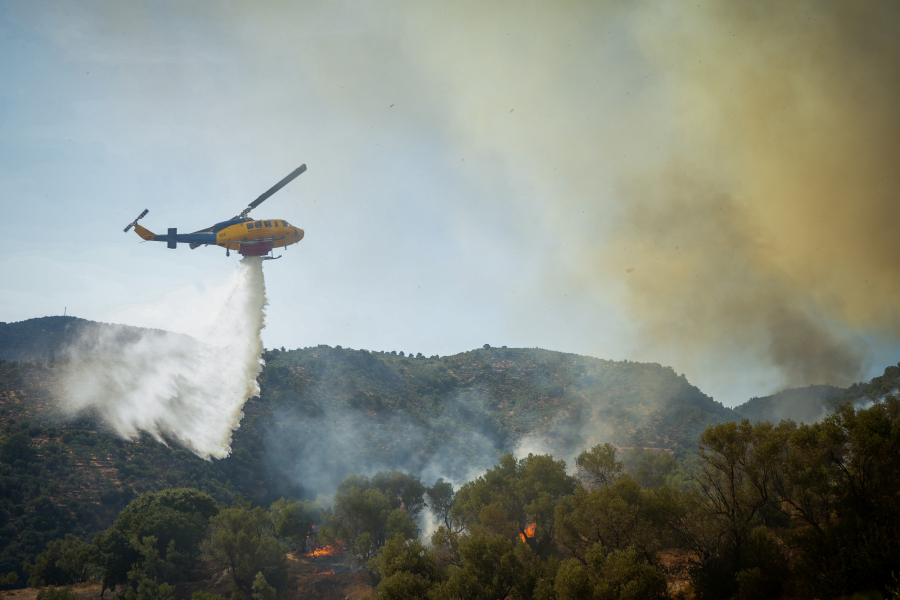

Three firefighters died Wednesday as wildfires burned across several regions of Greece, forcing evacuations in Crete and on the island of Lesbos and putting emergency services under pressure amid strong winds and high temperatures.
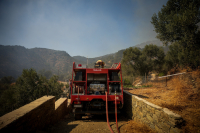
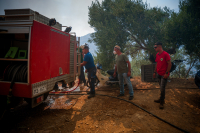
Two firefighters,ages 25 and 58, were killed while responding to a major blaze near Krya Vrysi in southern Rethymno, on the island of Crete. The men, one a seasonal firefighter and the other serving under a five-year contract, had been traveling in a firefighting pickup truck from the fire front toward the village of Melambes. Authorities are investigating the circumstances surrounding their deaths. Initial reports indicated that the vehicle became trapped as conditions deteriorated rapidly.
The firefighters are believed to have left the truck amid dense smoke, limited visibility and fast-moving flames. They were later found dead outside the vehicle. Two civilians were also injured in the Rethymno fire, according to local officials. A third firefighter, the 30-year-old deputy commander of the fire service in Gytheio, a coastal town in the southern Peloponnese, died during a separate firefighting operation near Ageranos, in the Laconia region.
ΔΙΑΒΑΣΤΕ ΕΠΙΣΗΣ
The Greek fire service said he was found unconscious outside the perimeter of the blaze and was taken by ambulance to a hospital in Sparta, where he was pronounced dead. Preliminary information suggested that his death was caused by a medical condition rather than direct exposure to the fire.
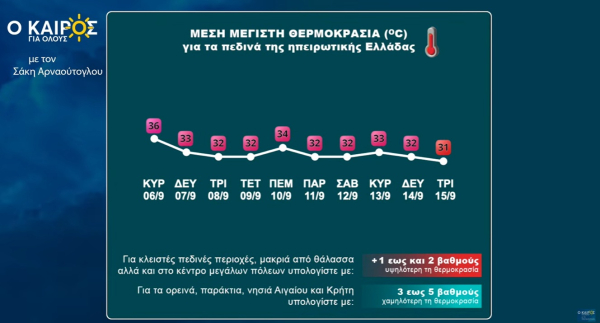
Thethree deaths came as firefighters confronted several major fronts simultaneously across the country, including in Laconia, Crete and Lesbos. Strong winds, high temperatures and difficult terrain complicated efforts to contain the flames and increased the risk of sudden shifts in fire direction.
In southern Crete, authorities ordered the evacuation of Agia Galini, a seaside resort popular with international visitors, after Greece’s 112 emergency-alert system instructed residents and tourists to leave the area. A local hotelier and member of the Rethymno Hoteliers Association estimated that about 2,000 tourists were in the resort at the time.
Local hotel operators began assessing room availability in nearby areas in case evacuees needed temporary accommodation. Authorities also carried out evacuations by sea. The Shipping Ministry said 29 people were removed from the coastal area of Agios Pavlos by coast-guard and private vessels as flames approached the area.
Elsewhere on Crete,another fire broke out near Agia Triada in the Sitia region, prompting the deployment of firefighters, ground teams, vehicles and a helicopter. On Lesbos, in the northeastern Aegean Sea, a wildfire near Plomari led to the precautionary evacuation of parts of the town. Residents were directed toward the coast and the nearby area of Agios Isidoros as fire spread through olive-growing land and pine forest.
About 50 firefighters, specialized ground crews, volunteers, firefighting vehicles, municipal water trucks, aircraft and helicopters were deployed. By early evening, one part of the fire had been contained, while another front remained active but had weakened. Strong northerly winds continued to raise concerns about flare-ups. The deaths in Crete prompted statements of condolence from senior Greek officials, while also renewing attention on the role of seasonal and fixed-term firefighters, who routinely serve alongside permanent crews during the country’s summer fire season.
Greece has faced increasingly destructive wildfires in recent years, often during periods of extreme heat, dry vegetation and strong winds. The latest fires again highlighted the challenge of responding to several emergencies at once across mountainous regions, islands and heavily visited tourist areas.