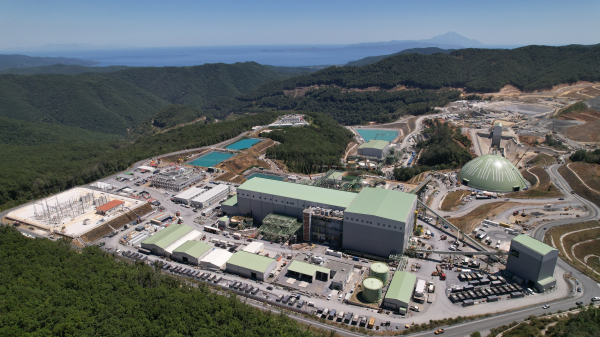

Two developments on Wednesday brought Metlen Energy & Metals’ strategic investment in gallium into sharper focus, highlighting both the financial backing behind the project and its potential commercial value.
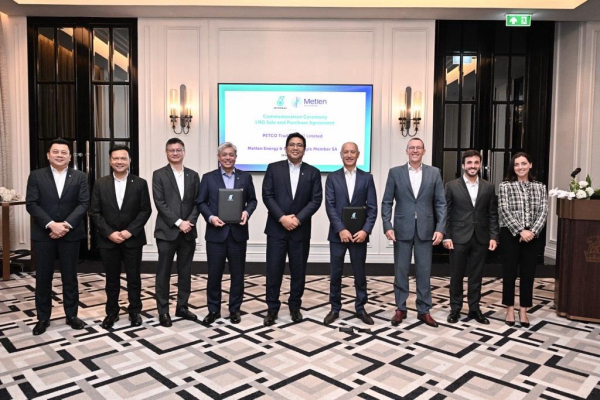
On the same day that Metlen announced a long-term agreement to sell roughly 25% of the annual gallium output from a new production facility planned in Greece to a leading U.S. technology company, the Greek government formally published a decision setting out a support package worth about €117.7 million for the investment.
The decision designates the project as an “Emblematic Investment of Exceptional Importance,” a category under Greece’s investment framework reserved for projects considered strategically significant and eligible for a combination of European Union and national funding.
ΔΙΑΒΑΣΤΕ ΕΠΙΣΗΣ


The overall support package amounts to €117.67 million. Of that, €91.51 million will come in the form of grants, while another €26.16 million will be provided through tax exemptions. Funding will be drawn from several sources, including the EU-backed Recovery and Resilience Facility, Greece’s Modernisation Fund and a development program administered by the Ministry of Development. The tax incentives will translate into foregone government revenue.
The support will be disbursed over several years. In 2026, Metlen is due to receive €16.13 million from the Recovery and Resilience Facility and €20.6 million from the Modernisation Fund. A further €30.91 million from the Modernisation Fund is scheduled for 2027, followed by €23.87 million in 2028 from the Ministry of Development’s sectoral program.
The tax benefit is expected to be spread across 2029 through 2031, reducing government revenue by an estimated €8.72 million annually. Metlen has also secured €90 million in financing for the project from the European Investment Bank, the EU’s long-term lending institution. The Bigger Question: How Much Can Gallium Earn? Public financing, however, is only one part of the equation. The other—and potentially more consequential for investors—is the price Metlen can command for its gallium and the earnings the business could ultimately generate.
That makes the agreement covering roughly one-quarter of the planned annual production particularly significant. Neither the pricing nor the other commercial terms have been disclosed.
Gallium was trading at around $274 a kilogram on Tuesday, providing a rough market benchmark. That price, however, isn’t directly comparable with the economics of a long-term supply contract, where pricing formulas can reflect volumes, purity, security of supply and other commercial considerations.
Metlen plans to produce50 metric tons of gallium annually. Against estimated global production of roughly 750 tons a year, the Greek facility alone could account for about 6.7% of current worldwide output—a substantial position in what remains a small but strategically important market. The plant is designed to produce gallium with a purity of 99.99%. The metal is an important input in semiconductor technologies and has applications spanning telecommunications, solar power, artificial intelligence infrastructure and defense.
Its strategic importance has increased as Western governments and companies seek to reduce their exposure to supply chains dominated by China, which accounts for the overwhelming majority of global primary gallium production. A sizeable new source of supply inside the European Union could therefore carry value beyond the metal’s spot-market price. That is what makes the undisclosed pricing of Metlen’s first major supply agreement so important.
The key question is the price at which Metlen has effectively locked in the first 25% of its output - and how that compares with the assumptions underpinning the original investment case. The answer matters even more because roughly three-quarters of the planned production remains available for future contracts. If Metlen can secure those volumes at prices above those assumed when the project was conceived, gallium could turn into a considerably larger earnings contributor than initially expected.