
The Greek government is drawing up a sweeping four-year package of tax cuts and income support measures as it seeks to sustain economic growth and ease pressure on households grappling with high living costs and a deepening housing shortage.
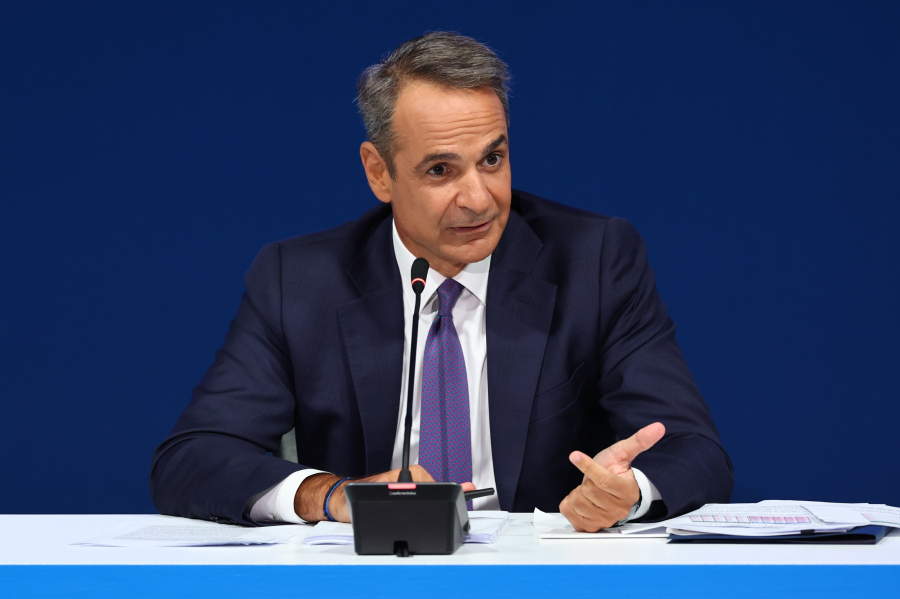
The measures, which are expected to be unveiled by Prime Minister Kyriakos Mitsotakis at the annual Thessaloniki International Fair in September, are intended to form the backbone of Greece's economic policy through the end of the decade and could become a central plank of the government's campaign ahead of the next national election.
The package under consideration includes tax relief for businesses and self-employed professionals, incentives for the housing market, and targeted support for workers and pensioners. Officials are also weighing changes to property taxation and the taxation of rental income in an effort to increase housing supply and curb tax evasion.
The government's economic team has estimated that it will have roughly €1.15 billion ($1.3 billion) in fiscal space available for next year's measures. About €1 billion stems from stronger-than-expected primary budget surpluses in 2025, while another €150 million comes from contingency funds that had been set aside in case geopolitical tensions in the Middle East required additional support measures.
Athens has already implemented a series of tax reductions this year and deployed two support packages worth €800 million to help households cope with rising food and energy prices. The new initiative would extend that effort over a four-year horizon, combining tax reductions with measures aimed at boosting disposable income.
ΔΙΑΒΑΣΤΕ ΕΠΙΣΗΣ


At the center of the government's plans are permanent tax cuts for companies and self-employed workers. One of the flagship proposals would reduce advance income tax payments, a longstanding feature of the Greek tax system that requires businesses and professionals to prepay a substantial portion of their expected tax liabilities.
Currently, companies are required to prepay 80% of their anticipated tax bill, while self-employed individuals pay 55%. Finance Ministry officials argue that the need for such high prepayments has diminished as digital tax-monitoring tools improve and efforts to combat tax evasion gain traction. Under scenarios being discussed, the prepayment rate for self-employed professionals could fall to 40% or even lower, while the rate for companies could be reduced to below 60%.
The government is also reviewing its controversial "presumptive income" system for self-employed workers, under which taxes are assessed based on estimated earnings rather than declared income. Officials are divided between those who favor a broad overhaul to provide meaningful relief to professionals and small businesses and those who prefer targeted adjustments that would preserve the additional revenue generated by the system.
Government officials say a complete abolition of the presumptive income regime is unlikely at this stage, though a redesign is considered necessary. Authorities are also considering the gradual elimination of an annual business levy of €1,000 imposed on many self-employed workers.
Housing has emerged as another priority. The government is examining tax cuts on rental income, hoping to encourage landlords to declare more of their earnings and to return properties to the long-term rental market, where supply has been squeezed by the growth of short-term tourist rentals and rising demand. One proposal would reduce the current 15% tax rate on annual rental income of up to €12,000.
Several measures already incorporated into the government's medium-term planning are also expected to be included in the Thessaloniki package. They include another increase in the minimum wage, which could exceed €950 a month, higher pay for public-sector employees linked to the minimum-wage adjustment, the elimination of a property tax on primary residences in villages with fewer than 1,500 inhabitants, and a further 0.5 percentage-point reduction in social security contributions.
For pensioners, the government appears to be ruling out the politically sensitive restoration of a 13th monthly pension payment and a similar extra salary for public-sector workers, measures that officials estimate would cost nearly €4 billion annually.
Instead, Athens is considering boosting an annual support payment made each November to pensioners. One proposal under review would double the payment from €300 to €600 while avoiding a significant burden on public finances.
The first assessment of the package is expected by the end of July, with the core measures likely to be finalized in early August. The complete plan will then be submitted to Prime Minister Mitsotakis before he delivers what is expected to be one of the most consequential economic policy speeches of his current term.