
In Attica, the region that includes Athens and is home to roughly a third of Greece’s population, researchers counted 150 days in which heat-wave and drought conditions occurred simultaneously between 2001 and 2023. That compares with 45 such days during the 1971-2000 period, according to data analyzed by the National and Kapodistrian University of Athens.
The increase is significant because extreme heat and drought reinforce each other. Prolonged high temperatures accelerate evaporation and strip moisture from soil and vegetation. Forests become drier, reservoirs and rivers come under pressure, and agricultural land requires more water at precisely the time when supplies are becoming harder to replenish.
For Greece, the result is a climate increasingly defined not simply by hotter summers, but by overlapping stresses that can amplify the economic and environmental damage caused by individual extreme events.
ΔΙΑΒΑΣΤΕ ΕΠΙΣΗΣ
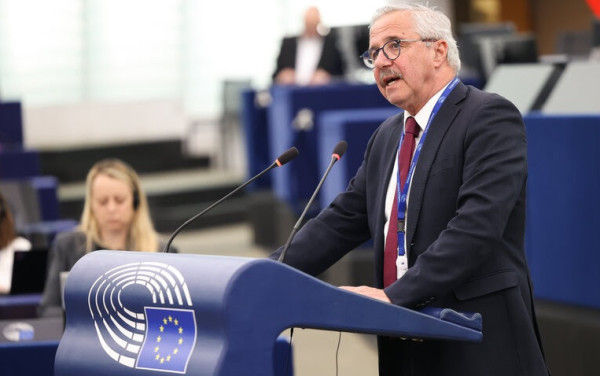
“The Mediterranean—and therefore Greece—has experienced more frequent, stronger and longer-lasting heat waves and drier summers over the past 30 years,” said Konstantinos Kartalis, a professor of environmental and climate physics at the University of Athens.
Rainfall was higher in many parts of Greece in 2026, but that doesn’t alter the longer-term trajectory, Kartalis said. The trend is particularly concerning from central Greece southward, an area that includes Athens, much of the country’s agricultural production and some of its most fire-prone landscapes.
The shift is especially consequential for wildfires, a recurring summer threat in Greece. Heat waves and drought don’t themselves ignite forest fires, but they can make fires that do start substantially more destructive.
When vegetation loses moisture after sustained heat and little rain, it behaves increasingly like fuel. Fires can spread faster, burn with greater intensity and become harder for firefighters to contain.
That relationship has become increasingly important for Greece after a succession of destructive fire seasons. The country’s mountainous terrain, extensive forests and Mediterranean vegetation already make firefighting difficult. Hotter and drier conditions add another layer of risk.
The pressures extend well beyond Greece.
Europe is warming faster than the global average, and Kartalis points to changes in atmospheric circulation and declining snow cover as contributing factors. With less snow on the ground, less solar radiation is reflected back into the atmosphere and more heat is absorbed.
The decline in snowfall also affects water availability farther downstream. Reduced Alpine snowfall during the previous winter, combined with prolonged drought and increased evaporation during periods of extreme heat, has contributed to lower water reserves across parts of Europe.
That can quickly turn a climate problem into an economic one.
Lower reservoir levels constrain hydroelectric generation. Thermal and nuclear power stations can also face difficulties when water needed for cooling becomes scarce or too warm. During severe droughts, some European plants have had to temporarily reduce output or shut operations.
Falling river levels create another vulnerability. Europe relies on major waterways for moving commodities and industrial goods, meaning unusually low water levels can restrict shipping capacity and raise transportation costs.
Agriculture faces similar pressures. Persistent drought can reduce crop yields while increasing irrigation requirements, potentially affecting food supplies and prices.
Scientists increasingly describe such interactions as a “polycrisis”: one shock intensifies another, creating consequences across sectors that would otherwise appear only loosely connected. A drought can become an electricity problem, a transportation problem and an agricultural problem at the same time.
Greece provides a particularly clear illustration of that dynamic because its economy and geography leave it exposed on several fronts.
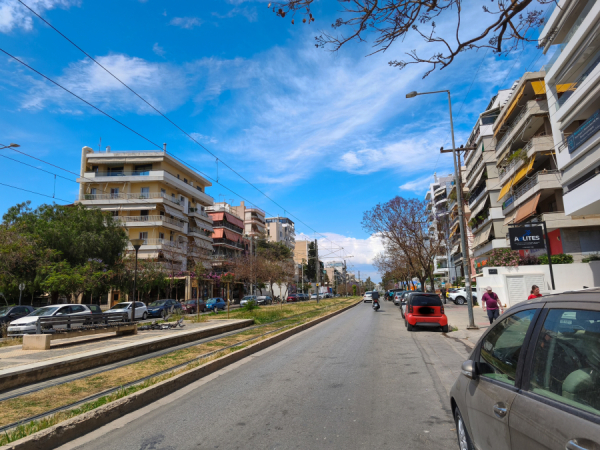
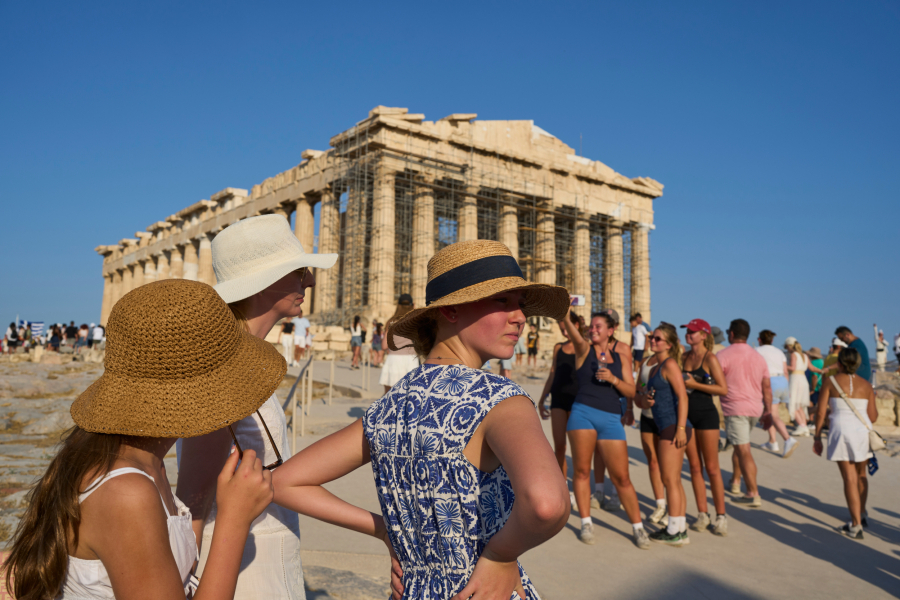
The country depends heavily on summer tourism, while its cities—including the densely built Athens metropolitan area—must cope with increasingly severe heat. Agriculture remains important to many regional economies, and Greece’s forests and islands are especially vulnerable to drought and wildfire.
The transformation underway in Attica is therefore more than a meteorological curiosity. The increase from 45 simultaneous heat-and-drought days in 1971-2000 to 150 in 2001-2023 suggests that the baseline conditions confronting policymakers, businesses and emergency services are changing.
That has implications for everything from insurance and electricity demand to water management, construction and urban planning.
Adaptation will increasingly require Greek cities to expand vegetation and shade, agricultural regions to manage increasingly scarce water more efficiently and planning authorities to incorporate future climate conditions into decisions about where and how communities are built, Kartalis said.
Those measures can reduce the damage, but they don’t address the underlying warming trend.
Climate scientists expect extreme events to become more frequent and more intense as temperatures continue to rise. Kartalis argues that adaptation therefore needs to be accompanied by efforts to curb the warming itself, principally through the gradual elimination of fossil fuels including coal, oil and natural gas.
For decades, Greece’s hot, dry summers have been regarded as a defining feature of its Mediterranean climate. The numbers emerging from Attica suggest something more consequential is happening.
The question is increasingly not whether Greece will continue to have hot summers, but how its economy, cities and natural environment will function as the combination of extreme heat and water scarcity becomes less exceptional—and more characteristic of the climate itself.