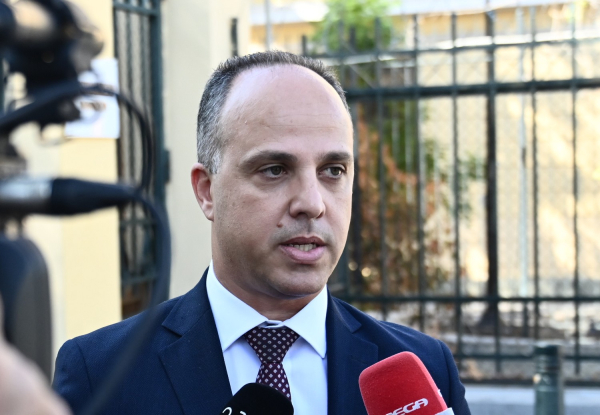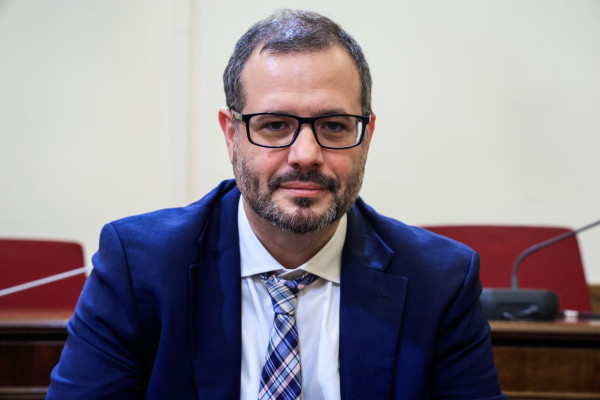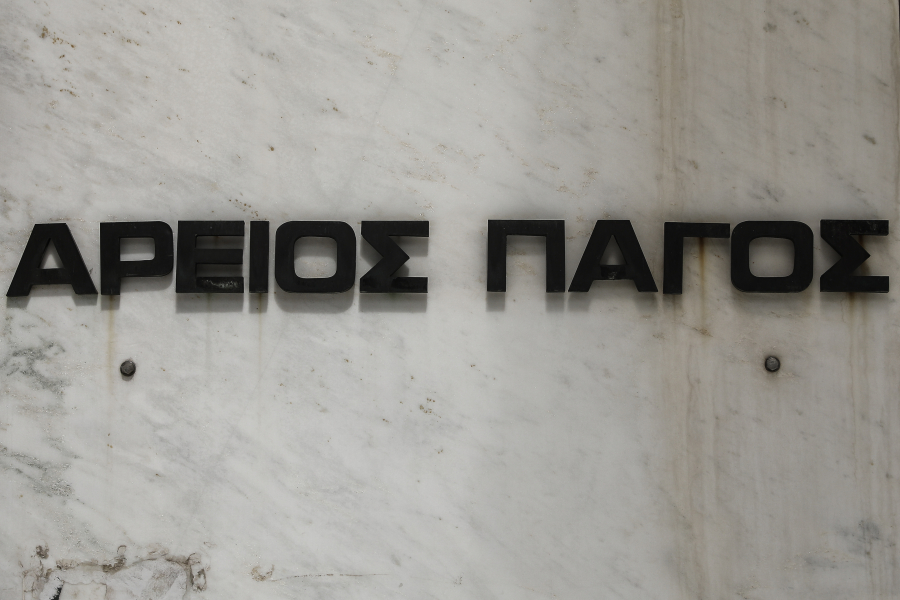

For the third time, Greece's highest prosecutorial authority has declined to reopen the country's Predator spyware investigation, reinforcing accusations from surveillance victims and opposition parties that politically sensitive aspects of the scandal remain beyond meaningful judicial scrutiny. Supreme Court Prosecutor Evangelos Bakelas rejected four applications seeking to revive the archived investigation, including requests linked to former Prime Minister Antonis Samaras, former Infrastructure Minister Christos Spirtzis and lawyer Zacharias Kesses, who represents investigative journalist Thanasis Koukakis and other surveillance targets. Bakelas concluded that the applications either failed to present genuinely new evidence or were procedurally incapable of justifying further investigation.
The ruling extends a pattern that has become one of the defining features of Greece's handling of the Predator affair. While criminal proceedings have produced convictions of private individuals connected to the spyware network, high court prosecutors have repeatedly stopped short of pursuing the broader questions surrounding who acquired, deployed and ultimately benefited from the surveillance technology.
Those questions have carried particular political weight because the scandal has shadowed Prime Minister Kyriakos Mitsotakis's government since it emerged in 2022.
The affair began with revelations that politicians, journalists and other public figures had been targeted with Predator, sophisticated spyware capable of taking complete control of a mobile phone. Some of the same individuals were also found to have been placed under lawful surveillance by Greece's National Intelligence Service, known as EYP, which Mr. Mitsotakis brought under the direct authority of the prime minister's office shortly after taking office.
The government has consistently denied using Predator. Yet the central question that has hung over the case—whether the illegal spyware operation intersected with the state intelligence apparatus, and if so at what level—has never been conclusively answered.
One of the most consequential requests rejected by Bakelas involved Tal Dilian, owner of Intellexa, the company at the center of the Predator spyware network. Dilian has publicly stated that Intellexa sold surveillance technology to state authorities, making his testimony potentially significant in determining who purchased and deployed the spyware in Greece.
Bakelas declined to summon him, arguing that because Dilian could himself face criminal liability, Greek criminal procedure prevented him from being examined as a witness. Dilian, together with Sara Hamou, Felix Bitzios and Giannis Lavranos, was convicted at first instance and collectively sentenced to 126 years in prison for offenses connected to the Predator affair. All four have appealed, meaning the convictions remain subject to appellate review.
The prosecutor also dismissed requests submitted by Samaras and Spirtzis. Samaras, himself a former conservative prime minister from the governing New Democracy party, sought a broader inquiry into an alleged attempt to compromise his telephone. Bakelas ruled that the material presented did not materially alter evidence already assessed during earlier prosecutorial reviews.
Spirtzis submitted material extracted from his mobile phone, including messages he said contained sensitive or classified information. Bakelas concluded that the evidence had already surfaced during the criminal proceedings against the four businessmen and therefore did not justify reopening the investigation.
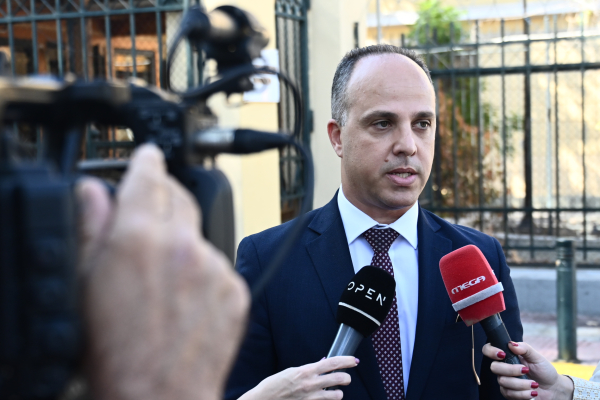
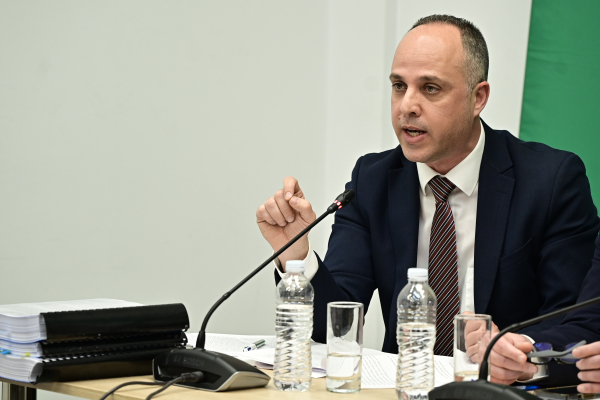
For Kesses, the repeated refusals point to something more fundamental than prosecutorial restraint. He argues that investigators have consistently relied on procedural objections while declining to pursue basic investigative steps that could establish who commissioned, financed or ultimately directed the Predator operation.
His criticism is unusually direct. Kesses says prosecutors failed to seek additional witness testimony, request potentially relevant evidence from abroad or question several individuals whose roles emerged during the criminal trial. He has described the latest rulings as "interpretive acrobatics" intended to prevent substantive investigation and as another chapter in what he characterizes as an ongoing cover-up. Those remain allegations rather than judicial findings. But each decision not to investigate has left intact the questions that gave rise to them.
One of Bakelas's principal legal arguments illustrates the broader dispute. The prosecutor reasoned that individuals who might eventually become suspects should not be questioned as witnesses because any testimony they gave could later prove inadmissible. Critics argue that this creates a circular problem: potential suspects are not questioned because they could become implicated, while the evidence that might establish whether they are implicated is never collected.
Opposition parties quickly seized on the latest decision. The center-left Pasok party said the repeated archiving of the case deepened rather than dispelled public suspicion, arguing that the identities of Predator's operators, financiers and clients remain unresolved. Other opposition parties went further, accusing the government and senior judicial officials of working to contain the scandal.
The government rejects those accusations, and Greece's judiciary operates under constitutional guarantees of independence. Yet the country's institutional framework has inevitably become part of the debate.
Unlike many judicial systems where the executive has a more limited role in appointing senior judges, Greece's cabinet selects the leadership of the country's highest courts and prosecutorial bodies from among senior members of the judiciary. The process is constitutionally established, but the government's decisive role in those appointments has long fueled concerns about the appearance of institutional dependence whenever politically consequential cases reach the highest levels of the judicial system.
That institutional design does not establish that prosecutors act on government instructions. But when the same government facing scrutiny over a surveillance scandal also participates in appointing the officials ultimately responsible for deciding whether that scandal merits further investigation, the burden of demonstrating judicial independence inevitably becomes heavier.
Four years after the Predator affair first erupted, it has produced convictions of private actors, resignations at the highest levels of Greece's intelligence service and the prime minister's office, repeated parliamentary confrontations and extensive litigation. What it has not produced is a definitive judicial account of who ultimately stood behind the surveillance of some of the country's most prominent political figures and journalists.
The case is not permanently closed. New evidence could compel prosecutors to revisit it, while the appeal of the four convicted businessmen is scheduled to be heard in December.
For now, however, the latest ruling ensures that the most politically consequential dimension of Greece's biggest surveillance scandal remains outside an active criminal investigation.
For Mr. Mitsotakis's government, that removes an immediate legal challenge. For Greece's judiciary, it presents a more enduring institutional test. With each decision to leave the file closed, the focus shifts further from what happened during the Predator operation to whether the institutions charged with uncovering the truth are prepared to pursue it.