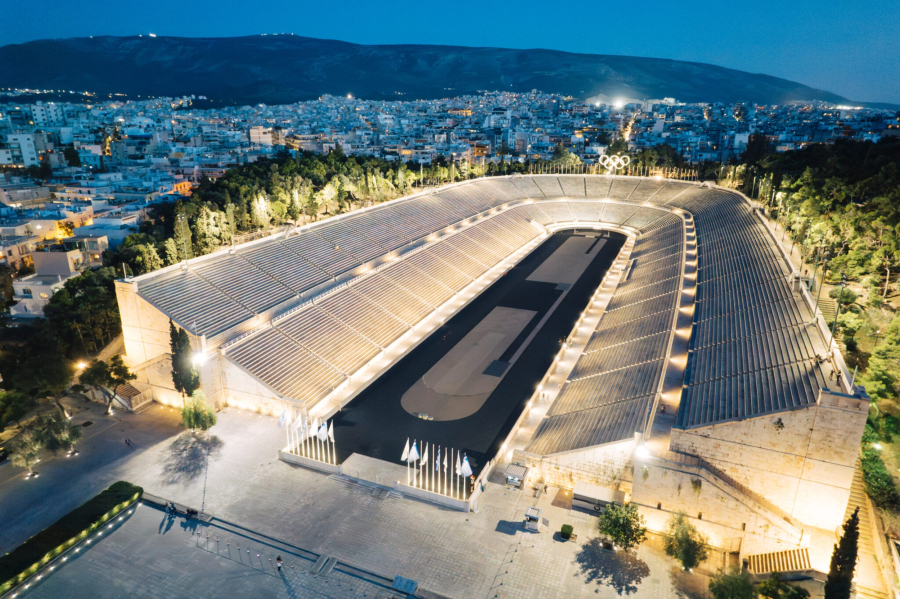

The marble stands of the Panathenaic Stadium, the venue that hosted the first modern Olympic Games in 1896, are set to undergo their first organized cleaning in roughly 120 years, in a privately funded conservation project backed by Greek shipping and media businessman Evangelos Marinakis.
Work is scheduled to begin today, Monday, August 10, as part of a broader effort by the Hellenic Olympic Committee to preserve and upgrade one of Greece’s most recognizable sporting monuments.
Known locally as the Kallimarmaro, or “beautifully marbled,” the horseshoe-shaped stadium in central Athens is distinguished by its extensive use of white Pentelic marble, the same stone associated with many of the city’s classical monuments. The stadium occupies a site used for athletic contests in antiquity and was substantially reconstructed in marble in the late 19th century ahead of the revival of the Olympic Games.
ΔΙΑΒΑΣΤΕ ΕΠΙΣΗΣ



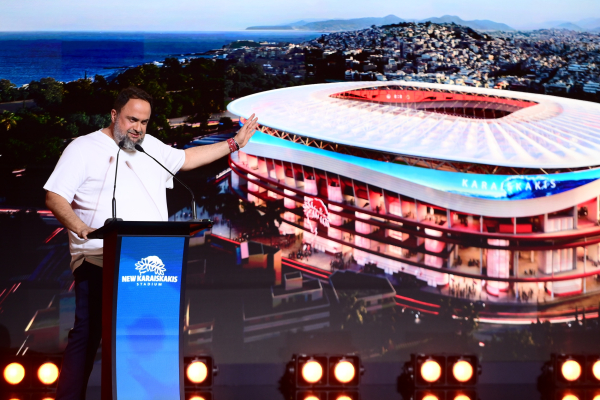
The conservation project is being supported by Marinakis through his shipping company, Capital Maritime & Trading Corp. Marinakis owns the shipping group as well as a media conglomerate and stakes in several European soccer clubs.
The project is intended to remove accumulated surface deposits and restore more of the natural appearance of the Pentelic marble while preserving the historic fabric of the stadium. Organizers say specialized conservation techniques will be used to avoid damaging the stone or altering the monument’s character.
The work will be carried out under the scientific supervision of architect Manolis Korres, an internationally recognized specialist in the conservation of ancient Greek monuments and an official adviser to the Hellenic Olympic Committee. Accredited conservators working with guidance from Greece’s Culture Ministry will also participate.
The cleaning is significant in part because of the unusually long interval since such work was last undertaken on this scale. According to the Hellenic Olympic Committee, the stadium’s marble surfaces haven’t undergone an organized cleaning of this kind for approximately 120 years.
The Panathenaic Stadium occupies an unusual place at the intersection of ancient Greek history and the modern international Olympic movement. An ancient stadium stood at the site, but the structure familiar to visitors today largely dates from the reconstruction undertaken before the inaugural modern Olympics in Athens in 1896.
It subsequently became one of the enduring architectural symbols of the Games. The stadium was used again during the 2004 Athens Olympics and remains closely associated with the Olympic flame ceremony and other major sporting and ceremonial events.
The marble cleaning forms part of a wider program by the Hellenic Olympic Committee to maintain and enhance the stadium, which remains both a working venue and one of Athens’ most visited landmarks.
For Marinakis, the sponsorship adds the preservation of a prominent national monument to a business profile spanning shipping, media and professional sports. His interests include Capital Maritime & Trading Corp., media assets in Greece and ownership interests in soccer clubs.
The conservation effort also reflects the increasing role of private funding in maintaining prominent cultural and sporting assets at a time when the cost of preserving historic structures can extend well beyond routine maintenance.
At the Panathenaic Stadium, the immediate objective is considerably more tangible: bringing the white Pentelic marble closer to its original appearance without erasing the traces of age that are part of the monument’s history.