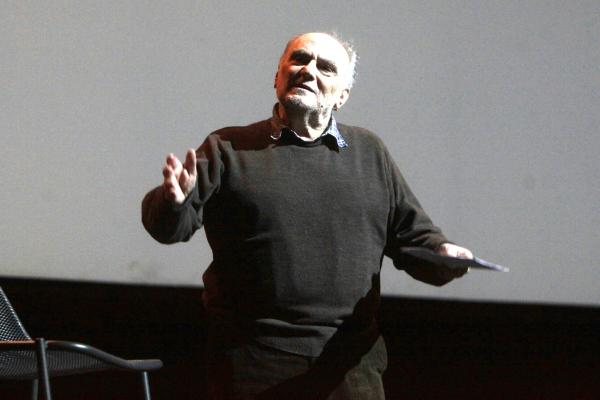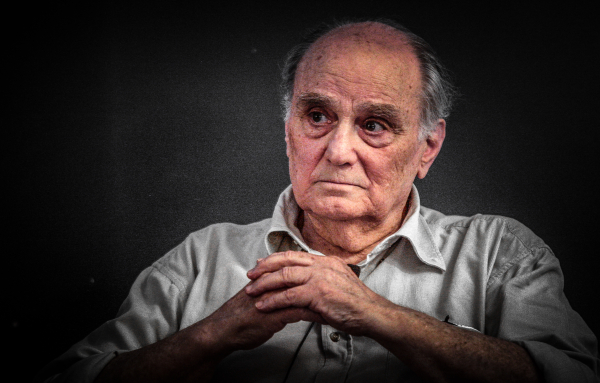
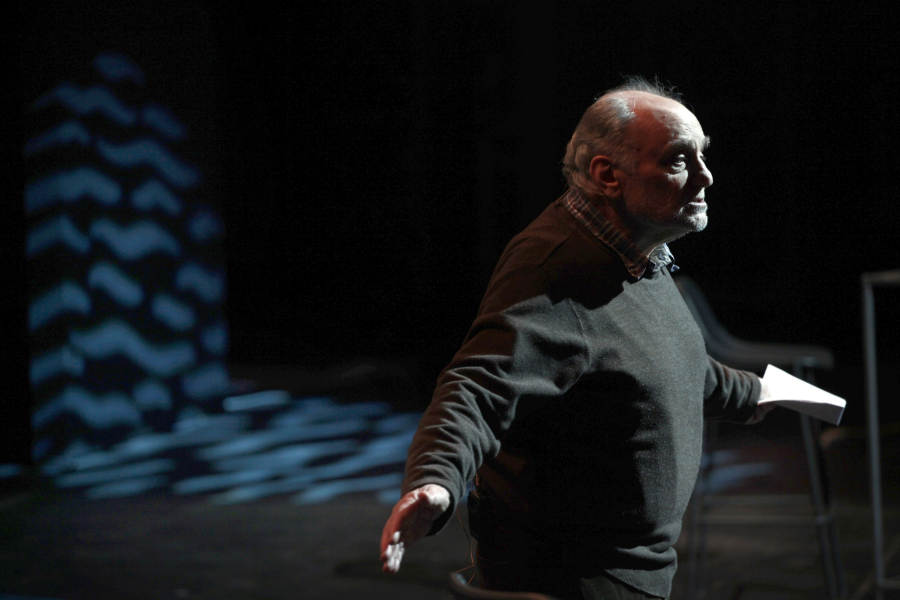

Stelios Ramfos, a prolific Greek philosopher and author whose work examined the tensions between Greece’s classical inheritance, Orthodox Christian tradition and modern European identity, has died at the age of 87.
Ramfos had been hospitalized at a private clinic in Athens in recent weeks. Over a career spanning more than half a century, he wrote more than 30 books and became a prominent, and at times provocative, presence in Greece’s intellectual and public life.
Born in Athens in 1939, Ramfos initially studied law at the University of Athens. In 1965, before completing his law degree, he moved to Paris to study philosophy at what was then the University of Vincennes, later incorporated into Paris 8 University. He taught philosophy there from 1969 until 1974, a period when French universities were at the center of intense debates over Marxism, structuralism and the political upheavals that followed the protests of May 1968.
ΔΙΑΒΑΣΤΕ ΕΠΙΣΗΣ


He returned to Greece in 1975, shortly after the collapse of the military dictatorship that had ruled the country for seven years. From then on, Ramfos concentrated on writing and teaching while becoming increasingly involved in public debate. He appeared frequently in Greek newspapers and on television, delivered lectures and contributed essays to magazines. He also taught at the Goulandris-Horn Foundation and later at the B. & M. Theocharakis Foundation in Athens.
From Plato and Aristotle to Christian asceticism
Ramfos occupied an unusual place in Greek intellectual life. His interests ranged from Plato and Aristotle to Christian asceticism, Marxism and the psychological foundations of contemporary Greek society. Much of his work revolved around a question that has preoccupied Greek thinkers since the creation of the modern state in the 19th century: how a country shaped by the legacies of classical antiquity and Eastern Orthodox Christianity could reconcile those traditions with the institutions and assumptions of modern Europe.
Among his studies were works on Plato, Aristotle and Sophocles’ “Oedipus Rex,” as well as writings on the early Christian desert fathers. His bibliography also included collections of essays addressing Greek culture, politics and identity.
In his later work, Ramfos increasingly turned his attention to what he regarded as the deeper cultural and psychological forces shaping modern Greece. He examined collective identity, the country’s relationship with the West and the persistent role of political and social division in Greek history. Those concerns were central to “The Greece of Dreams,” a study of the country’s collective imagination that prompted a wide-ranging interview with the Greek newspaper Ta Nea in 2021. The book appeared as Greece marked 200 years since the uprising against Ottoman rule that led to the establishment of an independent Greek state.
Ramfos argued at the time that anniversaries should not merely celebrate national triumphs but also provide an opportunity to examine failures. He pointed to the Greek Civil Wars during the struggle for independence and the political divisions surrounding the country’s disastrous 1922 campaign in Asia Minor, which ended with the defeat of Greek forces in Anatolia and a vast population exchange between Greece and Turkey.
For Ramfos, the recurring pattern of internal conflict was not simply a matter for historians. It was a problem that continued to shape the country’s political culture. “A major and important chapter for the future is to rethink why we are constantly fighting among ourselves,” he said in the 2021 interview, observing that modern Greek history had repeatedly been marked by division, fragmentation and civil conflict.
He also treated the Covid-19 pandemic as part of a broader challenge to assumptions about human control over nature. Describing the pandemic as a kind of war, he connected the emergence of new threats with environmental and climatic change and argued that such crises should encourage societies to reconsider how they live and behave.
Ramfos’ intellectual trajectory resisted easy political classification. His writing moved across philosophy, theology, history and cultural criticism, and his interpretations of Greek society often challenged established ideological camps. That made him an influential voice in a country where arguments about national identity, religion, Europe and the meaning of the past remain closely intertwined with contemporary politics.
His death removes one of the most recognizable figures from the generation of Greek intellectuals whose careers were shaped by postwar Europe, the upheavals of the 1960s and Greece’s transition from dictatorship to democracy.
For Ramfos, Greece’s past was rarely something to be admired from a safe historical distance. It was a living inheritance whose contradictions, he argued, had to be understood if the country was to understand itself.