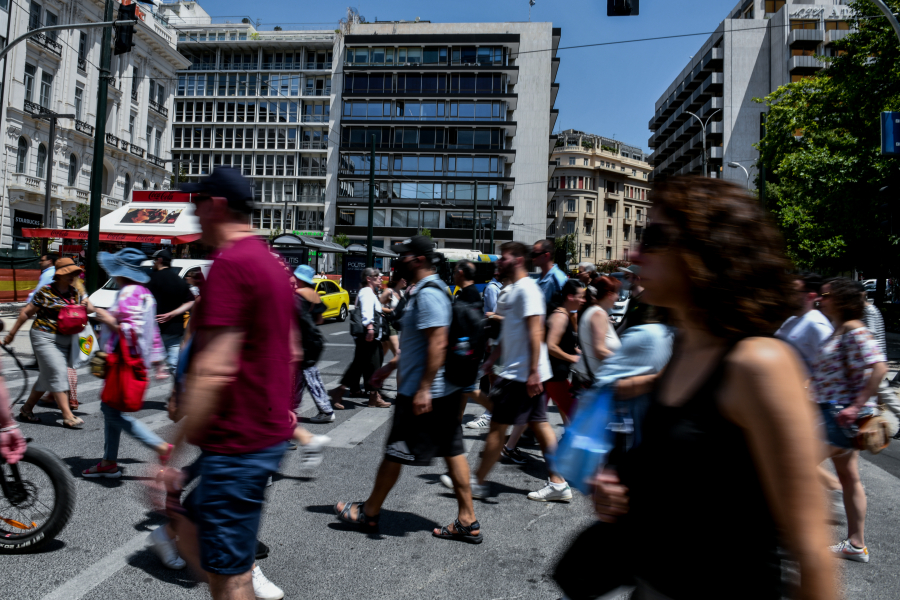

The announcements, however, will come against a considerably less upbeat backdrop for Greek households.
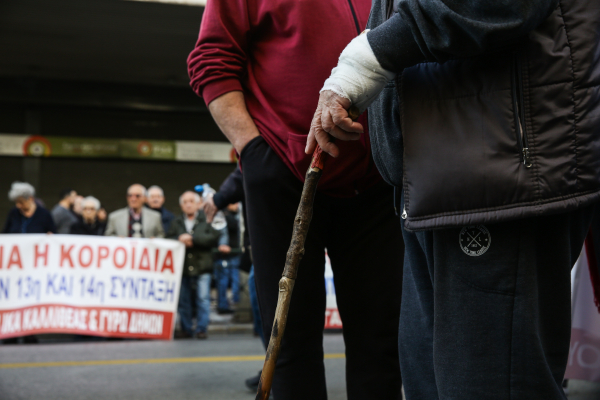
Nearly six in 10 households expect their finances to deteriorate over the next 12 months, while seven in 10 consumers anticipate a worsening of the country’s overall economic situation. The gap between the government’s plans for additional relief and voters’ assessment of their own finances is likely to shape the political debate surrounding this year’s fair.
The Thessaloniki International Fair, known in Greece by its Greek initials, TIF, has traditionally served as a platform for governments to announce their economic priorities for the year ahead. This time, officials are working on a longer horizon, with measures intended to extend over four years and with particular attention focused on 2027.
Based on current estimates, the government has about €1.3 billion in fiscal room for new measures that year. Officials are hoping that additional capacity could emerge from the European Union’s escape-clause provisions and from the trajectory of net government expenditure.
Combined with measures worth roughly €2 billion that have already been legislated, the overall value of interventions taking effect next year could approach €4 billion. That figure is likely to feature prominently in the government’s presentation, although it shouldn’t be confused with the amount of new spending or tax relief that will actually be announced in Thessaloniki.
A significant share of the package is already in the pipeline.
Measures already approved include an estimated €400 million reduction in the tax burden on self-employed workers through a new income-tax scale, as well as a further reduction in social-security contributions at an estimated budgetary cost of €244 million.
Additional pension spending is projected at between €660 million and €760 million, while increases in public-sector wages are expected to cost the budget about €310 million. Tax relief of at least €90 million is also planned for taxpayers earning rental income.
The greater political significance, however, lies in measures that have yet to be finalized. Prime Minister Kyriakos Mitsotakis’s government is expected to present those initiatives as the next stage of its economic and social agenda.
Among the options under discussion are targeted tax cuts for small and midsize businesses and the self-employed, further measures aimed at easing Greece’s housing pressures, and additional support for pensioners.
The question is whether those measures will be large enough—and sufficiently targeted—to change the financial reality confronting households that continue to struggle with the cost of living.
That tension is particularly important because the government’s economic narrative and consumers’ perceptions increasingly appear to be operating on different tracks. Athens has fiscal room to discuss tax cuts and new benefits. Many households, meanwhile, remain focused on the erosion of their purchasing power and are deeply cautious about what comes next.
Savings have also entered the government’s policy discussions. Officials are examining incentives that would encourage households to place more of their money into long-term investments, part of a broader effort to increase domestic savings and channel capital toward productive uses.
But the proposal exposes another divide in the Greek economy. For a substantial part of the population, the immediate question isn’t where to invest surplus income. It is whether there is any money left after rent or mortgage payments, groceries, energy bills and other everyday expenses.
That makes recent proposals from Greece’s Foundation for Economic and Industrial Research, known as IOBE, particularly noteworthy. The Athens-based research institute has proposed two voluntary long-term savings programs supported by tax incentives, including investment accounts designed for households and children.
The objective is to steer a greater share of private savings toward long-term investments and Greece’s domestic capital markets, potentially strengthening the pool of locally available investment capital.
Economically, the idea fits with Greece’s effort to move beyond policies centered on short-term consumption and toward deeper domestic investment. Politically, however, the timing is more complicated. Incentives to invest are likely to have limited resonance among households whose overriding concern is making their income last until the end of the month.