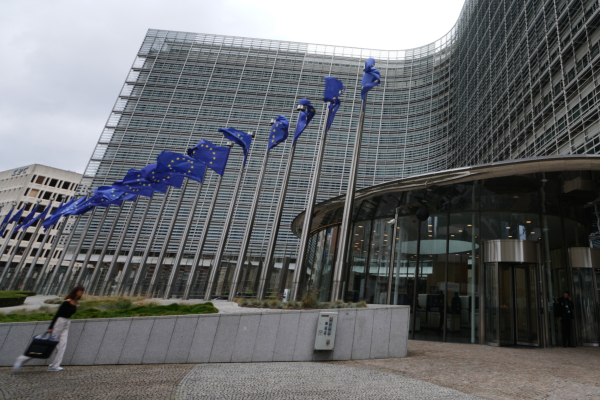


Η ολοκλήρωση της υποβολής των αιτήσεων σηματοδοτεί την έναρξη της πιο κρίσιμης φάσης: της προετοιμασίας. Ο διαγωνισμός EPSO/AD/427/26 δεν αναζητά απλώς υπαλλήλους, αλλά στελέχη που αντιλαμβάνονται τη στρατηγική σημασία της Ένωσης.
Το EU Knowledge Test δεν είναι μια απλή εξέταση απομνημόνευσης, αλλά μια δοκιμασία που απαιτεί συνδυαστική σκέψη πάνω στον τρόπο που η ΕΕ επηρεάζει την καθημερινότητα 450 εκατομμυρίων πολιτών. Η δοκιμασία γνώσεων για την ΕΕ αποτελεί ακρογωνιαίο λίθο αυτής της διαδικασίας επιλογής, καθώς έχει σχεδιαστεί για να εντοπίσει τους υποψηφίους που κατανοούν πραγματικά τον παλμό της Ευρωπαϊκής Ένωσης.
Τι είναι η δοκιμασία γνώσεων για την ΕΕ;
Πρόκειται για ένα ερωτηματολόγιο πολλαπλής επιλογής που ξεπερνά τις επιφανειακές γνώσεις. Αξιολογεί την κατανόησή σας σε τέσσερις κρίσιμους πυλώνες:
- Θεσμικά όργανα της ΕΕ: Ρόλοι, εξουσίες και έδρες του κοινοβουλίου, της επιτροπής, των συμβουλίων και άλλων οργάνων
- Διαδικασίες: συνήθης νομοθετική διαδικασία και έγκριση προϋπολογισμού
- Βασικές πολιτικές: από την Ευρωπαϊκή Πράσινη Συμφωνία έως τον Ψηφιακό Μετασχηματισμό και την Εξωτερική Πολιτική
- Συνθήκες: (Μάαστριχτ, Λισαβόνα) και ο ρόλος του δικαστηρίου της Ευρωπαϊκής Ένωσης
Η επιτυχία στις Βρυξέλλες ξεκινά από τη σωστή προετοιμασία. Χρησιμοποιήστε αυτό το τεστ ως εργαλείο εντοπισμού των κενών σας και εστιάστε στις ενότητες που σας δυσκόλεψαν.
Παρόλο που το παρόν τεστ προσομοίωσης παρέχεται στα αγγλικά (language 2), είναι σημαντικό να γνωρίζετε ότι οι υποψήφιοι έχουν το δικαίωμα να επιλέξουν τα ελληνικά για τη δοκιμασία γνώσεων για την ΕΕ. Αυτό ισχύει υπό την προϋπόθεση ότι ο υποψήφιος δεν έχει ήδη επιλέξει τα ελληνικά ως γλώσσα εξέτασης για τις δοκιμασίες των συλλογισμών (Reasoning tests).Η σωστή επιλογή της γλώσσα είναι στρατηγικής σημασίας για την άνεση και την ταχύτητά σας κατά τη διάρκεια της εξέτασης.
Part 1: EU Institutions & Bodies
1. Which institution represents the governments of the EU member states?
- The European Commission
- The European Parliament
- The Council of the European Union
- The European Council
2. How often are elections for the European Parliament held?
- Every 4 years
- Every 5 years
- Every 6 years
- Every 7 years
3. Which body is responsible for the EU’s monetary policy and managing the Euro?
- The European Investment Bank
- The European Central Bank (ECB)
- The Eurogroup
- The European Court of Auditors
4. Who is the current President of the European Commission (2024-2029)?
- Charles Michel
- Roberta Metsola
- Ursula von der Leyen
- Mario Draghi
5. Which institution has the “Right of Initiative” to propose new EU laws?
- The European Parliament
- The Council of the EU
- The European Commission
- The European Court of Justice
6. Where is the official seat of the European Parliament?
- Brussels
- Luxemburg
- Strasbourg
- Frankfurt
7. Which body defines the EU’s overall political direction and priorities but does not exercise legislative functions?
- The European Commission
- The European Council
- The Counsil of Europe
- The General Court
8. The European Court of Auditors is based in:
- The Hague
- Luxembourg
- Brussels
- Paris
9. How many Commissioners (including the President) make up the College of Commissioners?
- 12
- 20
- 27
- 705
10. Which official chairs the meetings of the Foreign Affairs Council?
- The President of the European Council
- The President of the European Commission
- The High Representative of the Union for Foreign Affairs and Security Policy
- The rotating Presidency of the Council
Answers:
1.C
2.B
3.B
4.C
5.C
6.C
7.B
8.B
9.C
10.C
Part 2: Treaties & Legal Framework
11. Which Treaty introduced concept of “EU Citizenship”?
- Treaty of Rome
- Treaty of Maastricht
- Treaty of Lisbon
- Single European Act
12. The “Ordinary Legislative Procedure” was previously known as:
- Co-decision procedure
- Assent procedure
- Consultation procedure
- Cooperation procedure
13. Which article of the Treaty on European Union (TEU) allows a member state to withdraw?
- Article 7
- Article 2
- Article 218
- Article 50
14. What are the three pillars of the EU established by the Maastricht Treaty?
- Trade, Agriculture, Fisheries
- EC, CFSP, and JHA (Justice and Home Affairs)
- Euro, Schengen, Single Market
- Parliament, Commission, Council
15. Which document became legally binding with the Treaty of Lisbon?
- The Declaration of Human Rights
- The Charter of Fundamental Rights of the EU
- The Constitution for Europe
- The Schengen Agreement
16. What does “Primary Law” in the EU refer to?
- Regulations and Directives
- Judgments of the ECJ
- The Treaties (TEU, TFEU)
- International Agreements
17. What is an EU “Directive”?
- A law that applies directly to all citizens without national intervention
- A non-binding recommendation
- An administrative decision addressed to a specific company
- A law that sets a goal for member states but leaves the method of implementation to them
18. The principle of “Subsidiarity” means:
- EU law always takes precedence over national law
- The EU only acts if an objective cannot be sufficiently achieved by member states alone
- Small countries have the same voting power as large ones
- The EU budget must always be balanced
19. Which body can declare an EU act void if it breaches the Treaties?
- The European Parliament
- The European Ombudsman
- The European Court of Justice (ECJ)
- The National Parliaments
20. The “Luxembourg Compromise” of 1966 related to:
- The budget of the EU
- The use of the veto in the Council
- The seat of the institutions
- The accession of the UK
Answers:
11.B
12.A
13.D
14.B
15.B
16.C
17.D
18.B
19.C
20.B
Part 3: EU Policies & Current Affairs
21. What is “NextGenerationEU”?
A temporary recovery instrument to support the post-pandemic economic repair
A program for youth employment
A satellite navigation system (Galileo)
An educational exchange program
22. Which EU policy accounts for the largest shar of the EU budget?
Defense and Security
Research and Innovation (Horizon)
Cohesion Policy and Common Agricultural Policy (CAP)
Space Policy
23. The “Schengen Area” primarily concerns:
The use of the Euro
The abolition of internal border checks
Free trade with the USA
Cooperation in criminal matters
24. Which program supports education, training, youth, and sport in Europe?
Horizon Europe
Erasmus+
Creative Europe
LIFE program
25. The “Fit for 55” package aims to reduce emissions by 55% by which year?
2025
2030
2040
2050
26. Which country was the latest to join the Eurozone (January 2023)?
Lithuania
Bulgaria
Romania
Croatia
27. What is the “Digital Decade”?
A plan to tax digital companies
A program to provide free Wi-Fi in cities
The EU’s strategy for digital transformation by 2030
A regulation on social media content
28. Which of the following is not a candidate country for EU accession?
Ukraine
Moldova
Norway
Albania
29. The “Single Market” is based on the “Four Freedoms.” These are:
Speech, Religion, Press, Assembly
Goods, Services, Capital, People
Air, Water, Earth, Fire
Voting, Working, Living, Studying
30. What is the “Frontex” agency responsible for?
Border and Coast Guard management
Food safety
Cybersecurity
Intellectual property
Answers:
21.A
22.C
23.B
24.B
25.B
26.D
27.C
28.C
29.B
30.A
Part 4: Procedures & Finances
31. How is the “Qualified Majority” (QMV) in the Council defined?
- 50% of states representing 50% of the population
- 55% of states (15 out of 27) representing at least 65% of the total EU population
- 100% agreement of all member states
- A simple majority of 14 states
32. The MFF (Multiannual Financial Framework) is usually set for a period of:
- 1 year
- 5 years
- 7 years
- 10 years
33. What is the “Yellow Card” procedure?
- A warning to a Commissioner to resign
- A disciplinary measure for MEPs
- A delay in the adoption of the budget
- A mechanism for national parliaments to object to an EU proposal on subsidiarity grounds
34. Who adopts the EU budget?
- The European Commission alone
- The European Parliament and the Council jointly
- The European Court of Auditors
- The European Central Bank
35. What is the “Trilogue” in the EU legislative process?
- A debate between three political parties
- Informal negotiations between the Parliament, Council and Commission
- A meeting of the three Baltic states
- The final stage of a court case
36. The “European Semester” is a cycle for:
- Selecting new trainees
- Monitoring human rights
- Scientific research grants
- Economic and fiscal policy coordination
37. Which EU body represents the interests of regional and local authorities?
- The Economic and Social Committee
- The Committee of the Regions (CoR)
- The Council of Regions
- The Assembly of Municipalities
38. What is “Own Resources” in the context of the EU budget?
- The EU’s own revenue sources (e.g. customs duties)
- Donations from citizens
- National taxes on EU employees
- Profits from EU space missions
39. The European Ombudsman investigates:
- Crimes committed by citizens
- Cases of maladministration in EU institutions
- Disputes between member states
- Tax evasion in the Eurozone
40. Which city is the headquarters of the European Commission?
- Paris
- Brussels
- Berlin
- Rome
Answers:
31.B
32.C
33.D
34.B
35.B
36.D
37.B
38.A
39.B
40.B