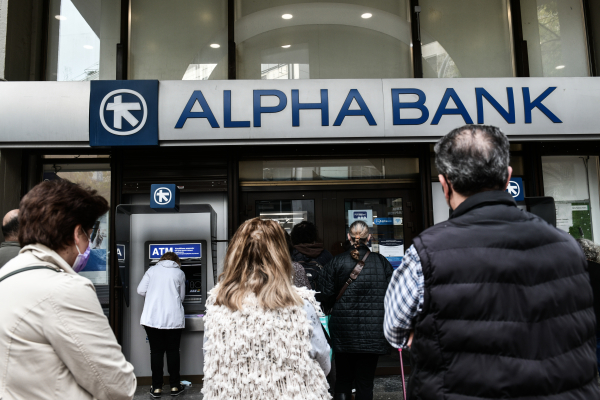

Greek banks are attracting a growing pool of money from outside the eurozone, marking a notable shift in the funding landscape of a banking system once at the center of Europe’s sovereign-debt crisis.
Deposits and repurchase agreements held by residents of countries outside the eurozone reached €15.22 billion in October 2026, up from €6.33 billion in October 2019, an increase of 140.4%, according to banking-sector data. Over the same period, deposits and repurchase agreements held by Greek residents rose 53.3% to €234.89 billion, highlighting the substantially faster growth of funds originating outside the single-currency bloc. The acceleration over the past year has been particularly striking.
After climbing steadily in the aftermath of the pandemic, balances held by non-eurozone residents remained broadly stable at around €11 billion between 2022 and 2025. That changed dramatically over the following 12 months, when balances increased by more than €4 billion, or 36.1%.
ΔΙΑΒΑΣΤΕ ΕΠΙΣΗΣ



Roughly 45% of the entire increase recorded since 2019 occurred in the past year alone. The influx is also changing the composition of Greek banks’ funding base.
Residents outside the eurozone accounted for 5.8% of the banking system’s €262.54 billion in total deposits and repurchase agreements in October 2026, up from 4.69% a year earlier.
While the overall deposit base expanded by 10.2% over the past year, balances held by non-eurozone residents grew more than three times as fast. Nearly one in every six euros added to the Greek banking system’s deposit base during that period came from this category of depositors. For a country that imposed capital controls in 2015 to stem an exodus of deposits, the figures offer a striking contrast with the banking system’s recent history.