
What would trigger a change in the electoral law? When will the final decisions be made? Could the bonus seats be calculated based on the gap between the first and second party? Why the hesitation about raising the parliamentary threshold to 5%?
On July 28, Dnews revealed the behind-the-scenes discussions within the government on possible changes to the electoral law. Last Sunday, it called on the Prime Minister to end the debate once and for all.
Today, Power Games attempts to answer the key questions about what is being planned, what is being leaked, and what might ultimately happen with the electoral system:
1. Will the Prime Minister actually change the electoral law?
For now, Mitsotakis has not adopted the recommendations of many—some very close—advisors urging him to do so. That doesn’t mean he will remain opposed until the end. The prevailing view here is that it will be very difficult for Maximos Mansion not to change the law. Under the current system, the ruling party cannot pose any meaningful dilemma to voters, since matching the European election result in a national election is nearly impossible.
2. When will he decide?
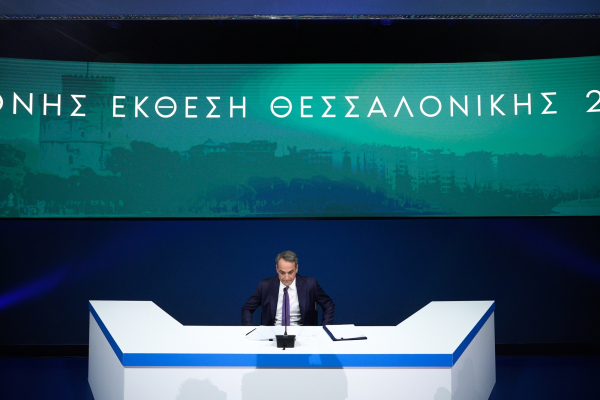
Not immediately. Mitsotakis will first wait to see how the political landscape evolves. He will only propose an electoral system that avoids trapping New Democracy in the very pit it might dig for its rivals. He must first assess how the party system shapes up after his announcements at the Thessaloniki International Fair (TIF). If the expected political gains fail to materialize, developments inside ND itself will weigh heavily. He must also calculate the impact of potential new parties, possibly led by Antonis Samaras, Alexis Tsipras, or even Maria Karystianou. Any amendment will exact a political cost, but a miscalculation could boomerang badly against the government.
3. Will the threshold for entering parliament rise to 5%?
That would be a very big risk—not to mention an undemocratic move. Why risky? Because smaller parties to the right of ND could band together, creating both short- and medium-term headaches for the governing party. Power Games’ assessment: raising the threshold from 3% to 5% will be very difficult to push through.
4. Is an outright majority possible with 32–33% of the vote?
Highly unlikely. Since the threshold for a majority depends directly on the combined vote share of parties excluded from parliament, this would require more than 20% of votes being wasted. Only then could a 32–33% tally secure a majority. In practice, that would demand a completely new electoral law—one that would be hard to justify.
5. Could there be a surprise law?
Some reports suggest one scenario is still on the table: linking the seat bonus not to the winning party’s percentage, but to the margin between the first and second. Maximos is confident the gap with PASOK will not fall below double digits—some even believe the double-score leads shown in polls will be replicated at the ballot box. Another proposal to bring back the “Pavlopoulos law,” which awarded the leading party a flat 50-seat bonus regardless of its vote share, is unlikely. Mitsotakis would find it difficult to embrace a law tied to a former president he pointedly refused to back for re-election against his party’s line.
6. How would the Prime Minister justify a U-turn on “institutionalism”?
Mitsotakis prides himself on being “institutional.” In the last election, he refused to tamper with the law, declaring he would not alter it this time either. How could he explain a sudden reversal? By invoking the need for “stability”? But can stability really rest on gerrymandered laws?
In any case, the Prime Minister is fortunate to have Interior Minister Thodoris Livanios—responsible for electoral law—at his side. Livanios knows the subject inside out and will likely protect Mitsotakis from pitfalls. And it is difficult to imagine Mitsotakis wanting his name linked to shady electoral engineering reminiscent of Greece’s darker political past.