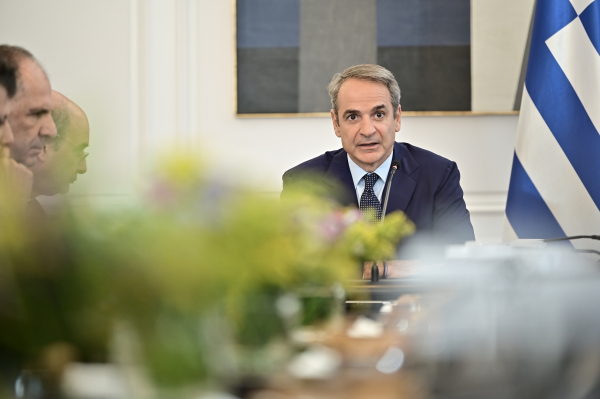

Mitsotakis has tentatively mapped the shake-up for late winter or early spring, envisioning a government lineup that will carry him into elections he hopes to hold in March 2027, with a likely second round the following month. Yet even within the prime minister’s circle, there is recognition that from autumn 2026 onward, the electoral timetable could be upended at any moment.
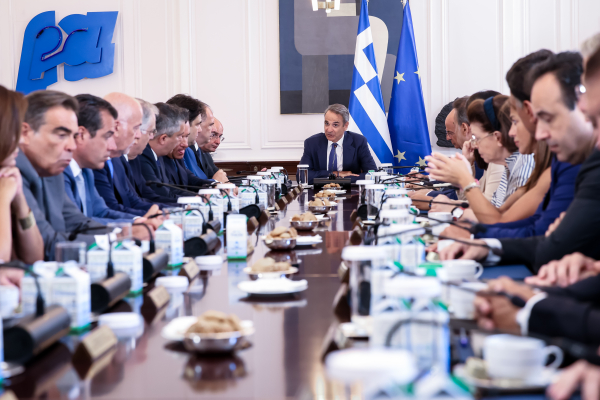
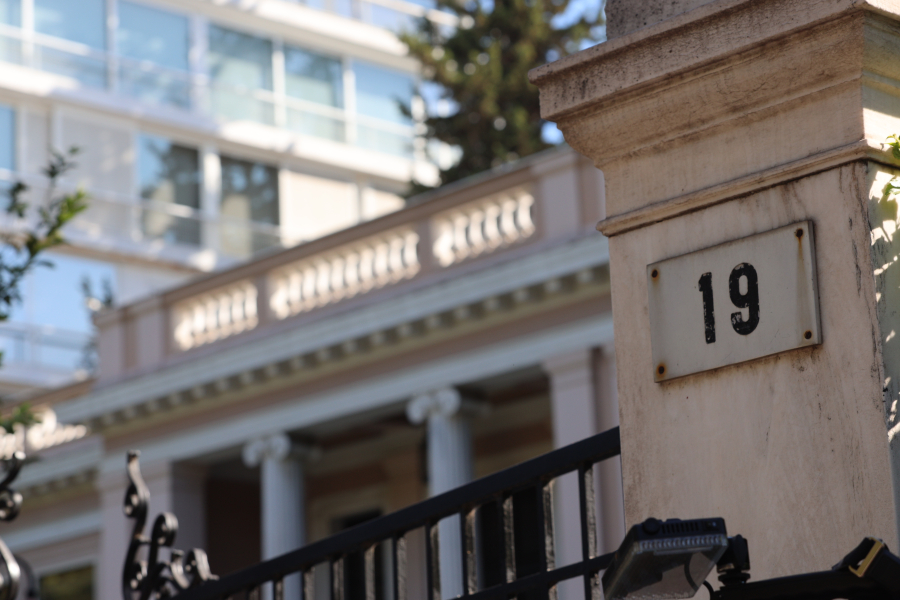
The first major complication is the Maximos Mansion itself—the Greek equivalent of a prime minister’s office—which many within the ruling party now see as the government’s weakest link. A recent controversy involving the state postal service, ELTA, has amplified internal criticism, with some MPs openly acknowledging serious coordination failures at the top. These frustrations have revived pressure for the return of Grigoris Dimitriadis, Mitsotakis’ former chief of staff, although insiders claim that a family veto blocked such a move months ago. Other names, such as seasoned minister Giorgos Gerapetritis, have been floated as potential stabilizing forces, but his current post at the Foreign Ministry, at a moment of heightened regional tensions, makes reassignment unlikely. Meanwhile, another senior official, Giorgos Mylonakis, has drawn substantial hostility from within the party. The reshuffle’s central challenge, in other words, begins at the prime minister’s own doorstep.
The second—and in many ways more volatile—problem concerns the MPs who will inevitably be left out of the new government. In Greece’s hyper-competitive political environment, remaining outside the cabinet is often perceived as a mark of failure, especially for those who see this as their final chance to gain ministerial status before facing voters again. Excluded MPs are expected to turn more aggressive in their criticism of government missteps, potentially becoming internal dissidents. Some may even consider defecting to any new political vehicle that former prime minister Antonis Samaras might launch—a scenario increasingly discussed in conservative circles. The political cost for Mitsotakis could be substantial.
Complicating matters further is the fact that several heavyweight ministers are widely seen as immovable. Nikos Dendias and Kyriakos Pierrakakis are expected to remain firmly in place, while Adonis Georgiadis is said to have received assurances he will stay at the Health Ministry until elections. Michalis Chrysochoidis, overseeing citizen protection, is also viewed as non-transferable. Despite murmurs that Gerapetritis might return to the prime minister’s inner circle, the demands of foreign policy make such a shift improbable.
Other key figures—Culture Minister Lina Mendoni, Tourism Minister Vassilis Kikilias, Interior Minister Takis Theodorikakos, and Labor Minister Niki Kerameus—are also considered stable presences. With so many senior positions effectively locked, the room for meaningful structural change appears limited, raising questions about how convincingly the government can project the image of a “fresh start.”
Adding to the complexity is what insiders refer to as the impending “massacre of non-parliamentary ministers,” particularly deputy ministers. As elections draw nearer, the pressure to accommodate as many sitting MPs as possible grows, making technocrats and non-elected appointees especially vulnerable. MPs have already pressed the issue, seeing a reshuffle as their final opportunity to secure a position with electoral value.
Still, despite public claims that the reshuffle will be “structural,” expectations are modest. Mitsotakis is likely to prioritize shoring up regions where his party is politically vulnerable, preventing defections, neutralizing would-be rebels, and rewarding those who stood firmly behind the government during difficult moments—such as MP Makarios Lazaridis, who played a key role during a recent parliamentary inquiry.
Underlying all of this is a final, frank acknowledgment circulating in political circles: cabinet reshuffles have never been Mitsotakis’ strong suit. Even veterans of his own party quietly admit that previous attempts at reorganizing his government have been clumsy or unconvincing. That reputation now looms over what may be the most consequential reshuffle of his premiership, adding yet another layer of difficulty to an already intricate political puzzle.