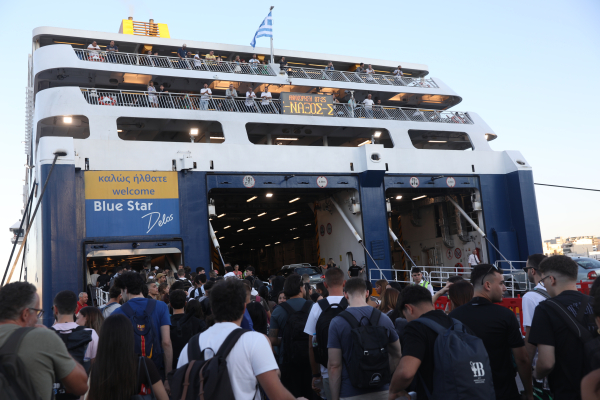
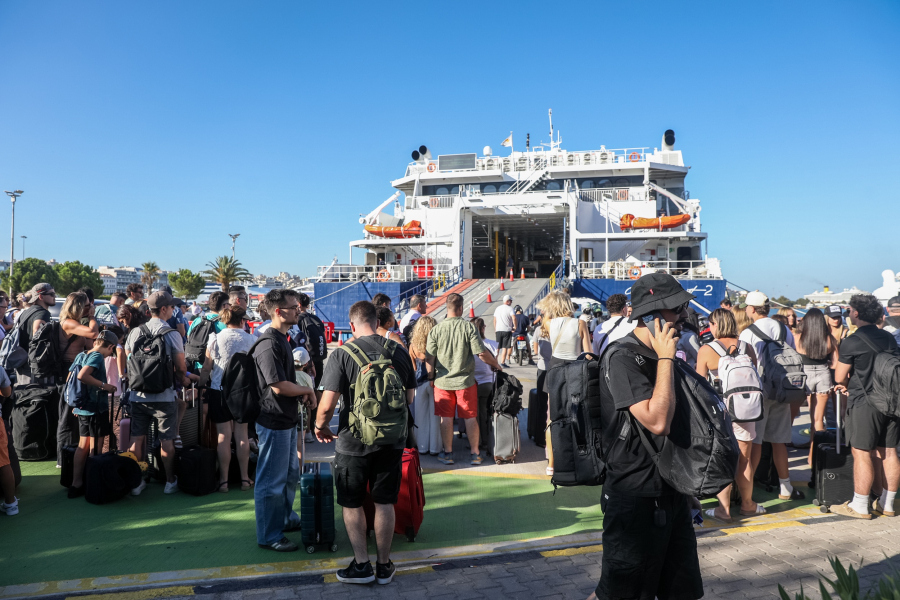
Greece has cemented its position as one of Europe’s leading maritime passenger markets, accounting for nearly one in five passengers passing through European Union ports in 2025, according to data published by Eurostat.
Greek ports handled 81.2 million passengers, representing 19.2% of the EU total. Only Italy ranked higher, with 96.5 million passengers, or 22.8% of the bloc’s maritime passenger traffic. Denmark came third, with 42.1 million passengers.
Together, Greece and Italy accounted for 42% of all maritime passenger traffic in the EU, underscoring the Mediterranean’s importance to Europe’s passenger shipping industry.
ΔΙΑΒΑΣΤΕ ΕΠΙΣΗΣ



Piraeus ranked as the EU’s fourth-busiest passenger port
Greece’s performance reflects the central role of maritime transport in an economy characterized by hundreds of inhabited islands, an extensive domestic ferry network and a tourism industry heavily reliant on sea connections.
The port of Piraeus, near Athens, ranked as the EU’s fourth-busiest passenger port, handling 10.4 million passengers in 2025. It was the busiest European passenger port outside Italy, trailing only Messina, Reggio di Calabria and Naples.
Greece had three ports among the EU’s 20 busiest passenger terminals, further highlighting the scale of its maritime transport infrastructure.
The figures come as European maritime passenger traffic reached a record 423.4 million in 2025, the highest level since comparable records began in 2002. That represented an increase of 5.5 million passengers from 2024 and 5.2 million from 2019, before the pandemic disrupted global travel.
For Greece, which accounts for roughly 2.3% of the EU’s population but more than 19% of its maritime passenger traffic, the figures illustrate the disproportionate importance of passenger shipping to its economy.