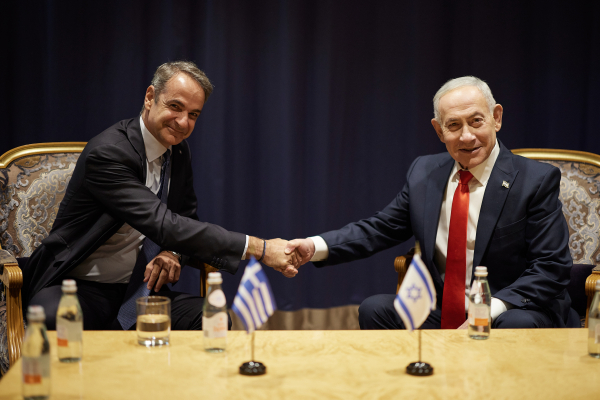
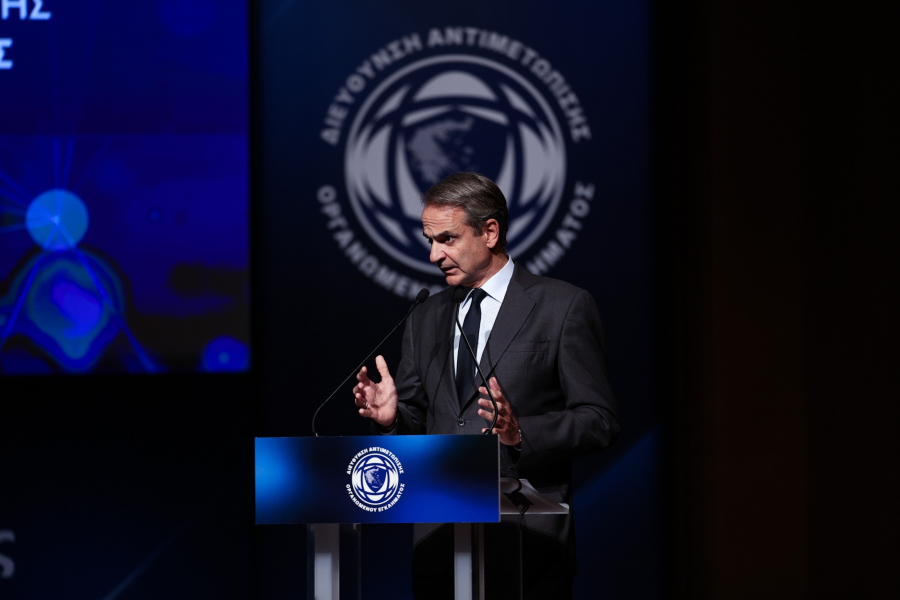
Greek Prime Minister Kyriakos Mitsotakis portrayed his government as a force against organized crime and corruption on Tuesday, but his sweeping claims of restoring law and order overlooked an inconvenient fact: he has governed Greece since July 2019, including during the years when many of the criminal activities now being uncovered allegedly took place.
Speaking at an event marking the second anniversary of Greece’s organized-crime directorate, Mitsotakis praised investigations into more than 260 criminal organizations and 1,500 cases, ranging from fuel smuggling to corruption in tax offices, planning authorities and prisons.
Rather than addressing how such networks operated under his administration, the prime minister turned his criticism toward previous governments, accusing them of weakening criminal enforcement and facilitating prisoner releases.
ΔΙΑΒΑΣΤΕ ΕΠΙΣΗΣ



His remarks risk reinforcing accusations of political gaslighting: presenting the exposure of criminal networks that flourished during his own tenure as evidence of his government’s determination to eliminate wrongdoing inherited from the past.
The narrative is further complicated by his administration’s own legislative record.
Changes to Greece’s criminal legislation in 2019 drew criticism for provisions that opponents argued effectively shielded bank executives accused of serious financial offenses from prosecution. Other controversial provisions concerning money laundering and serious tax offenses also raised concerns about reduced criminal accountability.
Critics have questioned how those decisions square with Mitsotakis’s current insistence that his government has consistently strengthened the rule of law.
The prime minister also highlighted more than €2 billion in additional revenue from combating tax evasion in 2025 and a reduction in Greece’s VAT compliance gap from 24% to 9.5%.
While those figures suggest progress in tax enforcement, they do little to resolve the broader question of political accountability.
After more than seven years in office, Mitsotakis faces a fundamental contradiction: the government claiming credit for exposing entrenched criminality is also the government under whose watch much of that alleged criminality occurred.