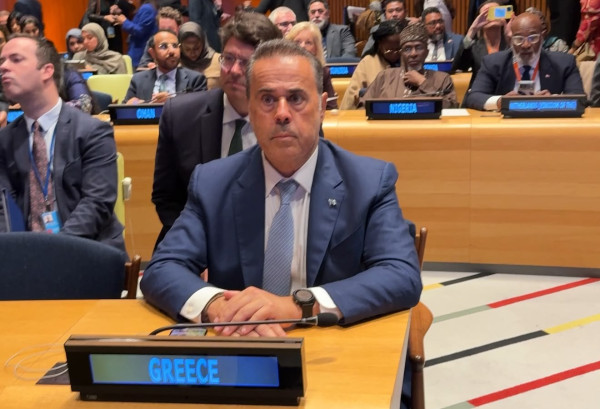
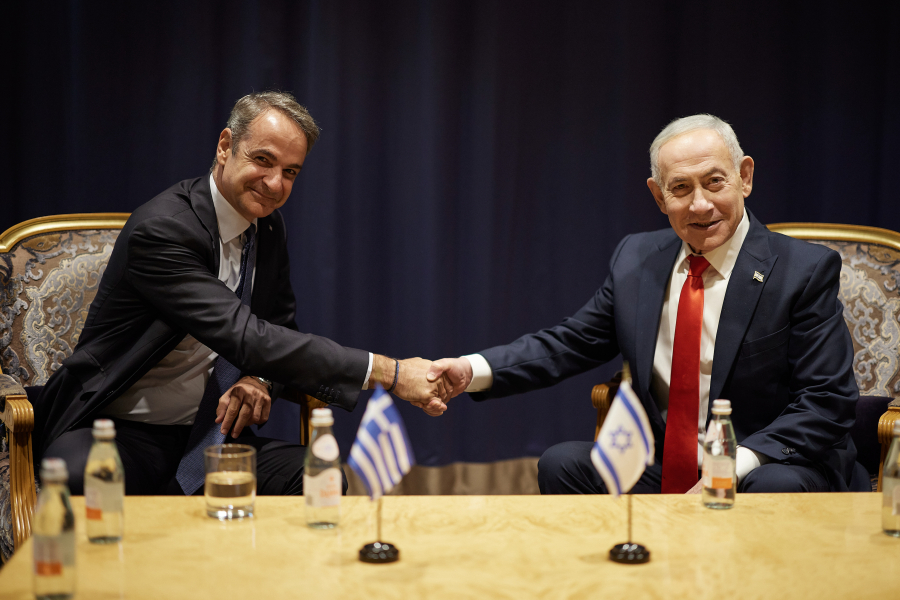

Greek Prime Minister Kyriakos Mitsotakis’s meeting with Israeli Prime Minister Benjamin Netanyahu on the sidelines of the United Nations General Assembly carried significance well beyond Greek-Israeli relations, coming as tensions with Turkey again surfaced publicly.
The roughly 40-minute meeting, held at Netanyahu’s request, provided Athens with an opportunity to display its expanding strategic relationship with Israel at a sensitive moment in its dealings with Ankara.
The timing was notable. Turkish President Recep Tayyip Erdogan, speaking to Turkish journalists in New York, warned Mitsotakis against allowing Greek-Turkish relations to become part of Greece’s domestic electoral politics.
“Turkey is not Greece’s enemy, but its neighbor and NATO ally,” Erdogan said, adding that bilateral relations were “too sensitive and too important to be used as election-campaign material.”
ΔΙΑΒΑΣΤΕ ΕΠΙΣΗΣ


Against that backdrop, the Mitsotakis-Netanyahu meeting offered a different picture of Greece’s regional strategy. The two leaders discussed security, energy and developments in the Eastern Mediterranean, while Netanyahu highlighted the strategic partnership between Israel and Greece.
The Israeli leader also welcomed Greece’s decision to acquire Israeli defense systems, according to his office. The two sides discussed plans for another trilateral summit involving Greece, Cyprus and Israel, a diplomatic format closely watched in Ankara because of competing strategic and energy interests across the Eastern Mediterranean.
There was no public indication that Mitsotakis presented the meeting as a warning to Turkey, and neither government said Erdogan was discussed. Still, the encounter could be read as an indirect signal to Ankara: Greece has regional partnerships it can deepen even as it seeks to keep channels with Turkey open.
That message was amplified by the fact that Netanyahu sought the meeting. For Athens, the request offered a chance to demonstrate that Greece remains a sought-after partner for Israel at a time of rapidly shifting regional alliances.
The imagery was equally conspicuous. Mitsotakis and Netanyahu embraced before cameras before holding talks, projecting familiarity between two governments whose defense and security cooperation has expanded substantially.
Erdogan, meanwhile, said Ankara wasn’t interested in Greece’s elections or its internal political balance. Turkey’s concern, he said, was protecting its rights and security while maintaining peace in the Aegean and Eastern Mediterranean.
A senior Greek government official responded that Erdogan’s latest statements appeared to move in a different direction from rhetoric heard recently, while insisting that Athens wasn’t responsible for increasing tensions.