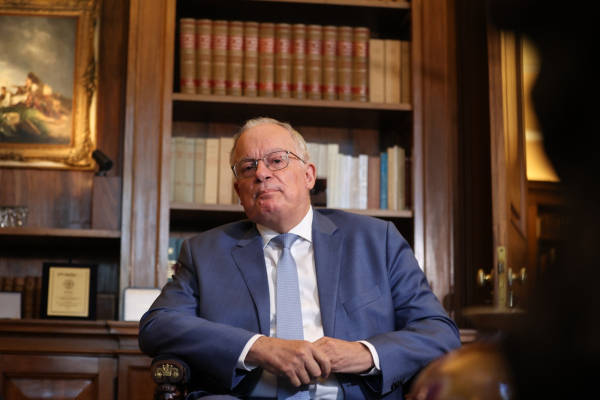
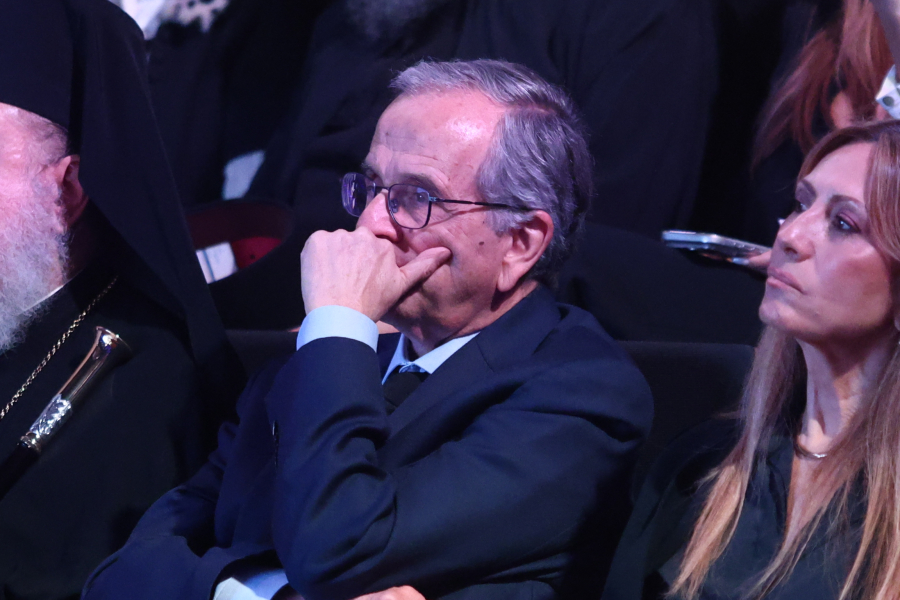

Former Greek Prime Minister Antonis Samaras delivered a sharp warning on Saturday: Greece, he said, is retreating on sensitive national issues while presenting its concessions as diplomatic successes.
Two developments involving Greece’s northern neighbors are giving that argument fresh political weight. Samaras, a conservative who served as prime minister from 2012 to 2015, attacked European Commission President Ursula von der Leyen over her references to the «Macedonian language» and «Macedonian culture» in North Macedonia. For Samaras, the episode illustrates precisely what he had warned would follow the 2018 Prespa Agreement.
That accord ended the long dispute between Athens and Skopje by changing Greece’s neighbor’s name to North Macedonia. But it also recognized a Macedonian language and nationality—provisions that remain deeply controversial among many Greeks.
ΔΙΑΒΑΣΤΕ ΕΠΙΣΗΣ



«The situation has become much worse than the Prespa fiasco, and we are watching silently» Samaras said Saturday. His second example concerned Bulgaria. Greece transferred remains attributed to Samuel, a medieval ruler of enormous symbolic importance to Bulgarians, while 48 religious artifacts removed from northern Greece during World War I were returned from Bulgaria.
Samaras questioned the balance of that exchange. He said Bulgaria had achieved a century-old national objective while Greece recovered only 48 objects from what he described as thousands of artifacts taken from Greek churches and monasteries.
«When I was prime minister, I demanded that they return everything» he said. «Today, unfortunately, we are sounding the retreat while celebrating». The government rejected the criticism. Spokesman Pavlos Marinakis said North Macedonia’s road to Europe passes through Greece and depends on respecting existing agreements. On Bulgaria, Athens pointed to the Church of Greece, which welcomed the return of the artifacts and hopes more will follow.
But the government’s rebuttal may do little to settle the argument where it matters most politically: inside New Democracy’s own electoral base. Samaras’s views resonate with a sizable segment of the governing party’s voters, particularly on national identity, relations with Greece’s Balkan neighbors and the legacy of the Prespa Agreement. That creates a potential vulnerability for Prime Minister Kyriakos Mitsotakis ahead of the 2027 national election.
Should Samaras decide to form a new party and contest that vote, those conservative voters could provide a natural pool of support. Saturday’s intervention, then, was more than another attack on the government’s foreign policy. It also offered a glimpse of the political terrain on which a future Samaras challenge to New Democracy could be fought.