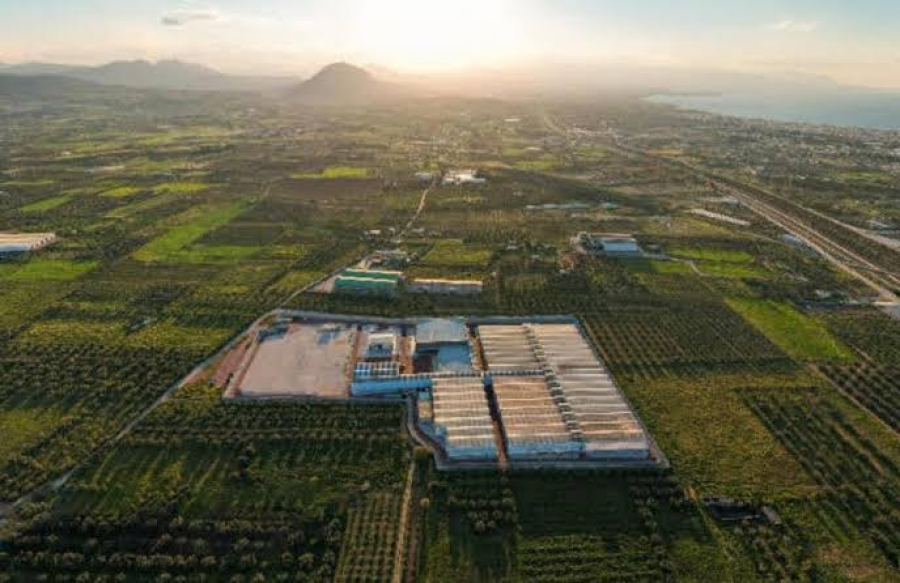

Tikun Olam Greece posted a sharp increase in revenue and returned to profitability in 2025, as the medical-cannabis producer strengthened its balance sheet and later unwound a licensing arrangement that could have represented a significant drag on earnings.
The group’s consolidated revenue rose 76% to €14.58 million ($17.1 million) from €8.28 million in 2024. Earnings before interest, taxes, depreciation and amortization more than doubled to €6.50 million from €2.62 million.
Pretax profit reached €4.00 million, reversing a €658,800 loss a year earlier. After €267,400 in income taxes, net profit stood at €3.74 million, compared with a €827,000 loss in 2024.
ΔΙΑΒΑΣΤΕ ΕΠΙΣΗΣ


Operating profit, or EBIT, climbed to €5.32 million from €1.54 million, pushing the operating margin to 36.5% from 18.6%.
The expansion was accompanied by a stronger balance sheet. Total assets increased to €42.73 million at the end of 2025 from €34.69 million, while equity jumped to €19.61 million from €3.89 million. Cash and cash equivalents rose to €3.41 million from €939,300.
Borrowings totaled €19.10 million at year-end. During the fourth quarter, Tikun Olam refinanced its bank debt through a bond loan provided by Credia Bank, fully repaying its existing long- and short-term borrowing from National Bank of Greece. As security, the company provided a €24 million mortgage pre-registration over a 56,367-square-meter property in Corinthia, in southern Greece.
A subsequent development could further bolster the company’s economics. On Sept. 2, 2026, Tikun Olam Greece terminated a licensing agreement signed in January 2021 with Israel’s Tikun Olam Ltd. and founder Tzachi Cohen. According to the company’s financial statements, the termination applies retroactively to the agreement’s inception.
The licensing arrangement provided for a fee equivalent to 5% of net sales, according to people familiar with the matter. Following its retroactive termination, Tikun Olam Greece no longer has payment obligations arising from the agreement. Cohen, who holds an approximately 18% stake in Tikun Olam Greece, consented to the termination, according to people familiar with the process.
The potential financial impact is substantial. Tikun Olam Greece—the company rather than the consolidated group—reported 2024 net sales of €7.98 million. A 5% charge on that amount would have been roughly €399,000.
Company sales climbed 80.8% in 2025 to €14.42 million, implying a theoretical licensing fee of about €721,000. Combined, the charge for 2024 and 2025 alone would have totaled approximately €1.12 million.
Removing the licensing arrangement therefore eliminates a cost that otherwise would have flowed directly through operating expenses—a potentially meaningful benefit to Tikun Olam Greece’s EBITDA as its sales base expands.