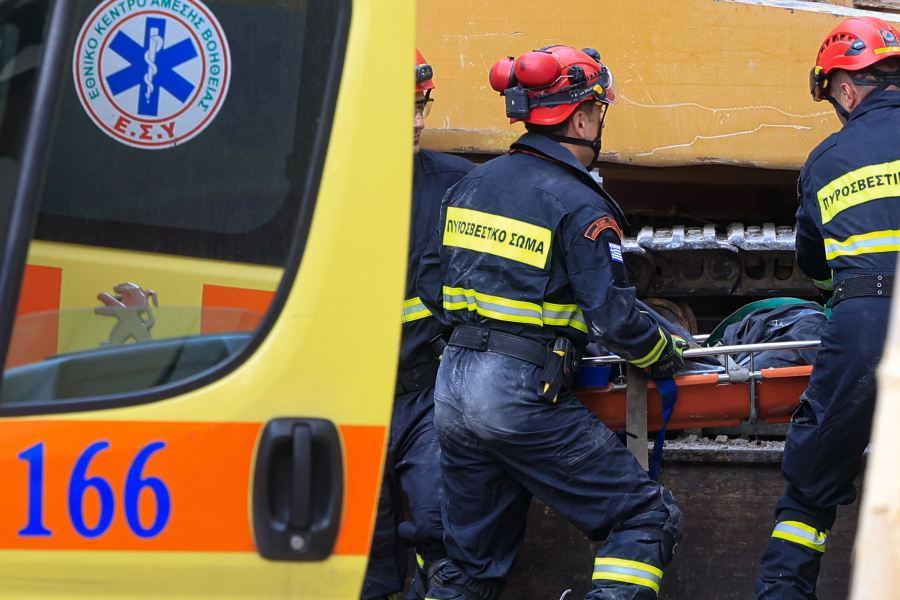

Six people were killed after a powerful explosion brought down a historic building in Plaka, the old quarter beneath the Acropolis, as investigators focused on a possible gas leak inside the property.
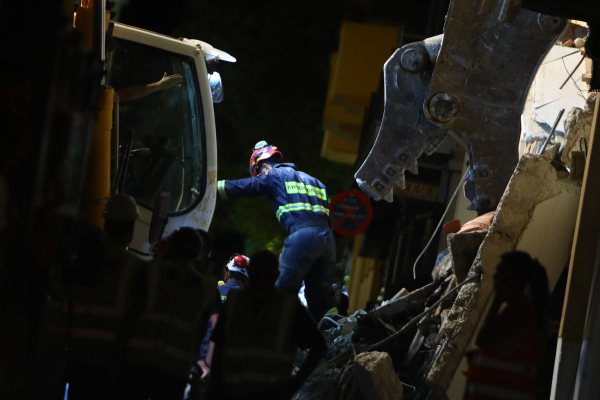
Emergency crews completed their search of the rubble after recovering the bodies of all six people reported missing. The operation was complicated by the extent of the collapse and serious damage to neighboring buildings, raising concerns about further structural failures in one of Athens’s oldest and most densely built districts.
The cause of the blast hasn’t been established. Investigators are examining whether a substantial accumulation of gas inside the building could have ignited when an electrical appliance or light was switched on.
ΔΙΑΒΑΣΤΕ ΕΠΙΣΗΣ


Efthymios Lekkas, president of Greece’s Earthquake Planning and Protection Organization, or OASP, compared the pattern of destruction with damage he witnessed in Beirut following the massive port explosion there in 2020.
Lekkas said the age and construction of the neoclassical building likely made it particularly vulnerable to the blast. Unlike modern reinforced structures, the property relied heavily on masonry and brickwork, materials that offer less structural cohesion when subjected to a powerful shock wave.
The collapse has also shifted attention to surrounding properties. Athens Mayor Haris Doukas said two adjacent buildings suffered severe damage and are currently considered unsafe, while cracks have been identified in another building across the street. «Unfortunately, the worst scenarios were confirmed» Doukas said after the sixth victim was recovered.
Municipal engineers have begun preliminary inspections, with more detailed assessments planned to determine whether neighboring buildings can be safely occupied. Part of the street will remain closed while authorities conduct structural checks and investigators collect evidence.
Fire-service experts are examining material recovered from the debris to reconstruct the sequence of events. Doukas said a large gas leak is among the leading possibilities, while cautioning that no definitive conclusion can be reached before the investigation is completed. He said the city had no record of an official complaint about a gas smell in the area before the explosion.
Andreas Grammatikogiannis, Athens’s deputy mayor responsible for civil protection, said preliminary evidence doesn’t point to a failure of the external natural-gas distribution network. Authorities are instead examining whether a problem occurred within the building’s internal gas installation and whether work had recently been carried out at the property.
Recovery crews worked through the night using floodlights, generators and drones. Specialized equipment was deployed to cut and remove sections of the wreckage while minimizing vibrations that could destabilize neighboring structures.
The investigation is continuing, and officials stressed that the gas-leak theory remains unconfirmed. For authorities, the immediate priority has now shifted from finding victims to ensuring that the explosion doesn’t result in further collapses in the surrounding neighborhood.