
For Greek households, inflation is increasingly measured not by an official percentage but by a simpler calculation: how much money is left at the end of the month.
Housing offers perhaps the clearest illustration. Based on 2026 market data, average asking rents in Athens and neighboring municipalities are running at roughly €9.80 ($11.50) a square meter. That puts the monthly rent for an 80-square-meter, or roughly 860-square-foot, apartment at about €785. Even in relatively affordable districts, such a property costs around €600 a month in Patissia and €608 in Vyronas.
Official statistics show how heavily housing already weighs on renters. According to Greece’s statistics agency, ELSTAT, households living in rented accommodation devote an average 23.4% of their monthly budget to housing, with rent alone accounting for 17.3%.
ΔΙΑΒΑΣΤΕ ΕΠΙΣΗΣ


Transportation is adding another layer of pressure. Greek households spent an average €247.93 a month on transport in 2025, up 7.9% from the previous year. This year, motorists have been hit by sharply higher fuel prices.
On Sept. 24, the nationwide average for 95-octane gasoline stood at €2.199 a liter, compared with €1.751 in September 2024—a 25.6% increase. Diesel has risen even faster, climbing 45.8% to €2.224 a liter from €1.525.
The difference is substantial at the pump. Filling a 50-liter tank with gasoline now costs about €110, versus €87.55 two years ago, an increase of more than €22. For diesel drivers, the same fill-up has jumped to €111.20 from €76.25, adding almost €35 to the bill.
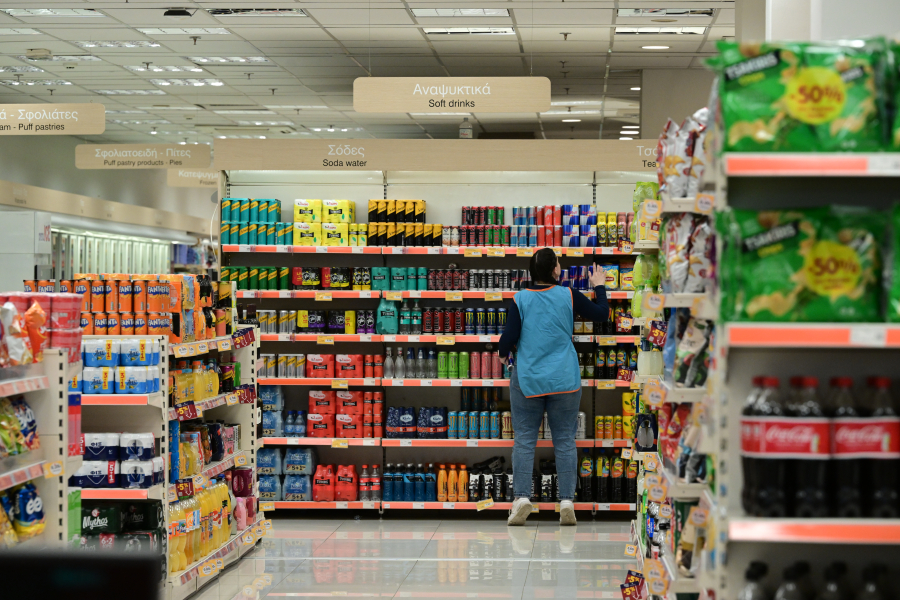
Then there is food
In 2025, household spending on meat increased 9.9%, fish 8%, fruit 5.4%, and coffee, tea and cocoa 11.9%. Yet households were often buying less. Quantities purchased fell 2.6% for fish, 2.4% for bread and bakery products, 1.6% for vegetables, and 1.2% for both fruit and milk. Prices have moved still higher this year.
That combination—paying more while consuming less—helps explain why Greece’s cost-of-living debate has moved beyond economics and become a central political issue.
For households, wage increases and government support measures are ultimately judged by what survives after rent, groceries and transportation are paid. When those essentials absorb an ever-larger share of income, increases in nominal wages can be difficult to feel.
That gap between improving paychecks on paper and purchasing power at the checkout counter is shaping public sentiment. Opinion polls consistently identify the cost of living as Greeks’ leading concern, while roughly one in two respondents say their personal financial situation is worse than it was a year ago.