
Turkey has renewed its challenge to Greek sovereign rights in the Aegean, objecting to Athens’s new spatial-planning framework for renewable energy and reviving claims over the status of Greek islands and islets. The dispute is the latest indication that improved political relations between the two NATO allies haven’t resolved their deeper disagreements.
Ankara said Greece’s renewable-energy framework, which also covers maritime areas, would have “no legal consequence” for Turkey. Turkish Foreign Ministry spokesman Öncü Keçeli went further, referring to geographical formations whose sovereignty, Ankara argues, wasn’t transferred to Greece through international treaties.
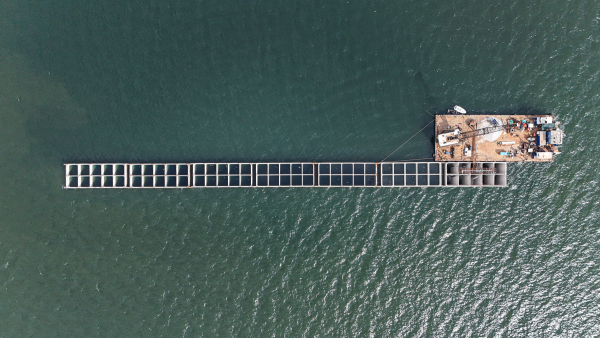
Athens firmly rejects that position. Greece considers the sovereignty of its islands and islets to be established by international treaties and regards Turkey’s recurring references to so-called “gray zones” as lacking a basis in international law. The exchange comes shortly after Turkey declared two marine parks in the northern Aegean and Eastern Mediterranean. Greece says parts of the designated areas extend over the Greek continental shelf and has formally challenged the Turkish initiative.
ΔΙΑΒΑΣΤΕ ΕΠΙΣΗΣ

The Greek Foreign Ministry said the parks are unlawful insofar as they encroach on Greece’s continental shelf, warning that such actions undermine efforts to strengthen good-neighborly relations. Athens has nevertheless kept its response measured, emphasizing that Greece will defend its sovereign rights consistently while remaining committed to international law and regional stability.
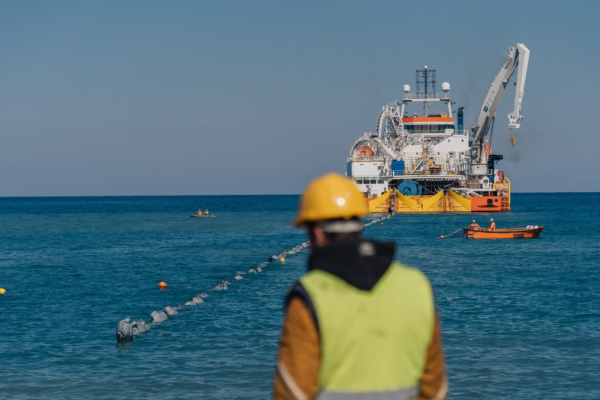
That approach reflects the delicate balance facing Prime Minister Kyriakos Mitsotakis’s government. Athens has invested considerable diplomatic capital in maintaining lower tensions with Ankara, but dialogue doesn’t imply acceptance of Turkish claims that Greece considers incompatible with the established legal order. The renewable-energy dispute also demonstrates how the Greek-Turkish rivalry is expanding into new areas. Offshore wind farms, marine parks and electricity infrastructure increasingly require governments to define where they believe their jurisdiction begins and ends. In the Aegean, even environmental and energy policies can therefore become geopolitical questions.
Attention will now turn to Turkey’s planned legislation on maritime jurisdiction zones and whether it incorporates elements of the “Blue Homeland” doctrine, which Greece views as an expansive interpretation of Turkish maritime claims. Athens’s challenge is to preserve the diplomatic opening without allowing relative calm to be mistaken for acquiescence. Greece has consistently supported dialogue and, where appropriate, settlement of maritime delimitation under international law. But diplomacy can endure only if it rests on respect for sovereignty rather than attempts to place it under permanent negotiation.