

A Greek member of the European Parliament is pressing Brussels to take a tougher stance against Turkey after Ankara warned it could block work on a European Union-backed electricity cable connecting Greece and Cyprus, turning a regional maritime dispute into a test of EU support for its member states.
Nikolas Farantouris, an MEP from Greece’s center-left Pasok party, submitted a written question to the European Commission asking how it intends to respond to Turkey’s latest statements and protect the sovereign rights of Greece and Cyprus.
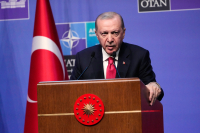
Turkey’s Defense Ministry said it wouldn’t allow what it described as unauthorized cable-laying, pipeline construction or scientific research in contested waters. Ankara invoked maritime arrangements with the Turkish-controlled northern part of Cyprus and Libya. Greece and Cyprus reject those arrangements as legally invalid and say they infringe their sovereign rights.
ΔΙΑΒΑΣΤΕ ΕΠΙΣΗΣ

Farantouris called the Turkish statements an escalation and urged the Greek government to issue an “immediate, firm and official” response. He also called on Athens to internationalize the dispute by raising it in Brussels, at the European Council and more broadly with the international community.
The timing was particularly provocative from the Greek and Cypriot perspective: Turkey’s statement came on Oct. 1, the anniversary of the Republic of Cyprus’s independence.
At the center of the dispute is the Great Sea Interconnector, a planned subsea power cable linking Greece and Cyprus and potentially extending to Israel. The project would end Cyprus’s status as the EU’s last member state isolated from the continental European electricity network.
Farantouris argues that this makes the issue European, rather than merely bilateral. The European Commission has designated the interconnector a Project of Common Interest, while the EU has committed €657 million through its Connecting Europe Facility.
In his question, Farantouris asked the Commission to explain both how it would respond to Turkey’s actions and how it would safeguard implementation of a project Brussels itself has financially and politically supported.
That puts the EU in a potentially awkward position. Brussels has invested heavily in energy integration and reducing isolated national power systems. Allowing geopolitical pressure to obstruct one of its flagship cross-border projects could raise questions about the credibility of that strategy.
For Farantouris, the argument is straightforward: If the Great Sea Interconnector is a European project, defending its implementation - and the rights of the EU states behind it - should also be a European responsibility.