Greek Prime Minister Kyriakos Mitsotakis hardened his public language toward Turkey on Wednesday, seeking to push back against President Recep Tayyip Erdogan while also answering growing criticism from Greece’s conservative right that his government has been too accommodating toward Ankara.
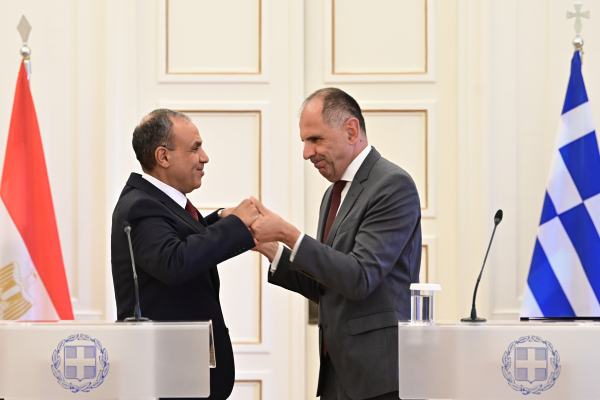
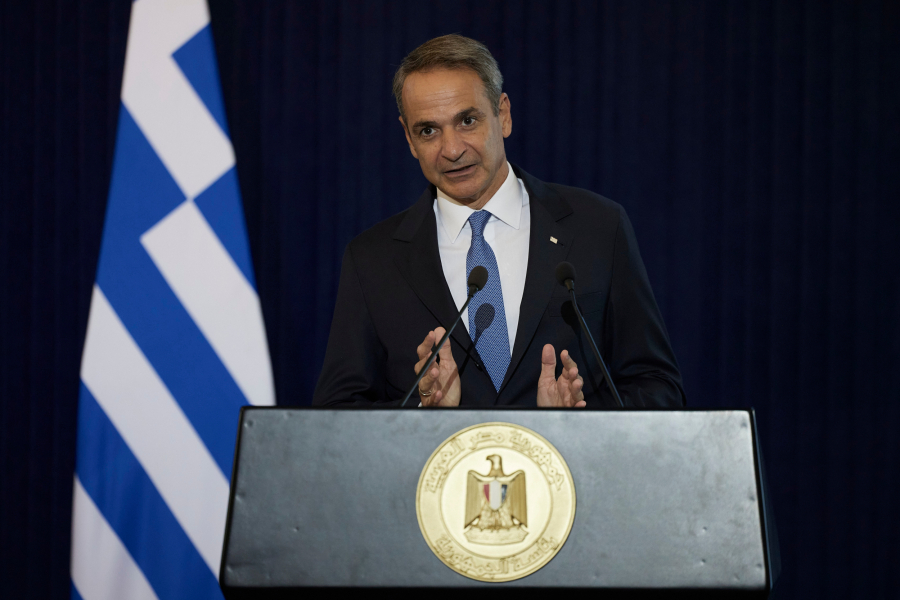
Speaking in Egypt after a trilateral meeting with Egyptian President Abdel Fattah Al Sisi and Cypriot President Nikos Christodoulides, Mitsotakis said Greece remained committed to dialogue with Turkey but warned that its preference for stability shouldn’t be interpreted as weakness.
“Stability, however, in no way means yielding, nor does it mean tolerating faits accomplis,” Mitsotakis said. Greece, he added, isn’t afraid “to defend its positions with confidence” while continuing to engage in dialogue.
ΔΙΑΒΑΣΤΕ ΕΠΙΣΗΣ

The message was ostensibly directed at Erdogan, who has recently revived some of his more combative rhetoric toward Greece. But it was also aimed at a domestic audience.
Mitsotakis has come under increasing pressure from figures to the right of his governing New Democracy party who argue that his strategy of maintaining “calm waters” with Turkey has produced few tangible concessions from Ankara while allowing longstanding Turkish claims in the Aegean and Eastern Mediterranean to persist.
Among his most prominent critics is former Prime Minister Antonis Samaras, who has accused the government of pursuing a policy of appeasement toward Turkey. The dispute has exposed a broader vulnerability for Mitsotakis as New Democracy seeks to prevent conservative voters from migrating to smaller parties on its right.
Against that backdrop, the prime minister has increasingly sought to portray dialogue and deterrence as complementary rather than contradictory. “Greece threatens no one,” Mitsotakis said. “It seeks stability through functional, good-neighborly relations, always on the basis of international law.”
He also highlighted maritime boundaries, the most consequential unresolved dispute between Athens and Ankara. Mitsotakis pointed to Greece’s 2020 agreement with Egypt partially delimiting their exclusive economic zones as evidence that competing maritime claims can be resolved through negotiation and international law.
“When there is political will and commitment to international legality, we can achieve mutually beneficial convergence while strengthening stability in the region,” he said, adding that this would remain Greece’s approach in both the Eastern Mediterranean and the Aegean.
The location of Mitsotakis’s remarks added to their significance. Greece has spent years strengthening relations with Egypt and Cyprus, part of a wider network of regional partnerships that also includes Israel and that has increased Athens’s strategic weight in the Eastern Mediterranean.
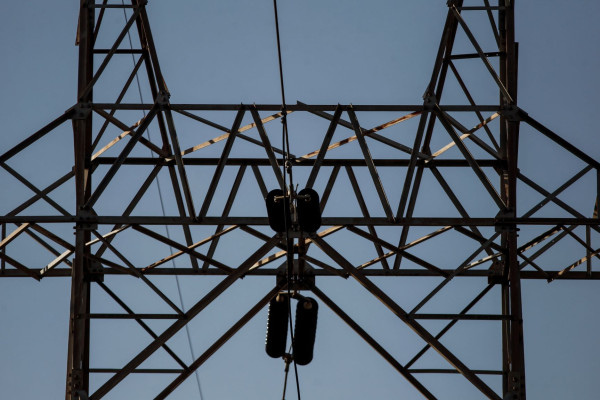
The three leaders discussed energy cooperation, including the planned electricity interconnection between Egypt and Greece and proposals to transport Cypriot natural gas to Egyptian facilities for eventual export to European markets.
They also addressed Gaza, Libya, Lebanon and Cyprus, with Mitsotakis reiterating support for a U.N.-based settlement of the decades-old Cyprus conflict.
For Mitsotakis, however, Turkey is increasingly as much a domestic political problem as a foreign-policy one. His government wants to preserve the relative calm that has characterized Greek-Turkish relations while convincing skeptical conservative voters that dialogue hasn’t come at the expense of Greek sovereignty.
His remarks in Egypt were crafted for both audiences. The message to Erdogan was that Athens’s restraint has limits. The message to critics at home was equally clear: Talking to Turkey, Mitsotakis argued, doesn’t mean giving ground.