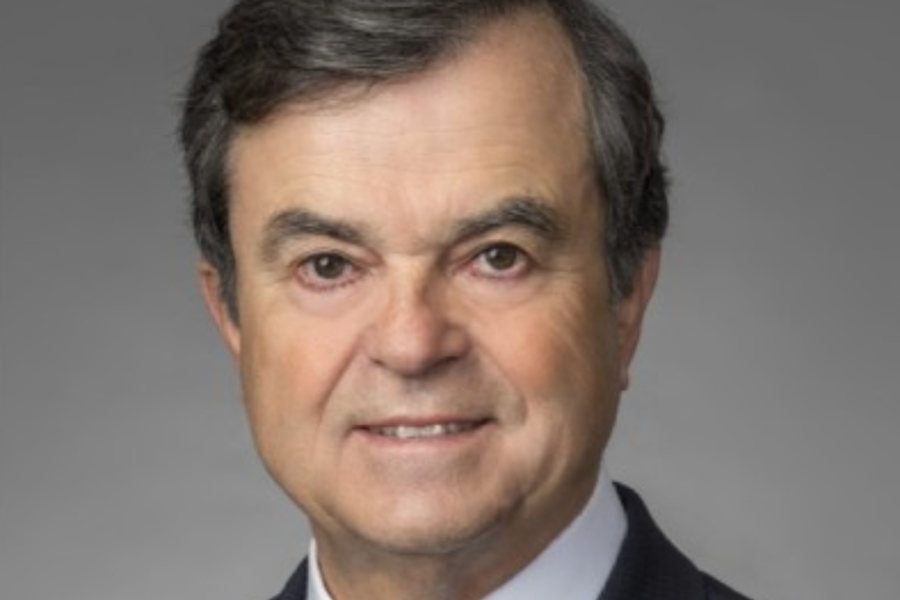
Jim (Demetrios) Logothetis, chairman of the U.S. Public Company Accounting Oversight Board, will be in Athens on Wednesday, Sept. 9, for the Hellenic Capital Market Commission’s 2026 Anniversary Symposium, bringing one of America’s most senior audit regulators to Greece at a time when technology and artificial intelligence are reshaping oversight of global capital markets.
Logothetis’s visit carries particular significance for Greece. A prominent Greek-American who maintains close ties to the country and speaks fluent Greek, he heads the independent U.S. regulator responsible for overseeing the auditors and accounting firms that examine the financial statements of companies listed on American markets.
The PCAOB’s supervisory reach includes the U.S. audit operations of the Big Four accounting firms—Deloitte, PwC, EY and KPMG—giving the board an important role in the infrastructure underpinning investor confidence in the world’s largest capital market.
ΔΙΑΒΑΣΤΕ ΕΠΙΣΗΣ

Congress created the PCAOB in 2002 under the Sarbanes-Oxley Act, legislation enacted in the aftermath of accounting scandals at companies including Enron and WorldCom. Its mandate is to protect investors and the public interest by promoting high-quality, reliable independent audits of public companies.
Logothetis took over as PCAOB chairman in January 2026, with his term running through October 2030. His appointment followed a four-decade career at Ernst & Young, giving him extensive experience on the industry side of the profession he now oversees.
Since taking office, Logothetis has set in motion a broader transformation of the PCAOB stretching toward 2030. His strategy is built around what he calls “Advance, Clarify, Transform,” or A-C-T, an agenda intended to strengthen audit quality and investor protection, make regulatory expectations clearer and modernize the way the board conducts oversight.
Technology sits near the center of that effort. The PCAOB under Logothetis is placing greater emphasis on data and artificial intelligence as regulators and audit firms confront rapid changes in financial reporting, corporate technology and international capital markets. The challenge is increasingly not simply to enforce existing standards, but to ensure that supervision evolves quickly enough to keep pace with the companies and markets it oversees.
That makes the Athens visit more than a ceremonial appearance. It provides an opportunity for substantive discussions with the leadership of Greece’s Hellenic Capital Market Commission and the Hellenic Accounting and Auditing Standards Oversight Board, known by its Greek acronym ELTE.