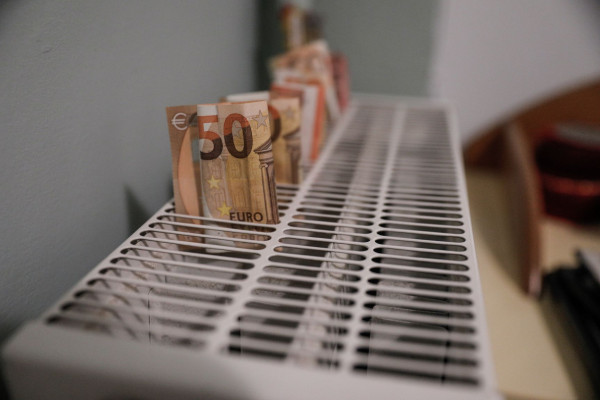
Greece is preparing a significant shift in its approach to foreign investment in real estate, with the government planning to raise the property-transfer tax for buyers from non-EU countries to 15% from 3%.
The measure, announced Saturday by Prime Minister Kyriakos Mitsotakis at the Thessaloniki International Fair, marks a broader change in philosophy. For years, Greece has actively courted overseas capital into property, viewing foreign demand as an important source of investment following the country’s long financial crisis. The new policy suggests Athens is becoming more selective about the capital it wants to attract—and more concerned about its impact on housing affordability.
Behind the decision is a debate within the government’s economic team over whether Greece should follow countries that have imposed higher taxes on residential purchases by foreign investors to curb speculative demand and ease pressure on housing.
ΔΙΑΒΑΣΤΕ ΕΠΙΣΗΣ



One model raised in those discussions was Canada.
The Greek plan isn’t a replica of Canada’s system, but it reflects a similar premise: Foreign capital flowing into residential property shouldn’t automatically be treated as investment worth encouraging if it contributes to higher prices and makes housing less accessible to local residents.
Finance Minister Kyriakos Pierrakakis appears to have embraced that argument, bringing proposals inspired by the Canadian approach into the government’s economic-policy agenda.
The move also carries a notable domestic political echo. In 2023, former Prime Minister Costas Simitis, who led Greece from 1996 to 2004, criticized the Mitsotakis government’s approach to investment, drawing a distinction between productive foreign capital and speculative investment.
Simitis focused in particular on real estate and transactions involving speculative funds. Greece, he argued, needed investment that brought new capital into the economy, strengthened competitiveness and created jobs. For investments that failed that test, he used the term “speculative opportunism.”
Three years later, the decision by Pierrakakis and the government’s economic team to impose a much heavier tax burden on property purchases by non-EU nationals amounts, at the very least, to an acknowledgment of the concern at the heart of that criticism: Not all foreign investment has the same economic value, particularly when it competes with residents for a scarce supply of housing.
A Fivefold Increase
Under the current system, Greece’s property-transfer tax is 3% of the taxable value. From Jan. 1, 2027, the rate for nationals of countries outside the European Union is set to rise to 15%, creating a significant disincentive for foreign investment in residential property.
For a property valued at €100,000, the tax would rise to €15,000 from €3,000. On a €200,000 property, it would increase to €30,000 from €6,000. A €500,000 acquisition would carry a €75,000 tax bill instead of €15,000, while on a €1 million property the levy would climb to €150,000 from €30,000. Those amounts come on top of other transaction costs, including notary, Land Registry, legal and brokerage fees.
The fivefold increase could materially alter the economics of Greek property purchases for investors from outside the EU, particularly those seeking short-term capital gains or building residential portfolios. It also represents a notable turn for a market that has attracted substantial overseas interest in recent years, helped in part by Greece’s Golden Visa residency-by-investment program.
The Canadian Precedent
Canada turned to tougher measures against foreign home buyers as investment demand became associated with soaring property prices and growing concerns over housing affordability.
Ontario introduced its Non-Resident Speculation Tax in 2017, initially setting the levy at 15% on certain residential purchases by foreign buyers. The rate was subsequently raised to 25%. Canada later went further at the federal level, introducing temporary restrictions on many residential-property purchases by non-Canadians.
The underlying principle was that housing isn’t simply another investment asset and that governments can intervene when external demand threatens residents’ access to homes.
Greece isn’t going as far as Canada, but the direction is similar. After years of treating foreign capital as an economic objective in itself, Athens is signaling that investment will increasingly be judged not only by how much money it brings into the country, but also by its impact on the domestic housing market.