Greece is preparing to put the state alongside parents in building a financial nest egg for children, a policy that could eventually channel billions of euros into long-term savings while creating a substantial fiscal commitment for future governments.
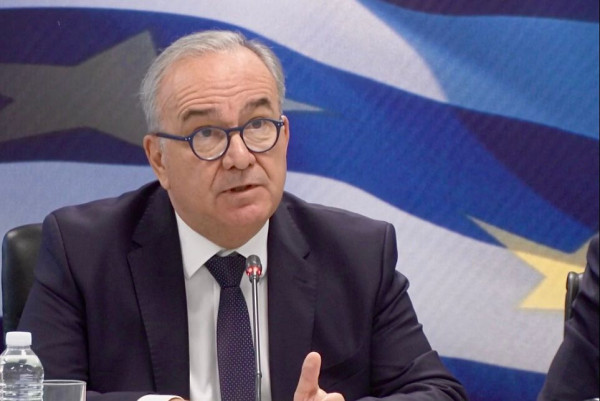
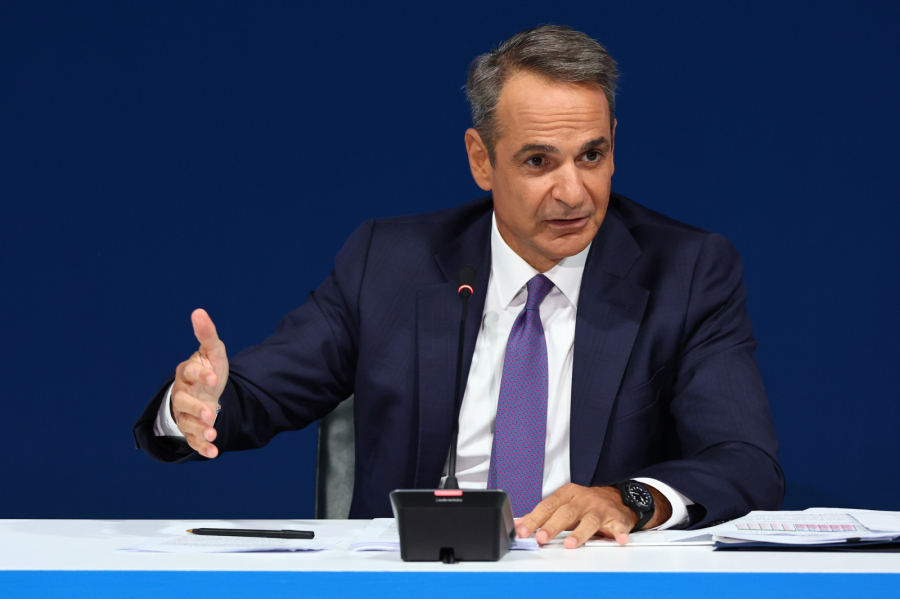
Finance Minister Kyriakos Pierrakakis is expected to provide today details on the “Savings Pot for the New Generation,” one of the standout measures announced by Prime Minister Kyriakos Mitsotakis at the Thessaloniki International Fair, the annual showcase for Greek economic policy.
Pierrakakis proposed the initiative before the August recess, drawing on research by IOBE, Greece’s Foundation for Economic and Industrial Research. Its adoption is an example of policymakers turning proposals from the research community into government policy.
ΔΙΑΒΑΣΤΕ ΕΠΙΣΗΣ



For Greece’s banks, however, the attraction is particularly clear.
If the final design remains close to what has been outlined, it would create state-supported financial flows stretching over decades—and allow banks to establish relationships with customers practically from birth. The system could deliver what banks prize: stable inflows, long-duration funding, predictability and a new generation of clients.
Under the initial framework, families could save as much as €1,200 a year for each child, with the state matching the contribution euro for euro. At the maximum, €200 a month would flow into the account.
Assuming contribution limits increase 10% every five years, an account funded from birth until age 18 could receive €49,303.20 before interest or investment returns.
But that figure can’t simply be multiplied by every child entering the scheme. At the end of the program’s first 18 years, only the first cohort would have completed the full savings cycle. Later cohorts would have accumulated fewer years of contributions.
With roughly 66,000 births annually, 20% participation would produce 13,200 new accounts a year. At 50%, that rises to 33,000, and at 80%, to 52,800. Assuming every participating family contributes the maximum, cumulative payments during the first 18 years could reach roughly €6 billion with 20% participation, €15 billion at 50% and €24 billion at 80%.
The comparison with Greece’s existing deposit market illustrates why banks will be watching closely. Household deposits stand at roughly €156 billion and have recently been increasing by around €5 billion annually.
The new program would initially be small. But as it matures, annual gross inflows could reach around €650 million at 20% participation, €1.63 billion at 50% and more than €2.6 billion at 80%—equivalent to roughly 13%, 32.5% and more than 52% of the current annual increase in household deposits.
Not all of that would represent new money. Parents could transfer savings already held elsewhere into the new accounts. The state contribution, however, is clearly an additional flow, while the matching incentive could generate genuinely new savings if families reduce consumption to qualify for the subsidy.
The more successful the program becomes, however, the bigger the bill for the government. At 50% participation, assuming maximum contributions, annual state spending could rise from roughly €39.6 million in 2027 to €813.5 million in 2044. The cumulative fiscal cost during the first 18 years would theoretically reach about €7.32 billion. At 20% participation, it would be around €2.93 billion; at 80%, nearly €11.71 billion.
And the expense wouldn’t disappear in 2044. If the program continues, new generations would replace those reaching adulthood, turning the subsidy into a recurring structural expenditure.
There are risks for families, too. The €49,303 maximum is nominal. If returns lag inflation, its purchasing power will erode, making the investment structure and returns on the accounts critical.
Banks eventually face the opposite problem. After 18 years, the steady inflows will begin to be accompanied by withdrawals as the first beneficiaries reach adulthood. Guaranteed returns, if offered, could also create interest-rate risk.
The initiative therefore presents an unusual equation. For banks, it promises long-term money and customers acquired almost at birth. For the state, it represents a potentially multibillion-euro commitment. And the variable determining both outcomes is the same: how many Greek families decide to participate.