
The next two weeks could determine whether a flagship electricity link between Greece and Cyprus moves forward—and whether a technical compromise designed to avoid confrontation with Turkey creates a diplomatic problem for Athens later.
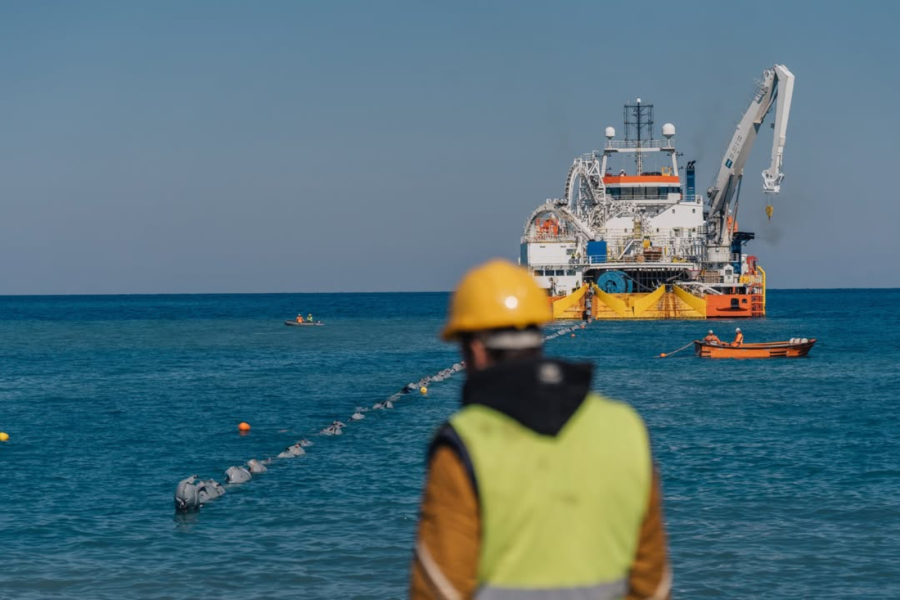
Greece and France are seeking a formula to restart surveys for the Great Sea Interconnector, or GSI, with Oct. 26 being considered as a possible date for the next operation at sea. The project is designed to connect Cyprus, one of the European Union’s last electrically isolated members, to Europe’s power grid through Greece. The immediate challenge is conducting seabed surveys in international waters east of the Greek islands of Kasos and Karpathos. French cable manufacturer Nexans is expected to play a central role, including notifying Turkey about planned operations while following procedures required by Athens. That is where engineering meets geopolitics.
Greece and Turkey hold sharply different views over maritime jurisdiction in the Eastern Mediterranean. Ankara says cable-laying, scientific surveys and similar activities in areas it considers part of its continental shelf should be coordinated with Turkey. Athens rejects the notion that Turkish authorization is required. One formula under discussion could allow both sides to maintain their positions: Turkey would receive advance notification without Greece treating that communication as a request for permission. Separate navigational notices, or NAVTEX messages, from Greek and Turkish authorities are also among the possibilities.
ΔΙΑΒΑΣΤΕ ΕΠΙΣΗΣ



No agreement guaranteeing an unobstructed restart has yet been finalized.
For Athens, however, avoiding a confrontation isn’t the only consideration. Some Greek officials and analysts worry that a procedural compromise could create an unwelcome precedent. If Nexans coordinates with Ankara and parallel navigational notices accompany the surveys, Turkey could later portray the episode as evidence that operations in contested waters require its involvement. Ankara could then cite the GSI procedure when other companies or governments seek to lay cables, construct pipelines or conduct surveys in the region.
That wouldn’t establish Turkish maritime claims as a matter of international law. But diplomacy often develops through practice as well as legal argument, and repeated arrangements can acquire political significance.
Greece therefore faces a delicate calculation. It wants the €1.9 billion interconnector to proceed without triggering another Eastern Mediterranean standoff. But the method used to get one cable past today’s dispute could shape the bargaining ground for the next one.