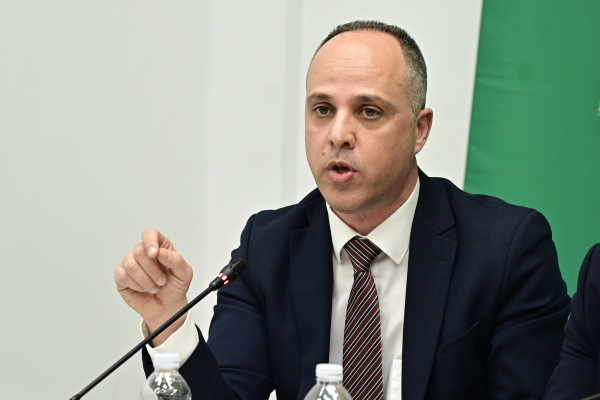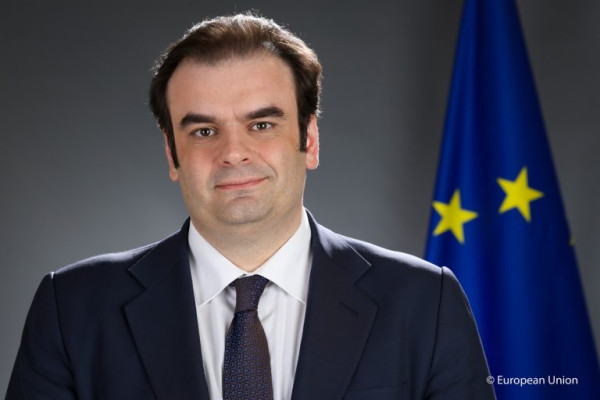

Israel’s new ambassador to Greece arrives with an unusual credential for a diplomat posted to Athens: experience in the commercial spyware business.
Pninat Yanai, an Israeli lawyer, strategic adviser and media commentator, has taken up the post at a particularly sensitive moment for Greece. For much of the past four years, the country’s political system has been consumed by revelations over the use of sophisticated surveillance technology against journalists, politicians and other public figures.
The affair, widely known as Predatorgate, has become one of the most consequential institutional scandals of Prime Minister Kyriakos Mitsotakis’s tenure, raising questions about government accountability, intelligence oversight and the rapidly expanding global market for commercial surveillance tools.
ΔΙΑΒΑΣΤΕ ΕΠΙΣΗΣ



Yanai’s connection to that industry predates the Greek scandal by years.
In 2022, an investigation by Israel’s Channel 13, subsequently reported by Haaretz, identified Yanai as one of the intermediaries involved in a transaction to supply NSO Group’s Pegasus spyware to Ghana. The television investigation said she received $80,000 for her role in brokering the deal.
Yanai hasn’t been accused or convicted of wrongdoing in connection with the Ghana transaction. The distinction is important. But in Greece, where the political and legal consequences of a separate spyware scandal are still unfolding, her professional history is unlikely to be viewed as politically irrelevant.
Greece has become one of Europe’s most prominent case studies in the risks posed by the largely opaque commercial-surveillance industry.
Predator, spyware developed by Cytrox and associated with the Intellexa consortium, was used in a campaign that targeted 87 people in Greece, according to evidence that emerged from the investigation into the scandal. Among the best-known cases was investigative journalist Thanasis Koukakis, whose phone was successfully infected, while an attempted infection was detected on the phone of Nikos Androulakis, the leader of Greece’s center-left PASOK party.
The scandal became considerably more explosive after it emerged that some of the 87 Predator targets had also, either simultaneously or at different times, been placed under surveillance by Greece’s National Intelligence Service, known as EYP. What initially drew public attention through the cases of Koukakis and Androulakis ultimately revealed a far broader surveillance operation whose targets included politicians, government officials, businessmen, journalists and other public figures.
The political consequences came quickly.
In 2022, the head of EYP resigned, as did Grigoris Dimitriadis, Mitsotakis’s chief of staff and nephew, as the surveillance revelations widened. The Mitsotakis government has repeatedly denied political involvement in the use of
Predator and has said that the Greek state neither purchased nor operated the spyware.
What began primarily as a political scandal has since acquired a more concrete judicial dimension.
In February 2026, an Athens court convicted four people linked to the Intellexa network: Israeli former intelligence officer and Intellexa founder Tal Dilian; his former wife and business partner, Sara Hamou; executive Felix Bitzios; and Greek businessman Yiannis Lavranos.
The convictions concerned offenses involving unlawful access to private communications and violations of privacy and data-protection rules.
The court imposed cumulative sentences exceeding 126 years on each defendant, although Greek sentencing rules capped the effective prison terms at eight years. The sentences were suspended pending appeal. Dilian has rejected the judgment as unfounded, and an appeal is scheduled for December.
The verdict was significant because it marked the first criminal convictions to emerge from a scandal that for years produced far more political accusations than judicial accountability.
Predatorgate has also remained an issue at the European level. The European Parliament’s inquiry into Pegasus and equivalent surveillance technologies examined Greece extensively, and lawmakers returned to the case after the 2026 convictions as part of a wider debate over the rule of law and the regulation of commercial spyware in Europe.
Against that background, Yanai’s arrival carries a symbolism that would be absent in many other diplomatic postings.
Her own encounter with the surveillance industry involved Pegasus rather than Predator. Pegasus was developed by NSO Group, the Israeli company whose technology helped turn what had once been a relatively obscure cyber-intelligence business into a global political controversy.
According to the 2022 Channel 13 investigation, a contract signed in late 2015 provided for NSO to supply Pegasus in Ghana for about $5.5 million through a local intermediary. A separate agreement with Ghana’s communications ministry reportedly valued the transaction at roughly $8 million. Yanai was identified as one of the Israeli participants in the intermediary structure and was reported to have received $80,000.
The circumstances surrounding the Ghana transaction later became highly contentious.
Ghanaian authorities investigated the purchase, and three former government officials were eventually imprisoned over irregularities connected with the deal.
Channel 13 reported that Pegasus equipment had been installed in Ghana ahead of elections and that Ghanaian intelligence later concluded the system was intended to monitor political opponents. NSO has disputed important elements of that account. The company said the system never became operational and that, after its personnel developed concerns about how the customer might use the technology, it refused to allow its activation.
Yanai wasn’t accused of wrongdoing in the Ghana case.
Still, the episode puts the incoming ambassador unusually close to an industry that has become deeply controversial in the country where she will now represent Israel.
That matters in part because Predatorgate is far from over.
Dilian has sought to distance himself from the 87 documented spyware targets at the center of the Greek investigation. He has repeatedly maintained that Intellexa sold its technology to government and state authorities and that he wasn’t personally behind the individual targeting operations carried out with software developed by his company.
The dispute over who ultimately ordered and operated the surveillance remains central to the broader political significance of the case. The convictions established criminal responsibility in one part of the affair, but they didn’t settle all of the questions surrounding who selected the targets and for what purpose.
The scandal also continues to generate litigation.
In July, eight people affected by the surveillance affair filed civil lawsuits against Intellexa and individuals associated with the company, including Dilian. They are seeking €1 million each in damages over alleged violations of their privacy, communications and personal data.
Meanwhile, Greece’s surveillance debate has expanded beyond Predator itself—and has moved closer to the technology at the center of Yanai’s earlier business dealings.
Citizen Lab researchers recently found that Pegasus had repeatedly compromised the phone of Stelios Kouloglou, a former Greek member of the European Parliament, while he was serving on the Parliament committee investigating spyware abuses. The researchers said they couldn’t determine which government was responsible for the attacks.
The disclosure creates a particularly awkward piece of diplomatic context for the incoming Israeli ambassador. Pegasus is no longer merely part of Yanai’s professional past in another country. It has become part of Greece’s own surveillance story.
Yanai isn’t arriving in Athens primarily as a cybersecurity intermediary. Her career is considerably broader.
A lawyer by training, she has worked in criminal and financial law, represented Israeli companies active in defense, homeland security, cyber and energy, advised businesses and governments and built a substantial public profile as a legal and political commentator.
She has also been active in Israeli public diplomacy. After the Hamas-led attacks of Oct. 7, 2023, she created the LOVE ISRAEL digital platform and has spoken frequently about what she describes as misinformation about Israel.
Israeli Foreign Minister Gideon Sa’ar appointed Yanai ambassador at a time when relations between Israel and Greece have assumed growing strategic importance for both countries.
Athens and Jerusalem have developed increasingly close ties around defense, energy, security and technology, as well as their shared interests in the shifting geopolitical balance of the Eastern Mediterranean. Those issues, along with the broader regional consequences of conflicts in the Middle East, are likely to dominate Yanai’s formal diplomatic agenda.
But her background means another subject—commercial surveillance technology—will inevitably remain somewhere in the backdrop.
For Israel, the country’s cyber industry has long represented technological prowess, strategic influence and a lucrative source of exports. Companies such as NSO and Intellexa, and the Israeli intelligence veterans associated with the broader sector, helped establish the country as a global center for sophisticated surveillance technology.
In Greece, the same industry has acquired a very different set of associations: journalists whose phones were infected, opposition politicians targeted with malicious links, secret-service surveillance, government resignations, years of judicial investigation and, eventually, criminal convictions.
That contrast gives Yanai’s appointment a dimension rarely attached to the arrival of a new ambassador.
Diplomats routinely arrive carrying the baggage of their countries’ foreign policies. In Athens, Israel’s new envoy also arrives with a personal connection to a business that Greece is still struggling to reckon with.
UPDATE — Response from the Embassy of Israel
Following the publication of this article, the Embassy of Israel in Greece contacted Dnews to dispute the article’s characterization of Ambassador Pninat Yanay’s past professional activities and any connection drawn between those activities and the Predator case in Greece.
The Embassy of Israel’s response is reproduced in full below:
“In response to an article by Mr Nikos Andriopoulos published on dnews.gr, the Embassy of Israel would like to state the following:
Ms Yanay’s former law firm represents clients.
All legal representation was carried out in full compliance with Israeli law and with all required permits and approvals, and focused on the provision of legal advice, contracts, and cooperation with governments and authorised entities.
The attempt to associate lawful legal representation with a ‘past in this type of business’ and, in particular, the attempt to create a false connection with the Predator case in Greece—which is an entirely separate matter—is, in our view, a serious matter, constitutes false reporting, and creates a misleading and unfounded impression.
For the avoidance of any misunderstanding, there has never been any prior acquaintance, business relationship, or any other connection with Tal Dilian.
The press has a responsibility to present its readers with accurate, truthful, and properly substantiated facts.
We expect the media to distinguish between substantiated facts and not to create false connections between events and individuals that are entirely unrelated to one another.
The dissemination of false information will not be tolerated.”