
Greece’s next big economic challenge may not come from debt markets or fiscal deficits, but from demographics.
The latest Eurostat data show a country aging faster than most of the European Union while births continue to fall, raising long-term questions about growth, labor supply and the sustainability of pensions and healthcare.
Greece’s median age reached 47.2 years in 2025, making it the fourth-oldest country in the EU, behind Italy, Bulgaria and Portugal. Two decades earlier, the figure was 39.2. That eight-year increase was among the sharpest in the bloc.
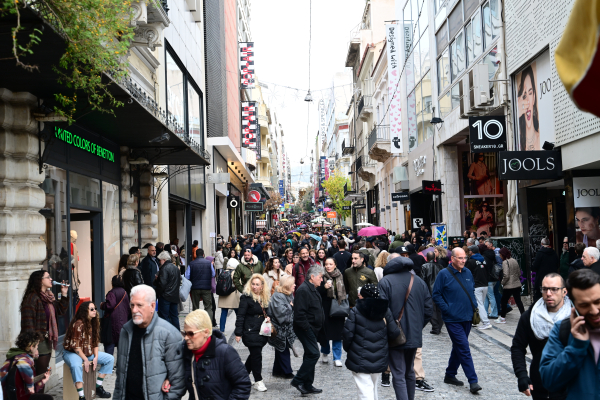
At the same time, people aged 80 and over now account for about 7% of Greece’s population, while children under 15 make up only around 12% to 13%. The result is a population pyramid increasingly weighted toward older age groups.
ΔΙΑΒΑΣΤΕ ΕΠΙΣΗΣ



Births offer little relief. Greece recorded 6.6 live births per 1,000 residents in 2024, among the lowest rates in the EU and below the bloc’s average of 7.9. The fertility rate remains close to 1.3 children per woman, far below the roughly 2.1 level associated with population replacement.
Another striking feature is the postponement of motherhood. About 11% of babies born in Greece in 2024 had mothers aged 40 or older, the highest proportion in the EU and nearly twice the European average.
Housing costs, economic insecurity and delayed financial independence have all contributed to Greeks starting families later. Greece also remains unusually traditional in the way families are formed: only around 10% of births occur outside marriage or a civil partnership, compared with an EU average of about 41%.
For Greece, the consequences are economic as much as social. A smaller working-age population means fewer taxpayers, tighter labor markets and heavier pressure on pensions, healthcare and long-term care.
Policies supporting affordable housing, childcare, female employment and younger families could soften the trend. Immigration may also help fill labor shortages.
But demographics move slowly, and that is precisely the danger. Greece’s population challenge is not a sudden crisis. It is a gradual erosion of the country’s future economic capacity—and one that becomes harder to reverse with every passing year.