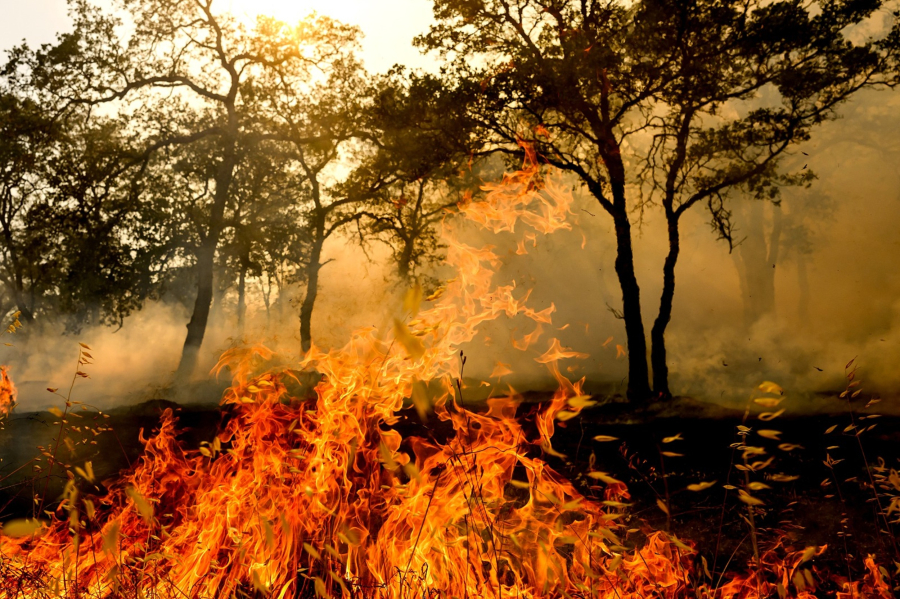
Preliminary findings from the Greek Fire Service’s arson-investigation directorate indicate that fires linked to electricity infrastructure account for roughly 75% of the land burned in Greece so far this year, according to Kathimerini. The Hellenic Electricity Distribution Network Operator, known as HEDNO, has pushed back against the suggestion that its infrastructure is a major cause of wildfires. It said only 1% of forest-fire incidents recorded in 2025 were attributed to the electricity network.
The dispute is drawing attention to a system of enormous scale. HEDNO operates 253,865 kilometers, or nearly 158,000 miles, of distribution lines—enough to circle the Earth more than six times. The network includes 167,316 medium- and low-voltage substations, serves 7.67 million customers and accommodates more than 9.1 gigawatts of renewable-energy capacity.
Much of the infrastructure was built over decades using different materials, manufacturers and technical standards. People familiar with HEDNO’s technical databases say gaps remain in the precise identification and location of some poles, cables, transformers and substations.
ΔΙΑΒΑΣΤΕ ΕΠΙΣΗΣ



That presents a basic challenge: Without knowing the age, condition and location of every asset, it becomes harder to determine which equipment needs inspection or replacement most urgently.
Maintenance is another concern. HEDNO is required to inspect its network annually between October and May, ahead of the summer fire season. Technicians say such inspections require experienced personnel capable of identifying early signs of equipment deterioration. Increasingly, however, some work has been outsourced to contractors, prompting questions about expertise and oversight.
Staffing has also declined sharply. People familiar with HEDNO’s operations say its technical workforce has fallen to roughly 3,000 from as many as 14,000 in earlier decades, even as the network has expanded and become more complex. Greece’s rapid rollout of solar and other renewable generation is adding thousands of decentralized power sources and extending the infrastructure requiring inspection.
Vegetation around power lines represents another risk. HEDNO says it conducts clearing and tree trimming, but specialists question how work is prioritized and verified. Dry branches left near lines can themselves become fuel if electrical equipment produces a spark.
Technology could provide part of the answer. Drones, sensors and real-time monitoring systems could identify vegetation growth and equipment problems before they become dangerous.
Burying power lines would reduce some risks but could cost as much as five times more than overhead infrastructure. With nearly 254,000 kilometers of network, wholesale undergrounding is unrealistic.
Instead, specialists advocate targeting high-risk forests, populated areas and locations with histories of equipment failures, while using insulated cables, automation and better monitoring elsewhere.