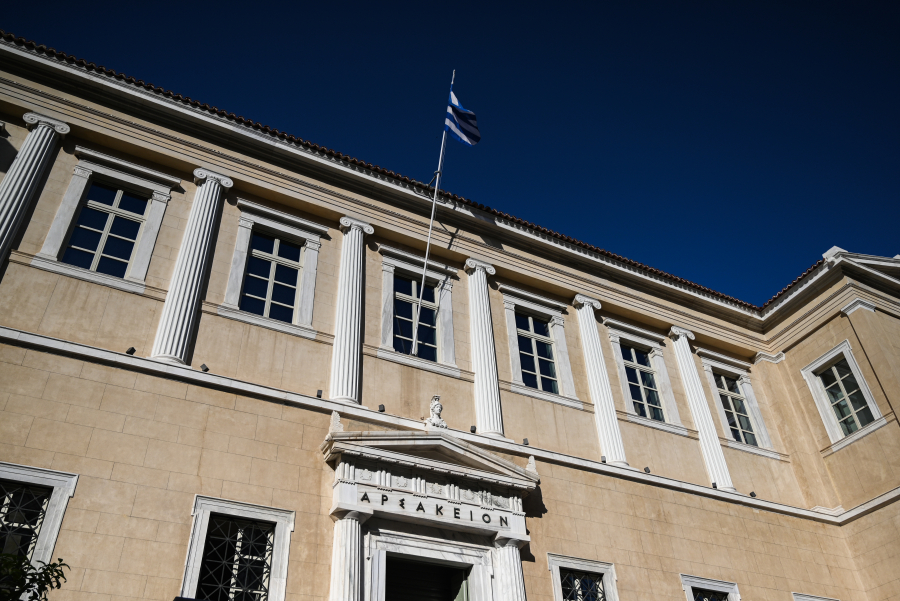

The Council of State, Greece’s supreme administrative court, annulled approvals involving CITY College’s partnership with the University of York, Keele University and Anatolia College. The rulings don’t overturn the legislation that opened the Greek higher-education market to branches of foreign universities. Instead, they target the way regulators and the Education Ministry applied the new framework in these particular cases.
That distinction is central to both the legal significance of the decisions and the government’s response.
The dispute stems from Law 5094/2024, legislation introduced under then-Education Minister Kyriakos Pierrakakis that created a framework allowing foreign universities to establish branches in Greece as nonprofit university entities, known by the Greek acronym NPPE.
The reform marked a major shift in a country where higher education has historically been dominated by public universities and where the constitutionality of private universities has been debated for decades.
The Council of State had already settled the biggest constitutional question. In earlier rulings, its plenary session found that the Greek Constitution doesn’t prohibit branches of foreign universities based in the European Union or countries covered by the World Trade Organization’s General Agreement on Trade in Services, provided that Greek legislation establishes safeguards for academic standards and academic freedom.
The latest decisions therefore don’t amount to a judicial rejection of private or nonstate universities as such. They instead expose shortcomings in licensing, accreditation and regulatory oversight.
In two of the cases, the court found problems with certification of the universities’ buildings. The National Organisation for the Certification of Qualifications and Vocational Guidance, known as EOPPEP, had conducted inspections and requested modifications to facilities as well as additional documentation. According to the court, the agency failed to establish promptly—and in any event before the cases reached the courtroom—that the institutions had complied with those requirements.
That procedural gap was enough to undermine the licenses issued by the Education Ministry.
A separate case raised a different problem: the independence of the accreditation process. The court found that an evaluation committee member had a relationship with the educational organization under review. That connection, the judges concluded, was capable of creating an appearance of bias under Greece’s administrative-procedure rules.
The court also identified a broader weakness in the accreditation of degree programs. It ruled that the criteria used by Greece’s National Authority for Higher Education weren’t sufficiently specific. The material underpinning the accreditation process, the court said, didn’t establish the concrete quantitative and qualitative standards required under the 2024 law.
Once the underlying operating licenses were annulled, the associated program accreditations were also struck down. But the court separately concluded that the deficiencies in the accreditation criteria themselves provided an additional reason for their cancellation.
The decisions have created immediate uncertainty for students and families who have already committed money and time to the institutions. The Education Ministry moved quickly to reassure them, saying no student would lose an academic year.
The ministry argues that the judgments concern defects in the administration of the new system rather than the legality of the reform itself. It identified three areas requiring action: more detailed accreditation standards for degree programs, an issue involving the composition of an evaluation committee, and the delayed formal confirmation that building-related requirements had been satisfied.
Authorities will take the necessary steps to protect students’ rights and ensure the uninterrupted continuation of their studies, the ministry said.
That response reflects the government’s broader interpretation of the rulings: The framework survives, but parts of its implementation need to be repaired.
The political opposition sees something much more damaging.
PASOK, Greece’s main center-left opposition party, said the decisions demonstrated that the government rushed the reform and failed to establish adequate safeguards before issuing licenses. Stefanos Parastatidis, the party’s education spokesman, argued that opposition lawmakers had previously warned about shortcomings ranging from university facilities to the involvement of foreign parent institutions and the accreditation of degree programs.
PASOK described the episode as evidence that the Pierrakakis law is collapsing in practice, while stressing that the consequences fall most heavily on students and families who have already paid tuition and begun their studies.
Other opposition groups went further. New Left called for the 2024 law to be repealed and demanded reimbursement of tuition fees and compensation for teaching staff affected by the decisions.
The sharper political rhetoric, however, goes beyond what the Council of State itself decided.
The court didn’t rule that foreign university branches are unconstitutional, nor did it invalidate Law 5094/2024. Indeed, the latest judgments reaffirmed the court’s previous conclusion that such institutions can operate in Greece under a properly designed and enforced legal regime.
The problem for the government is therefore less existential than administrative—but potentially no less politically costly.
The reform was designed to demonstrate that Greece could attract international universities while imposing standards comparable with those of the public higher-education system. The court’s findings instead raise questions about whether regulators moved too quickly to turn the legislation into operating universities.
For the affected institutions, the next phase will depend on whether the defects identified by the court can be corrected and new approvals issued. Building compliance can in principle be documented. Evaluation procedures can be repeated without conflicted participants. Accreditation standards can be rewritten with more explicit quantitative and qualitative requirements.
That makes the rulings potentially remediable rather than fatal to the institutions or to Greece’s experiment with foreign university branches.
But the episode has created a difficult first test for the new system. The government now has to repair the regulatory process while ensuring that students already enrolled aren’t left in limbo.