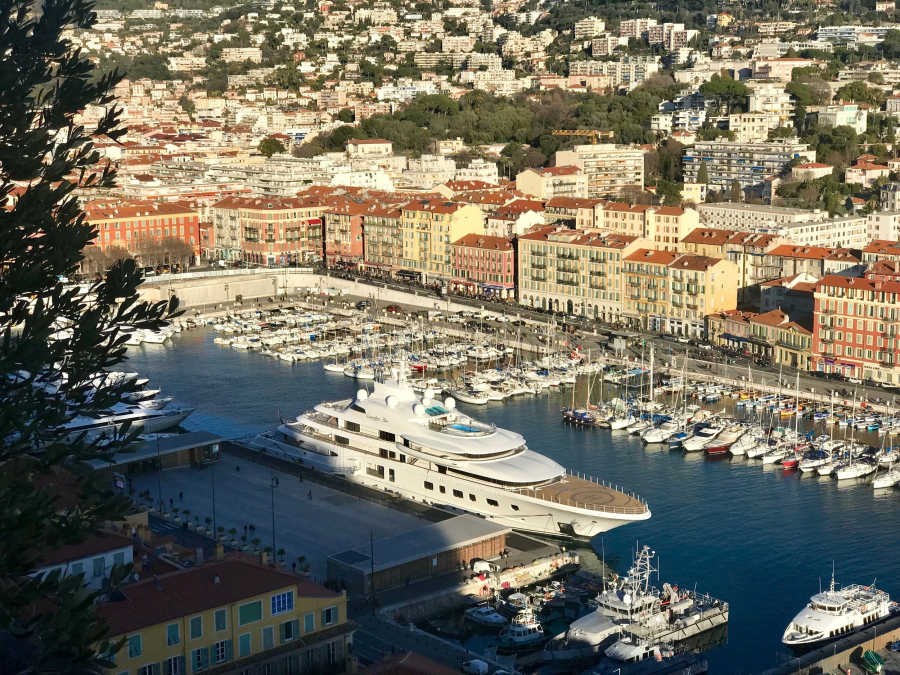

At the height of this summer’s season, more than 300 yachts longer than 24 meters are estimated to be cruising the Aegean and Ionian seas. More than twice as many vessels between 15 and 24 meters are navigating the same waters, turning even remote coves into crowded summer anchorages.
The flotilla reflects Greece’s emergence as the center of the global luxury-yacht charter business. It also exposes a problem: The country’s infrastructure and environmental protections haven’t kept pace.
Greece remains the world’s leading destination for luxury-yacht charters, according to data from IYC, a yacht brokerage and charter company. Between May and October, Greece accounts for 32% of the market tracked by IYC, up from 31% in 2025 and 30% in 2024. Its full-year share stands at 28%.
ΔΙΑΒΑΣΤΕ ΕΠΙΣΗΣ


Bookings for summer 2026 have already reached 98% of the comparable level last year, despite an initially cautious season amid tensions in the Middle East. Globally, charter weeks booked this summer are running 8% above last year.
The Mediterranean’s center of gravity is shifting east. Greece, Croatia and Turkey now account for 51% of the charter market, compared with 46% for the traditional yachting grounds of Italy, France and Spain.
Greece’s appeal is difficult to replicate. Thousands of islands and islets offer short sailing distances, secluded anchorages and an enormous variety of itineraries. Cruising can also be less expensive than in parts of the Western Mediterranean.
But success is creating congestion. Greece hasn’t built enough organized marinas to accommodate the growing number of large yachts. During July and August, berths are scarce, pushing vessels into natural bays where anchoring is more difficult to regulate.
Among the casualties are underwater meadows of Posidonia oceanica, a Mediterranean seagrass that provides habitat for marine life, protects coastlines and stores carbon. Heavy yacht anchors and chains can tear through meadows that take decades to recover.
That presents Greece with a paradox. Luxury yachting brings wealthy visitors and supports businesses from shipyards to restaurants, while spreading tourism beyond major resorts. Yet it depends on the clear water, undeveloped coastline and secluded coves that unchecked growth could damage.
More environmentally designed moorings, additional marina capacity and tighter management of sensitive areas could reduce the pressure without undermining the industry.
Greece has won the Mediterranean competition for the world’s superyachts. The harder task is ensuring its seas can afford the victory.