The circle is tightening around the people connected to Intellexa, the spyware firm at the center of Greece’s surveillance scandal.
Shareholders, executives, employees and associates of the company are facing growing pressure to explain what they know about Intellexa’s cooperation with Greece’s intelligence services between 2020 and 2022, as a new wave of legal and political moves threatens to reopen one of the most damaging affairs of Prime Minister Kyriakos Mitsotakis’s tenure.
The latest escalation comes from two fronts: a petition to Greece’s Supreme Court by former Prime Minister Antonis Samaras, who says his phone was targeted for surveillance, and civil lawsuits filed by eight alleged Predator spyware victims seeking a combined €7.6 million in damages.
Together, the moves are shifting the scandal from a political controversy the government had hoped to bury into a renewed legal battle with potentially explosive consequences.
For Intellexa’s orbit, the message is clear: silence is becoming harder to sustain.
The lawsuits target not only the four private individuals already convicted at first instance in connection with the spyware affair, but also employees and associates whose roles surfaced during criminal proceedings. Lawyers for the victims argue that the civil cases could force new testimony, expose financial trails and clarify who ultimately benefited from the surveillance of politicians, journalists, officials and state employees.
“The lawsuits set out in detail the structure, operation and division of roles of the network of companies and individuals connected with the development, distribution and use of Predator,” said Zacharias Kesses, the lawyer representing the plaintiffs. “This process is the next institutional step toward full accountability for all those involved and the restoration of the victims, both at national and European level.”
Kesses also warned that the civil proceedings may produce new evidence serious enough to be forwarded back to criminal prosecutors for possible felony investigations.
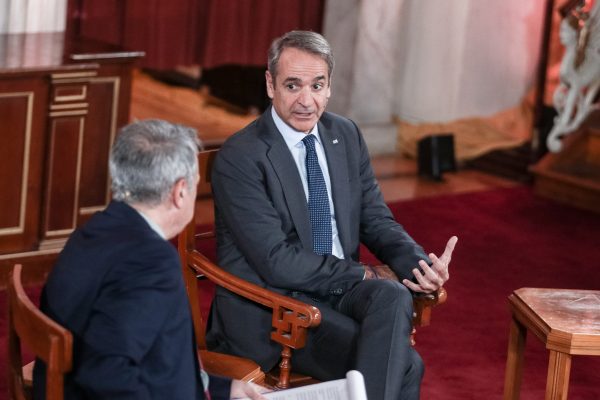
That is what makes the new phase especially uncomfortable for Athens. The government has long argued that the Predator affair was essentially the work of private actors. It has pointed to judicial findings that, according to officials, did not establish involvement by government figures.
But critics say that explanation leaves the most important question unanswered: why were some of the same people allegedly targeted both by Predator and by Greece’s national intelligence service, EYP?
The period under scrutiny, from 2020 to 2022, is critical. It covers the years when Predator was allegedly deployed against a wide range of targets, including journalists, politicians, senior state officials and people with access to sensitive national-security information. It was also a period during which Greece’s intelligence service operated under tight control from the prime minister’s office.
Samaras’s intervention has made the issue politically harder to dismiss. A former prime minister and former leader of the ruling New Democracy party, Samaras is not a conventional opposition figure. His decision to ask the Supreme Court to investigate his alleged surveillance cuts into the government’s own political camp.
His argument is simple: despite repeatedly raising the issue, he says he has received no convincing answer as to why he was targeted and by whom. By taking the matter to the country’s highest court, he is challenging the official narrative that the case has been adequately investigated.
The government’s response has only deepened the controversy. Government spokesman Pavlos Marinakis sought to question the timing and political meaning of Samaras’s move, noting that the former premier had still run as a New Democracy candidate in the 2023 election. Associates of Samaras fired back, asking why the government was connecting his alleged surveillance to New Democracy and the election if the party and Mitsotakis had nothing to do with the case.
The exchange exposed the central weakness in the government’s position. If the surveillance was merely the work of private operators, critics ask, why has the state failed to establish who directed them, who paid them, and what happened to the material collected?
The civil lawsuits add another layer of pressure. The eight plaintiffs include journalist Thanasis Koukakis, cybersecurity professional Artemis Seaford, former senior police official Penelope Miniati, journalist Spyros Sideris, two EYP employees, a lawyer and a former political aide. Their claims are expected to bring renewed scrutiny to the operational chain behind Predator, from the sending of infected messages to the handling of any data obtained from compromised phones.
Miniati’s case is particularly sensitive. As a former senior police official, she says the spyware may have exposed information linked to criminal investigations, terrorism cases, diplomatic contacts and national-security matters.
That raises the stakes beyond privacy violations and into the territory of possible espionage.
The pressure is also moving into Parliament. Opposition parties have demanded that Tal Dilian, the founder of Intellexa, be summoned to testify before the Institutions and Transparency Committee, alongside other figures linked to the affair. Dilian has reportedly signaled a willingness to appear. The government majority, however, is expected to resist such a move.
That resistance could prove politically costly. Each refusal to hear witnesses strengthens the opposition’s claim that the government is trying to contain the scandal rather than clarify it.
For Intellexa’s shareholders, executives and collaborators, the legal landscape is now more dangerous than before. Civil litigation can open paths that criminal proceedings did not. It can force disclosures, examine financial relationships, and raise the threat of asset claims in Greece and abroad if damages are awarded.
For Mitsotakis, the risk is that the Predator affair is no longer just a scandal from the past. It is becoming an active test of institutional accountability.
And for those who know how Intellexa operated in Greece between 2020 and 2022, the room for silence is shrinking fast.