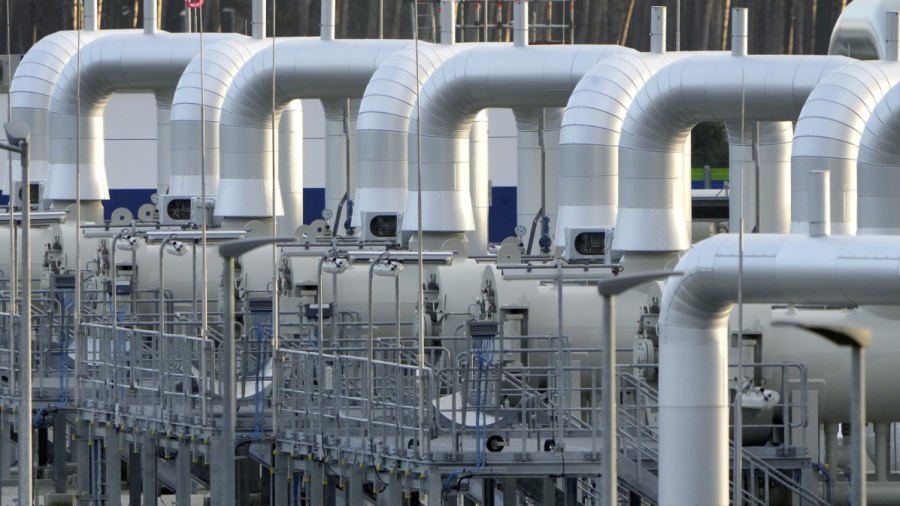
Energy companies booked more than 45% of the natural-gas export capacity offered on Greece's main pipeline route to Bulgaria through 2030, the latest sign that Southeastern Europe is deepening its reliance on Greek infrastructure to secure non-Russian gas supplies.
The annual capacity auction, held by Greece's gas transmission operator DESFA, also drew commitments extending to the 2040-41 gas year, an unusually long time horizon for a region still reshaping its energy map after Russia's invasion of Ukraine.
The results provide a boost for Greece's long-running ambition to become an energy hub for the Balkans, channeling liquefied natural gas imported through its terminals to markets farther north.
ΔΙΑΒΑΣΤΕ ΕΠΙΣΗΣ

Demand was strongest at the Sidirokastro interconnection point on the Greek-Bulgarian border, where 46% of the offered capacity for the 2026-27 through 2029-30 gas years was booked. Another 26% of the capacity available for 2030-31 was also reserved, according to DESFA.
The latest auction secured annual bookings equivalent to about 22 gigawatt-hours a day. Greek gas supplier DEPA Commercial accounted for nearly 60% of the newly reserved capacity, booking 13 GWh a day. Together with volumes secured in previous auctions, total reservations on the route now amount to 47 GWh a day, close to half of the corridor's maximum annual export capacity of 100 GWh a day.
Industry executives described the outcome as a strong commercial endorsement of the project.
DEPA participated in the auction alongside Atlantic See LNG Trade, a joint venture between Greece's AKTOR Group and DEPA. The companies said the bookings support plans to strike short-term agreements to supply the region with U.S. liquefied natural gas before the end of the decade.
People familiar with the auction said the newly booked volumes are intended primarily for countries along the corridor rather than for Ukraine, suggesting that demand is being driven by neighboring Balkan markets seeking to diversify supply and improve energy security.
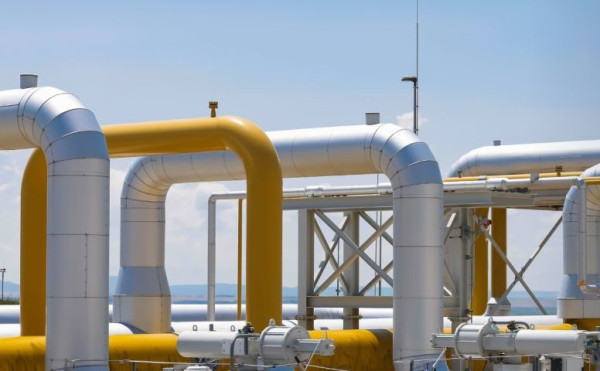
The so-called Vertical Corridor has become a central part of Europe's effort to redraw gas flows after decades of dependence on Russian pipelines. By linking LNG terminals in Greece with markets in Bulgaria and farther north, the route is increasingly viewed as a strategic alternative supply artery for Southeastern Europe, even as the continent accelerates its transition toward cleaner sources of energy.