
Nearly a decade after emerging from its international bailouts, Greece's banking system is again facing uncomfortable questions about the legacy of its financial crisis.
Former Prime Minister Alexis Tsipras recently touched a political nerve in Athens by pointing out an awkward fact: Greece's largest banks are posting record profits and distributing billions of euros in dividends while, because of the country's deferred tax regime, they are expected to pay no corporate income tax until 2035.
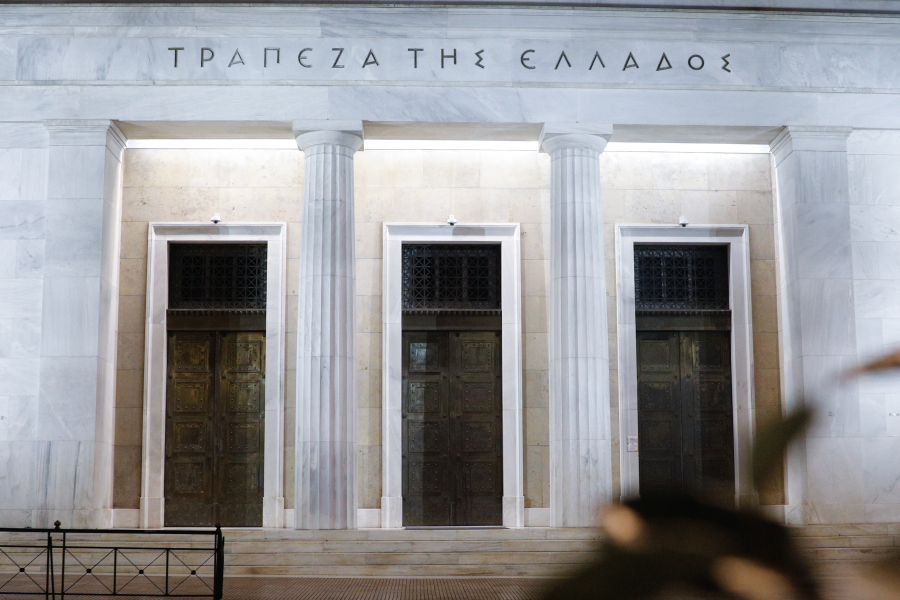
The Bank of Greece responded swiftly, arguing that a faster reduction of deferred tax assets could undermine financial stability. Yet the exchange largely missed the more fundamental issue.
ΔΙΑΒΑΣΤΕ ΕΠΙΣΗΣ


The real question is why, more than a decade after the sovereign-debt crisis, a substantial portion of Greek banks' capital still rests on future tax claims against the state.
Deferred tax assets were introduced as an emergency measure during the crisis to prevent the collapse of the banking system after massive loan losses and debt restructurings. What was intended as a temporary solution, however, has become a defining feature of Greek banking. Deferred tax assets account for roughly one-third of Eurobank's core capital, more than 40% at the National Bank of Greece, more than 45% at Alpha Bank and nearly 57% at Piraeus Bank.
International institutions, including the International Monetary Fund, the European Central Bank and the European Commission, have for years argued that Greek banks should rely less on accounting-based capital and more on tangible capital generated through retained earnings and market funding.
That makes Mr. Tsipras's criticism difficult to dismiss as political theater. If Greek banks are sufficiently robust to reward shareholders with billions of euros in dividends, it is fair to ask why they remain so dependent on a state-backed mechanism introduced during a national emergency.
The issue becomes even more sensitive when viewed through a tax-policy lens.
Greek banks have not undergone a regular tax audit by the country's revenue authority since 2010. During that period they have received annual tax certificates from statutory auditors, but those reviews are not equivalent to full tax inspections. External auditors generally lack the investigative powers needed to determine whether a company may have used fictitious invoices or engaged in more sophisticated forms of tax fraud.
The concern is not merely theoretical.
A high-profile case involving Piraeus Bank's alleged use of fictitious invoices between 2013 and 2015 surfaced only after tax authorities investigated the company that had issued the invoices, not the bank itself. Years later, prosecutors filed felony tax-evasion charges against those allegedly involved. The case remains unresolved.
Because no regular tax audits were conducted, the Greek state's ability to assess additional taxes has already expired under statutes of limitation for tax years up to and including 2019. In practical terms, even if evidence were to emerge that banks had been used in large-scale tax schemes during those years, the authorities would have limited options for pursuing additional claims.
The debate, therefore, is not simply about whether banks are paying taxes today. It is also about whether potential tax liabilities from the past have quietly disappeared through administrative inaction and legal expiration.
This is the broader question raised by Mr. Tsipras's intervention. The issue is not fundamentally whether deferred tax assets should be phased out by 2028 or by 2035. It is whether Greece's banking system, nearly sixteen years after the crisis that brought the country to the brink of financial collapse, should still benefit from extraordinary arrangements that were conceived as temporary emergency measures—and whether the state has become too comfortable leaving those arrangements in place.