
Large companies and new homebuyers in Greece have so far been largely insulated from the latest uptick in borrowing costs, unlike small and medium-sized businesses, which saw financing become more expensive in May.
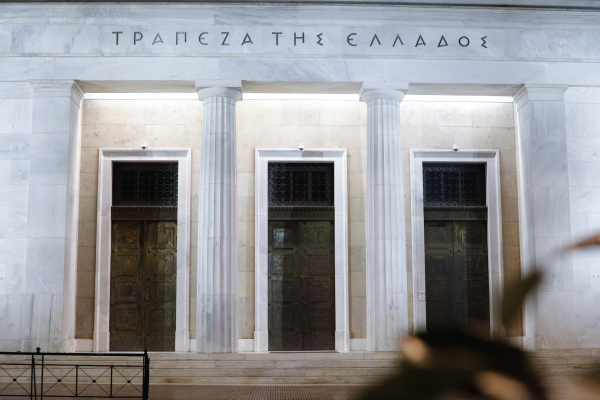
Data released by the Bank of Greece show that interest rates on new business loans of up to €1 million increased during the month, while borrowing costs for larger companies, which typically take out loans above that threshold, actually declined.
The average rate on new corporate loans of up to €250,000 rose to 5.09% in May from 5.01% in April, while rates on loans between €250,001 and €1 million increased to 4.54% from 4.40%. By contrast, the average rate on loans exceeding €1 million fell to 4.15% from 4.37%.
ΔΙΑΒΑΣΤΕ ΕΠΙΣΗΣ



Compared with March, before geopolitical tensions in the Middle East intensified and contributed to renewed volatility in financial markets, borrowing costs for smaller businesses have risen even further. Rates for large companies, although lower than in April, remain above their March levels.
The divergence reflects both intense competition among Greek banks to finance large investment projects linked to the European Union's post-pandemic Recovery and Resilience Facility and the stronger negotiating position of large corporations. Greece has relatively few major companies, making them strategic clients for the country's banking system. Smaller businesses, by contrast, are more exposed to shifts in funding costs and have less leverage in negotiating financing terms.
In the mortgage market, banks kept the average interest rate on new housing loans broadly unchanged at 3.50%. Bank executives attribute that stability to fierce competition for a limited pool of new mortgage borrowers. Repayments on existing mortgage portfolios continue to exceed new lending, leaving banks eager to compete for fresh business.
European Central Bank data paint a similar picture. In Greece, mortgages with fixed rates of more than 10 years carry an average interest rate of 3.08%, below the eurozone average of 3.32%. By contrast, loans with an initial fixed-rate period of up to 10 years are priced at an average of 3.85%, above the eurozone average of 3.65%.
On the deposit side, Bank of Greece figures show that the average interest rate on new household term deposits remained virtually unchanged at 1.14% in May. For businesses, however, rates rose to 1.93% from 1.76% in April.
Returns on household term deposits remain among the lowest in the eurozone and well below the European average of 1.91% recorded in May. The gap reflects banks' broader strategy of steering a growing share of household savings toward investment products, including mutual funds and insurance-linked investment products, rather than traditional deposit accounts.