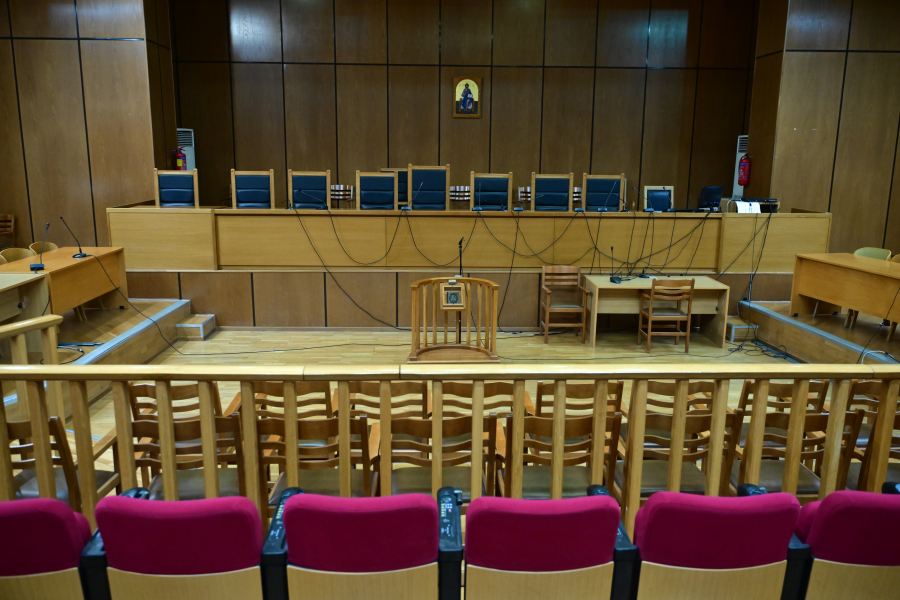

Greece remains one of Europe's slowest countries in delivering justice, with civil, commercial and administrative cases taking an average of 638 days to reach a first-instance ruling—more than six times the European Union median of 100 days, according to a new study by the Athens-based think tank Center for Liberal Studies (KEFiM). The report, titled An X-Ray of the Greek Justice System According to EU Data, paints a picture of a judicial system still struggling with chronic delays despite recent reforms aimed at modernizing courts and reducing backlogs.
The findings underscore one of Greece's longstanding structural weaknesses, one that economists and investors have frequently cited as an impediment to economic growth and business confidence. Slow judicial processes can delay commercial disputes, increase costs for companies and discourage investment in a country that has spent much of the past decade attempting to rebuild its economy following the sovereign debt crisis.
The most severe delays are found in civil and commercial litigation, where the estimated time needed to resolve a case has reached 737 days, according to the study. The situation is particularly acute in consumer-protection cases, which require an average of 1,643 days—or roughly four and a half years—to be completed. Such delays, the report argues, undermine the practical effectiveness of legal protection by making judicial remedies too slow to provide meaningful relief. The data also suggest that Greece's courts are struggling to keep pace with incoming cases. The clearance rate—the share of resolved cases relative to new filings—in civil and commercial matters declined by 11.8% over the past year, indicating that the system is processing fewer cases than are entering the courts and allowing backlogs to accumulate further.
Administrative courts present a more encouraging picture. Their clearance rate remains above 100%, suggesting that judges are gradually reducing pending cases rather than adding to them.
The study also highlights sharp differences across specific categories of litigation. Cases involving money laundering recorded the most dramatic improvement in 2024, with the average duration of proceedings falling by 89%.
By contrast, corruption-related cases moved in the opposite direction. The average time needed to resolve bribery cases increased by roughly 62%, rising from 356 days in 2023 to 576 days in 2024. Proceedings before Greece's competition authorities also deteriorated significantly, with average durations climbing 53%, from 861 days to 1,319 days. The report does identify some areas where Greece compares favorably with its European peers. Women account for 69% of judges serving on the country's highest courts, significantly above the European Union median of 39%.
The study also examined a series of reforms introduced in recent years, including changes to the judicial map, greater digitization of court procedures and efforts to improve administrative efficiency.
According to KEFiM's assessment of the implementation of recommendations contained in the influential Pissarides Report on the Greek economy, 36% of proposed judicial reforms have been implemented to some degree, while another 56% are currently in progress. Only 8% of the recommendations have yet to be addressed. Early evidence from Greece's newly redesigned court system has been encouraging. Nine months after the introduction of the New Judicial Map, the estimated time required for decisions in Courts of First Instance fell by 48%, from 705 days to 364 days. The reduction reached 64% in Athens, 40% in Thessaloniki and 23% in Piraeus.
The report cautions, however, that these figures are based on a different methodology from that used by the European Commission's EU Justice Scoreboard and therefore cannot be directly compared with the broader 638-day measure. “The long delays in the administration of justice remain one of the country's most serious institutional and developmental weaknesses,” KEFiM President Nikos Rombapas said in a statement accompanying the report.