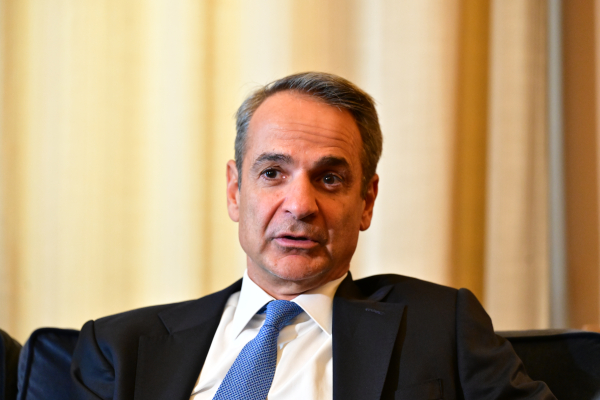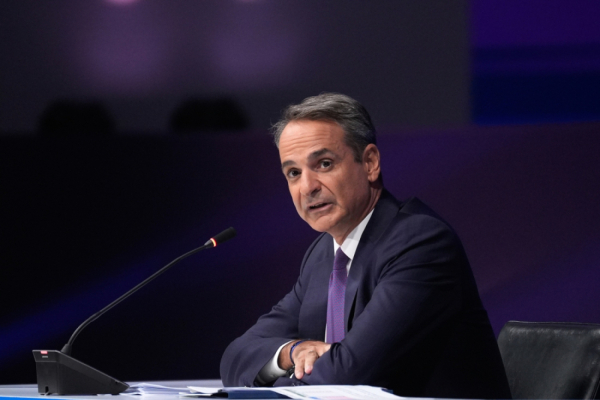

A new opinion poll in Greece suggests that Prime Minister Kyriakos Mitsotakis's governing conservatives remain the country's largest political force but continue to face deep voter dissatisfaction, while former Prime Minister Antonis Samaras is emerging as a potential rallying point for disaffected right-wing voters. The survey by Metron Analysis, published on Thursday, put Mitsotakis's center-right New Democracy party at 25% in voting intention, up from 22.7% a month earlier. The increase consolidates the party's lead over a fragmented opposition but does little to mask the broader sense of unease among the electorate.
Two-thirds of respondents, 67%, said Greece is moving in the wrong direction, while the cost of living remains by far the country's most pressing issue, cited by half of those surveyed. Concerns over the economy and the functioning of state institutions followed closely behind. The government itself continues to suffer from poor approval ratings. Sixty-seven percent of respondents expressed a negative opinion of the administration's performance, while only 28% viewed it positively.
Mitsotakis's personal ratings remain similarly weak. Nearly two-thirds of respondents, 64%, said they hold an unfavorable opinion of the prime minister, compared with just 31% who view him positively. Although his popularity has improved slightly in recent weeks, the figures underline the extent of public fatigue after seven years of New Democracy rule.
The poll also points to an increasingly fluid political environment on the Greek right, where former Prime Minister Antonis Samaras appears to retain significant influence despite no longer holding a formal leadership role.
Asked whether they would consider supporting a political party led by Samaras, 13% of respondents said they would be likely to do so, with 5% saying they would be "very likely" to back such a movement. Among voters who identify themselves as right-wing, support rises sharply, with nearly one in four saying they would consider supporting a Samaras-led party.
The findings are likely to be closely watched within New Democracy, where Samaras has become one of the government's most vocal critics, particularly on issues of national identity, migration and foreign policy.
While no new party has been announced, the fact that Samaras already registers support in opinion polling suggests there is a constituency on the conservative right that feels politically underrepresented.
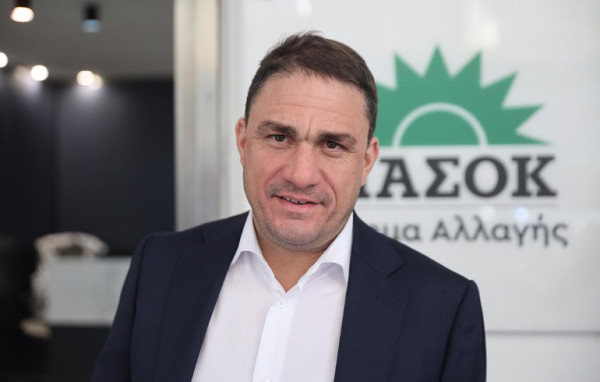
The poll also illustrates the continuing fragmentation of Greece's opposition. A new left-wing alliance associated with former Prime Minister Alexis Tsipras has risen to second place with 14.1% of voting intention, while the center-left PASOK remains stuck below 10%.
For Mitsotakis, the numbers present a mixed picture. New Democracy retains a comfortable lead and remains the only party capable of governing. Yet the government continues to face high levels of public dissatisfaction, and the emergence of alternative political poles—both on the left and potentially on the right through Samaras—suggests that the Greek political landscape is entering a new and more unpredictable phase.
For Samaras, meanwhile, the survey offers the clearest indication yet that he still commands loyalty among a meaningful segment of conservative voters and could, if he chose to re-enter frontline politics, become a significant factor in reshaping Greece's center-right.