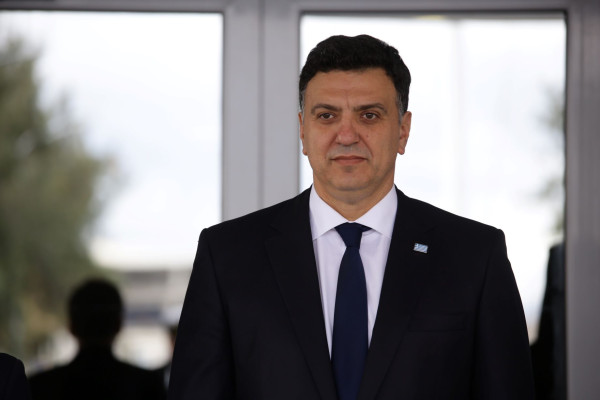

New revelations that former Greek MEP Stelios Kouloglou was targeted with Pegasus spyware have triggered legal and administrative action in Israel, with campaigners arguing that the surveillance amounted to an attempt to sabotage an official European Parliament investigation into spyware abuses.
Israeli human rights lawyer Eitay Mack has filed an urgent request with Israel's Ministry of Defense, calling for an immediate investigation into NSO Group, the maker of the Pegasus spyware, and the possible imposition of sanctions against the company. In his complaint, submitted on July 5 to Rachel Chen, head of Israel's Defense Export Controls Agency (DECA), Mack argues that the alleged targeting of Kouloglou represented a direct attack on the work of the European Parliament.
The complaint relies on findings by the University of Toronto's Citizen Lab, which recently reported that Kouloglou, a former member of the European Parliament's PEGA committee, had been targeted with Pegasus while serving on the panel. The PEGA committee was established in 2022 to investigate the use of commercial spyware against politicians, journalists and activists across Europe.
ΔΙΑΒΑΣΤΕ ΕΠΙΣΗΣ



According to Mack, the targeting of a sitting member of the committee went far beyond a privacy violation. Instead, he argues, it amounted to an effort by NSO Group or one of its clients to interfere with and disrupt a parliamentary inquiry into the very industry that produced the spyware.
Because NSO operates under licenses granted by Israel's Defense Export Controls Agency, the complaint argues that the Israeli state bears legal responsibility for overseeing the company's activities, particularly when they affect institutions of the European Union. Mack has called on Israeli authorities to exercise their powers under the country's 2007 Defense Export Control Law, launch a formal investigation and ensure full transparency regarding the outcome.
The allegations could create fresh friction between Israel and the European Union, which has repeatedly expressed concern over the use of commercial spyware against public officials, journalists and civil society figures.
NSO Group has long been at the center of international scrutiny. In 2021, the U.S. Commerce Department placed the company on its Entity List, citing activities contrary to U.S. national security interests. The company has also faced lawsuits from technology giants Apple and Meta, while victims and journalists around the world have pursued legal action against the spyware maker.
Pegasus also featured prominently in investigations surrounding the killing of Saudi journalist Jamal Khashoggi, whose associates were targeted with the software before his 2018 murder in the Saudi consulate in Istanbul.
Despite the international backlash, Israeli courts have largely rejected attempts by rights organizations, including Amnesty International, to revoke NSO's export licenses. The company remains subject to oversight by Israeli authorities regarding its customers and the use of its products.
For his part, Kouloglou has announced legal action against NSO and alleged there was an "obvious Greek connection" behind the infection of his phone. Speaking to Greek media, the former MEP said he was targeted while drafting the PEGA committee's report on Greece and while communicating with investigative journalist Thanasis Koukakis, who had himself been targeted by Predator spyware.
Kouloglou suggested that his communications may have been intercepted in an effort to gain access to European investigations into Greece's own surveillance scandal. He also pointed to what he described as close business ties and common roots between NSO and Intellexa, the company behind Predator.
The latest allegations have also revived questions about previous contacts between Greek officials and NSO. Testimony presented during court proceedings involving executives linked to Intellexa and security company Krikel indicated that representatives of the Greek state held discussions with NSO in late 2020 regarding the potential acquisition of Pegasus.
According to witness testimony, NSO proposed a five-year agreement worth €50 million and insisted that any arrangement be strictly government-to-government, with the software to be operated exclusively by state authorities in coordination with Israeli intelligence services.
The proposal ultimately failed. Witnesses testified that Greek counterparts rejected the model because it would have deprived them of what was described in court as the "advantage of plausible deniability" should the operation ever become public.
According to people familiar with the discussions, NSO executives also rejected any involvement of private actors in operating the system, dismissing the Greek preference for private-sector participation as a "Latin American model."