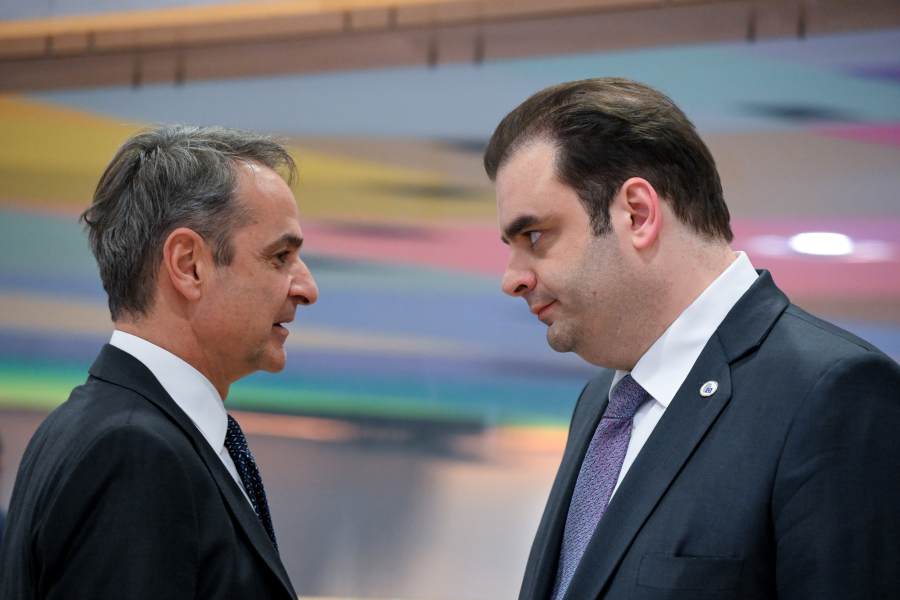

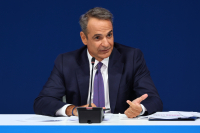
The Greek government enters Monday’s high-profile meeting with business leaders hoping to demonstrate progress in its battle against the cost-of-living crisis. But despite the symbolism of convening top executives from the country’s industrial and retail sectors at the prime minister’s office in Athens, expectations for immediate and meaningful results remain low.
At the heart of the problem is the nature of inflation in Greece itself. The country’s persistent rise in consumer prices is not a phenomenon that can easily be addressed through a gentlemen’s agreement between the government and businesses or through voluntary price reductions on a limited number of products.
Economists point instead to deeper structural factors: strong consumer demand, limited productive capacity, distortions in competition and high levels of concentration in several sectors of the economy. Those issues require long-term reforms and investment rather than temporary arrangements negotiated behind closed doors.
ΔΙΑΒΑΣΤΕ ΕΠΙΣΗΣ


Business leaders have also approached the initiative cautiously. While companies broadly acknowledge the need to help ease pressure on consumers, they are unlikely to accept broad-based price cuts that would significantly erode profit margins. Many firms continue to grapple with elevated operating costs, uncertainty in international markets and lingering disruptions in supply chains.
A further complication is timing. Industry groups and supermarket chains have reportedly taken a different view from the government on when any measures should be implemented. Many executives believe interventions introduced during the summer would have limited impact and argue that any coordinated effort would be more effective from September onward, adding another obstacle to the government's push for immediate action.
Athens also appears to be using the possible extension of a cap on gross profit margins as leverage in the negotiations. But agreements built on regulatory pressure rather than a genuine convergence of interests rarely produce lasting changes in market behavior.
Energy costs remain another significant constraint. Despite the recent decline in international oil and natural gas prices, businesses across manufacturing, transport and retail continue to operate with energy costs well above pre-crisis levels. That has squeezed margins and reduced companies’ willingness to commit to broad or long-lasting price reductions. Executives also remain wary that renewed volatility in global energy markets could quickly reverse current trends and trigger another wave of price increases.
Even if the talks result in a deal and prices are reduced on selected products, the broader impact on inflation and household purchasing power is likely to be modest. Previous interventions have shown that targeted discounts on individual items do little to alter consumers’ perception of a generalized rise in the cost of living.
The initiative also carries a clear political dimension. As Greece gradually enters a pre-election period, the government has every incentive to show voters that it is taking action on what surveys consistently identify as the country’s most pressing concern: the rising cost of everyday life.