
New data from the European Central Bank show that the average net wealth of Greek households has climbed to €117,936, a rise of 23% from the lows reached after Russia's invasion of Ukraine triggered another bout of economic uncertainty across Europe. Yet average household wealth is still nearly one-fifth below the level recorded in 2009, before Greece's sovereign debt crisis plunged the country into one of the deepest recessions experienced by an advanced economy in peacetime.
The figures reveal a paradox at the heart of modern Greece: an economy that is once again generating wealth, but a society where a majority of people continue to struggle financially.
Total household wealth has rebounded to around €1tn, helped by soaring property prices, a strong recovery in Greek stocks and lower government borrowing costs after the country regained investment-grade status. Even so, Greece remains far from the days before the crisis, when household wealth exceeded €1.5tn.
ΔΙΑΒΑΣΤΕ ΕΠΙΣΗΣ


The scale of the destruction that followed the debt crisis was extraordinary. Between 2009 and the trough of the bailout years in 2016, average household wealth fell by roughly 35%, wiping out more than a third of Greek families' assets.
The Bank of Greece has described the period as a form of terra incognita – an economic collapse without precedent in modern Europe. In peacetime, it can be compared only to the Great Depression in the United States. But while the US economy had regained its pre-crash output seven years after 1929, Greece has yet to return to the levels of economic activity it enjoyed before the crisis. Nearly two decades after its economy peaked in 2007, the country's real GDP remains almost 14% below that level.
By several conventional measures, Greece is a success story. Since 2018, the economy has grown faster than the eurozone average. Foreign direct investment reached €11.9bn last year, the highest level in more than a decade, and the country has finally exited the European Union's macroeconomic imbalance procedure after years of scrutiny.
Yet prosperity has returned unevenly.
Greek GDP per capita is still about 25% below its 2009 peak and roughly one-third lower than the average across the European Union. Productivity – a key determinant of living standards – remains barely half the EU average.
Perhaps more importantly, the gains from the recovery have accrued disproportionately to those who already had assets.
As property and financial markets have rebounded, wealthier households have benefited from rising asset prices, while lower-income families have found it increasingly difficult to keep up with the cost of living. Economists often describe this as a "snowball effect": those with wealth can invest, diversify and generate further returns, while those with limited assets remain vulnerable to economic shocks and are often forced to dip into their savings simply to cover everyday expenses.
Research by Greece's Foundation for Economic and Industrial Research (IOBE) highlights the growing disconnect between economic indicators and social reality.
On one hand, standard measures of inequality have improved. The Gini coefficient, one of the most widely used measures of income inequality, has fallen from 34.2 in 2015 to 31.6 in 2025.
On the other hand, nearly 68% of Greek households say they struggle to make ends meet, compared with just 19% across the EU. Almost 35% of Greeks consider themselves poor, while more than four in five believe income disparities in the country are excessively large.
The findings suggest that inequality in Greece is about far more than income.
Single-parent families and households with several dependent children remain among the most vulnerable to poverty. Young people aged between 16 and 24 face the highest risk of economic hardship, while the gender pay gap remains stubbornly persistent.
Even in Athens, the country's wealthiest region, inequality is among the highest.
The labour market has improved markedly since the darkest years of the crisis, with unemployment falling sharply and the informal economy shrinking. But structural weaknesses remain deeply embedded. Long-term unemployment, low participation in the workforce and a high reliance on self-employment continue to shape opportunities and outcomes.
Access to essential services also reinforces social divides.
Education remains heavily dependent on private tutoring, limiting social mobility for students from lower-income backgrounds. Healthcare has recovered from the worst years of austerity, but out-of-pocket costs continue to weigh most heavily on poorer households.
Long-term care is still largely provided by families, with women carrying a disproportionate share of the burden as unpaid carers.
And then there is housing – increasingly one of the defining issues of post-crisis Greece.
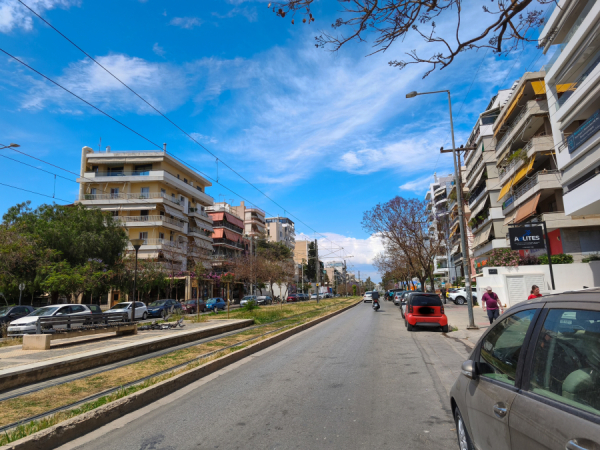
Rents have surged in recent years, driven by tourism, foreign investment and a shortage of affordable housing. The cost of housing now consumes one of the largest shares of disposable income in the European Union, particularly for low-income households and younger Greeks unable to enter the property market.
For many people, these pressures have created a sense that the country's economic recovery belongs to someone else.
The numbers tell a story of a nation that has rebuilt much of the wealth it lost during the debt crisis. But they also tell another story: of a recovery that has left deep inequalities intact and of a society where economic growth has not yet translated into a broadly shared sense of security or prosperity.
Greece may be richer than it was a decade ago. But for a large part of the population, it still does not feel that way.