
Greece's meat market is coming under mounting pressure as shrinking livestock herds, animal disease outbreaks and persistently high production costs combine to keep prices elevated, with little prospect of a meaningful reversal anytime soon.
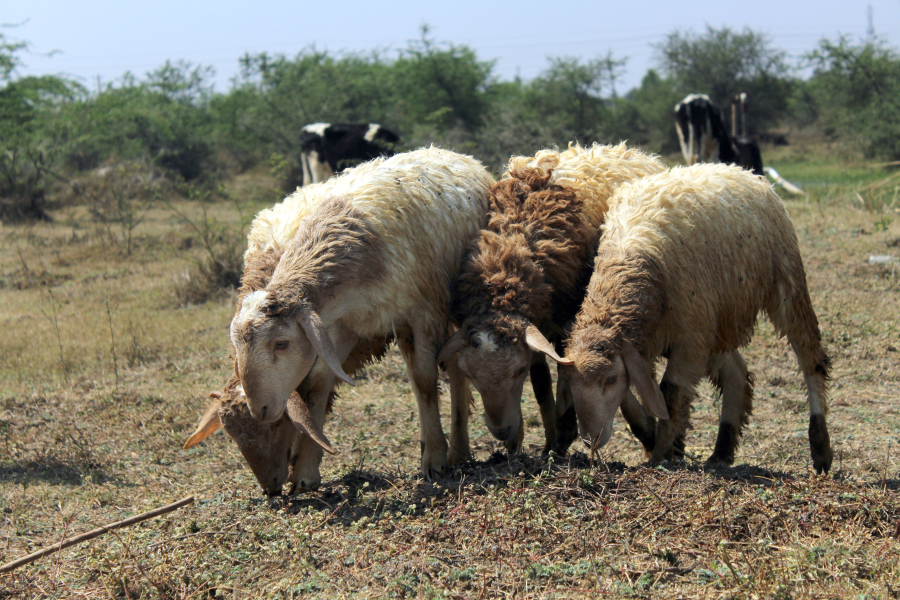
New data from Greece's statistical authority and Eurostat suggest that European livestock farming is facing a deep and prolonged downturn. Greece has been among the hardest-hit countries. In 2025, livestock numbers declined across all major categories, with sheep suffering the steepest losses. The country's sheep population fell 17.2% to 6.44 million head, while goat numbers dropped 9.2% to 2.34 million. Cattle and pig herds also contracted, declining 12.8% and 7.2%, respectively.
The number of livestock farms is also steadily shrinking, highlighting the increasingly difficult economics of the sector and the growing number of farmers exiting the industry. Higher feed, energy and transportation costs, coupled with weak returns, have made livestock production progressively less viable.
ΔΙΑΒΑΣΤΕ ΕΠΙΣΗΣ

The picture is similar across the European Union. In 2025, the bloc counted 131.5 million pigs, 71.6 million cattle, 55.3 million sheep and 10.2 million goats, with annual declines of 0.5%, 0.4%, 2.2% and 2.5%, respectively. Compared with a decade ago, the losses are even more pronounced, underscoring a long-term contraction in European livestock farming that is limiting production and intensifying price pressures.
In Greece, the situation has been aggravated by an outbreak of sheep pox that has decimated parts of the national flock. Mandatory culling, restrictions on animal movements and uncertainty in affected regions have significantly reduced supply, particularly in lamb and goat meat.
Price developments over the past three years illustrate the consequences of that shrinking supply. Wholesale prices for domestic lamb reached €10.40 a kilogram this year, about 9.5% higher than the average level in 2025. Goat meat climbed to €9 a kilogram, up roughly 9%.
Beef has seen even steeper increases. Domestic and imported beef prices rose to €9.30 a kilogram, an increase of about 11% from 2025 and nearly 35% compared with 2024. The surge reflects both the decline in cattle numbers and the persistently high cost of raising livestock, which continues to be passed on to consumers.
Pork has been the lone exception. Domestic and imported pork products have recorded price declines of between 15% and 18% compared with 2025, largely because of increased supply in the European market and weaker demand in some countries. Analysts, however, say the decline in pork prices is insufficient to offset increases in other categories or alter the broader upward trajectory of the meat market.
Even the European Union's trade agreement with the Mercosur bloc is unlikely to change the picture significantly. The agreement, which entered provisional application on May 1, 2026, grants more favorable import conditions for beef from Argentina, Brazil, Uruguay and Paraguay, allowing an additional 99,000 metric tons of imports at lower tariffs.
That volume, however, represents only about 1.6% of total EU beef consumption and is widely viewed as too small to materially shift the balance between supply and demand. Moreover, imported products must comply with the same stringent health and quality standards that apply within the European Union, limiting the scope for substantial price reductions.
Under these conditions, Europe's meat market appears set for an extended period of constrained supply. Rebuilding livestock herds will take time, while animal diseases and elevated production costs continue to weigh on the sector. As a result, the conditions for a meaningful decline in prices are not in place, and meat is unlikely to become significantly cheaper in the foreseeable future, even if imports from third countries increase.