
April is expected to mark a turning point for electricity prices in Greece, as rising natural gas costs driven by the war in the Middle East begin to feed into the country’s energy market, leading to higher power bills in the coming months.
Until now, the sharp increase in the benchmark European TTF natural gas price—from €29 to €59 per megawatt-hour—has not yet been reflected in household electricity bills.
This is largely due to the time lag in the way fuel costs are incorporated into electricity generation and retail tariffs, a process that typically takes about a month. Another reason is the large share of cheaper energy sources in Greece’s electricity mix. During February and March, renewable energy and hydroelectric power accounted for roughly 60% to 70% of total electricity production, helping to limit the impact of expensive natural gas on overall power prices.
Energy market analysts, however, expect the situation to change from April onward. Wholesale electricity prices in Greece, currently hovering around €90 to €100 per megawatt-hour, are expected to rise as higher natural gas costs begin to pass through the system. These increases are then likely to gradually appear in consumer electricity bills over the following months, as retail tariffs adjust with a delay to wholesale market trends.
Uncertainty remains high, and analysts caution that it is difficult to predict how large the increases will be. International developments, particularly geopolitical tensions and conflicts that influence global energy prices, will play a decisive role. In response to the potential rise in electricity costs, the Greek government is considering reintroducing measures used during the previous energy crisis, including a mechanism to recover excess revenues from electricity producers in order to fund subsidies for household electricity bills.
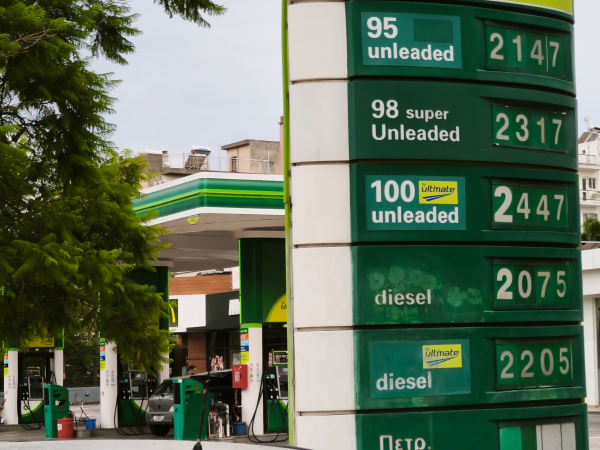
At the same time, broader energy costs are rising due to higher international oil prices, which have already pushed up fuel prices in Greece. Unleaded petrol now averages around €1.98 per litre, up from €1.751 before the crisis, while diesel has risen to about €1.976 per litre from €1.57, increasing transportation costs and operating expenses for businesses.
These developments are adding pressure on households and businesses and are increasing the likelihood of new government support measures. Officials are examining targeted income support policies, with the main scenario involving the return of electricity subsidies. A new fuel subsidy scheme similar to earlier programs is also being discussed, while the possibility of reducing fuel taxes is being raised for the first time, though such a move would likely require coordination at the European level.