
A sprawling alleged subsidy fraud scheme involving phantom olive groves, fictitious pastureland and questionable EU farm payments is putting fresh scrutiny on Greece’s agricultural oversight system, after dramatic testimony in an Athens courtroom revealed that olive trees were allegedly declared in mountainous regions where they could never grow — and, in some cases, even outside Greece itself.
The case centers on Greece’s payment and control agency for EU agricultural subsidies, OPEKEPE, which distributes funds under the European Union’s Common Agricultural Policy. Prosecutors accuse 58 defendants from Crete of fraudulently obtaining tens of thousands of euros in subsidies by falsely declaring land in northern Greece as olive groves, almond orchards or grazing areas.
At the heart of the trial is a question that has long haunted the EU’s vast agricultural subsidy system: how easily can public money be siphoned off through fabricated land claims and weak oversight mechanisms?

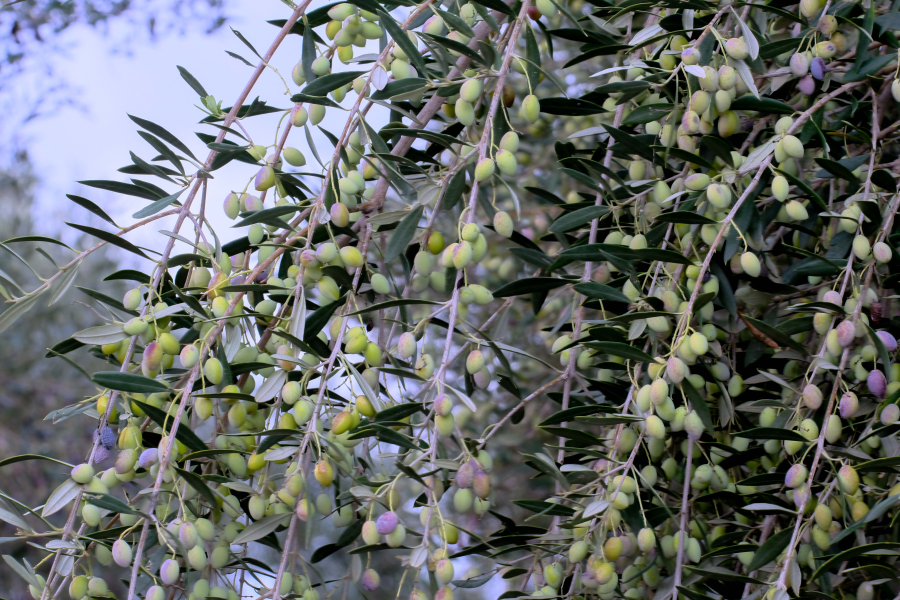
During testimony before the Athens Misdemeanor Court, Dimitris Moschos, president of the Livestock Farmers’ Cooperative of Kastoria, described discovering enormous declared olive plantations in areas near Kastoria and Mount Vitsi, close to Greece’s northern border, at altitudes reaching 1,100 meters.
“These are regions with harsh winters and frost conditions where olive cultivation is impossible,” Moschos told the court. Yet official declarations listed 22,000 stremmas — roughly 2,200 hectares — of olive groves in Kastoria alone, alongside another 17,000 stremmas of almond trees, crops that also do not thrive in the area.
Even more startling, Moschos alleged that some of the declared olive groves later appeared in subsidy filings tied to locations outside Greece.
The testimony painted a picture of a subsidy system vulnerable to manipulation through fabricated leases and remote land claims. According to the witness, vast tracts of land in Kastoria and neighboring Florina were repeatedly reclassified on paper — sometimes as pastureland, other times as olive orchards — depending on which designation maximized access to EU funding.
The defendants, prosecutors allege, secured an average of around €25,000 each annually through the scheme.
The courtroom exchanges also raised uncomfortable questions about oversight inside OPEKEPE itself. When asked by the presiding judge whether the grazing lands in question were fictitious, Moschos responded bluntly: “Completely fictitious.”
He added that reports of supposed on-site inspections had left him “furious,” insisting that no meaningful field checks had taken place. “Now I understand how the game was played,” he said, suggesting that agency employees may also bear responsibility if inspections were formally recorded but never actually conducted.
The allegations strike at a sensitive political issue in Greece and across the European Union, where agricultural subsidies account for a major share of EU spending and have repeatedly been targeted by fraud investigations. Greece has long faced criticism from Brussels over weaknesses in land registry systems, subsidy controls and the management of agricultural payments.
Moschos said he first became suspicious in 2020 after requesting local subsidy data out of curiosity during a visit to OPEKEPE offices. He later alerted prosecutors and said he had informed then-OPEKEPE administrator Grigoris Varra before filing a formal complaint.
Another striking element of the testimony involved the alleged lease agreements used to support the subsidy claims. According to Moschos, some of the land was reportedly rented for as little as €0.035 per stremma — effectively a symbolic amount — while legitimate farmers in the region pay closer to €5 per stremma per month.
The witness contrasted the alleged fraudulent payouts with the shrinking support available to genuine livestock farmers. He told the court that although he owns 400 sheep and cultivates 400 stremmas of land, his own subsidy payments have fallen sharply in recent years.
None of the 58 defendants appeared in court during the hearing. Defense lawyers requested delays, citing concerns that some of the alleged offenses, dating back six years, could soon fall under Greece’s statute of limitations. The court rejected the requests, allowing proceedings to continue.