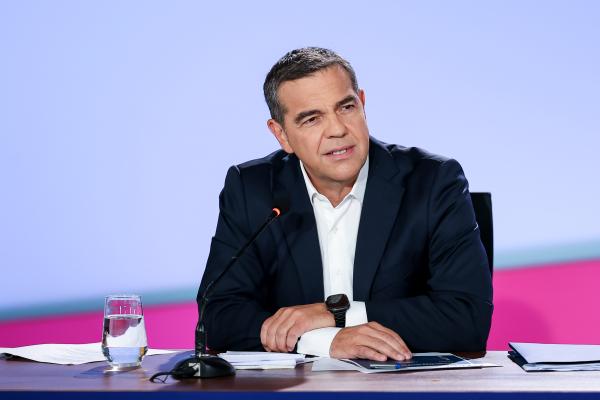
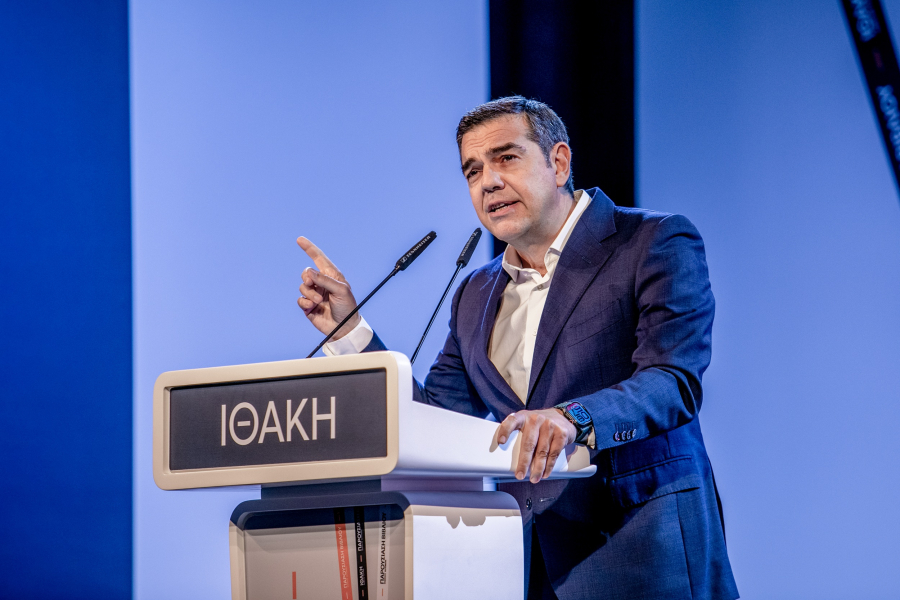

Former Greek prime minister Alexis Tsipras has issued a clear signal of political re-engagement, indicating that he is preparing to step up his public criticism of the government led by Kyriakos Mitsotakis. The message was delivered during a recent discussion with students at Panteion University in Athens, held on the occasion of the publication of his book Ithaca.
According to people close to him, Tsipras is expected in the coming months to significantly intensify political pressure on the prime minister, focusing particularly on allegations of illegal wiretapping and broader concerns about the functioning of the rule of law in Greece. During the discussion, later published in full on the website of the Alexis Tsipras Institute, the former prime minister warned that without what he described as a “shock of democracy and participation,” prolonged political stagnation could allow social frustration to be channelled into support for far-right and anti-political movements.
Placing his remarks in a wider context, Tsipras argued that a new dividing line is emerging in Greek society, between those who claim to defend the common good and those who, in his words, seek to expand their personal wealth. He framed this contrast as one between the social majority on the one hand and oligarchic or kleptocratic interests on the other. While criticising widespread resignation in the face of corruption scandals, he also highlighted examples of civic solidarity, referring to an elderly woman in the town of Messolonghi who donated her property to help finance an ambulance for the local community. Such acts, he said, reflected a “different Greece” deserving of pride.
Tsipras also engaged in self-criticism over his time in office as leader of the left-wing SYRIZA government, acknowledging mistakes while insisting that his administration succeeded in steering the country out of international bailout programmes and the prolonged financial crisis. His attack on the current prime minister was particularly sharp. He urged Mitsotakis to “write a book” explaining what Tsipras described as the collapse of the rule of law, the Predator spyware affair, the management of European agricultural subsidies through the OPEKEPE agency, and the handling of the deadly Tempi train crash, suggesting there had been an attempt to cover up responsibility.
“At some point Mitsotakis should write his own book about how he led the country into a crisis of the rule of law and into disrepute within the European Union,” Tsipras said. He went on to question the creation of surveillance mechanisms allegedly targeting large parts of the political system and concluded by expressing doubt that the current prime minister would secure a third term in office.
Looking ahead, Tsipras made clear that he feels compelled to assume once again a share of political responsibility, with the aim of contributing to a meaningful reshaping of Greece’s political landscape. He argued that building a credible democratic alternative to the current government would require three elements: trustworthy political leadership, a coherent plan for governing, and, above all, the active engagement of citizens.