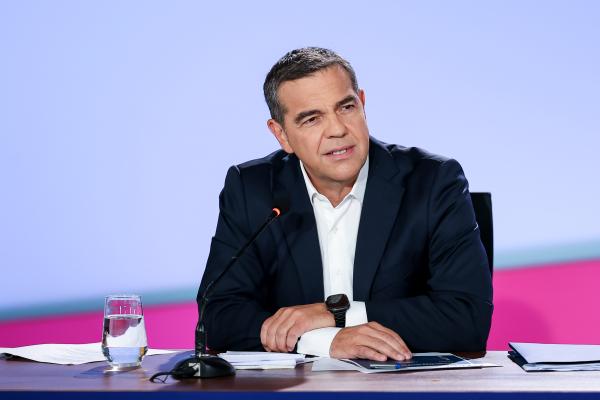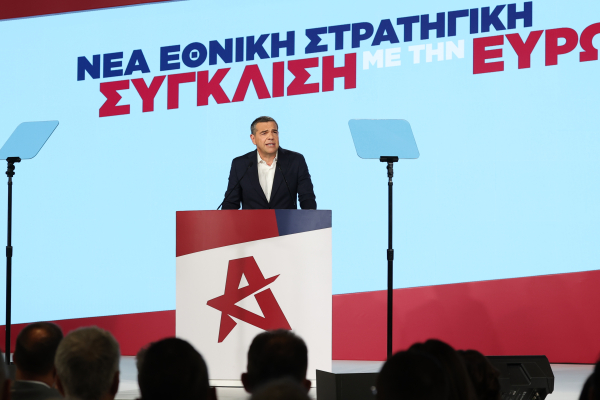
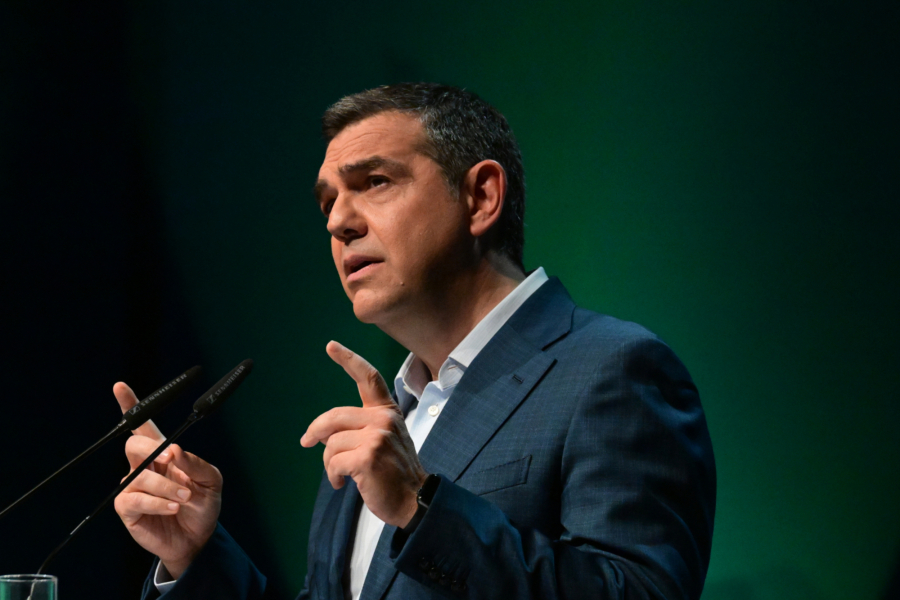

Former Greek prime minister Alexis Tsipras delivered a forceful political intervention on Tuesday from the city of Patras, openly challenging the government and signalling a possible return to a leading role in national politics sooner than many had expected. Speaking at the presentation of his initiative titled “Ithaca,” Tsipras launched a broad attack on Prime Minister Kyriakos Mitsotakis- whom he once again avoided naming directly - while also turning his criticism toward leaders of the wider centre-left and left opposition.
Tsipras accused the current government of presiding over what he described as a systemic collapse marked by corruption and institutional failure. He claimed that Greece has been turned into “a vast swamp,” citing surveillance scandals, the deadly Tempi train disaster and alleged attempts to cover it up, irregularities linked to agricultural subsidies, and the dominance of cartels in sectors such as energy, fuel, supermarkets and banking. According to Tsipras, these practices have placed hundreds of thousands of households under severe economic pressure.
His rhetoric in Patras was particularly sharp, as he argued that the government has effectively exhausted its political legitimacy. He said it is collapsing under the weight of inefficiency and corruption and that, in the eyes of Greek society, it is already finished. “They know it themselves,” he added, asserting that political change has become both a social and national necessity. With the phrase “we must accelerate,” Tsipras appeared to hint that his own political comeback may be imminent.
Beyond attacking the government, Tsipras also directed pointed criticism at the leadership of opposition parties. He argued that the ruling party is seeking a “safe landing” and protection from accountability, something he believes is made possible by the absence of a credible alternative governing force. In his view, parts of the progressive camp no longer offer a clear alternative to conservative rule, but instead function in a supplementary or accommodating role toward the Right.
Without naming names, Tsipras questioned whether a political leader who leaves open the possibility of governing alongside conservatives can genuinely challenge the current administration. This was widely interpreted as a reference to PASOK leader Nikos Androulakis. He also criticised figures within the left for prioritising party survival over broader unity, and for focusing on ideological purity and criticism of others while failing to acknowledge their own past mistakes- remarks seen as aimed at senior SYRIZA figures, including former finance minister Euclid Tsakalotos.
Despite his confrontational tone, Tsipras struck a more conciliatory note toward the end of his speech. He left open the possibility of future cooperation across the progressive spectrum, calling for dialogue, collective reflection and coordinated political action. He argued that a broad, inclusive progressive alliance - free of preconditions and ideological litmus tests- is now more necessary than ever, and that such an alliance must be built through a meaningful and creative break with past failures.